
Cab Calloway Biography Quotes 16 Report mistakes
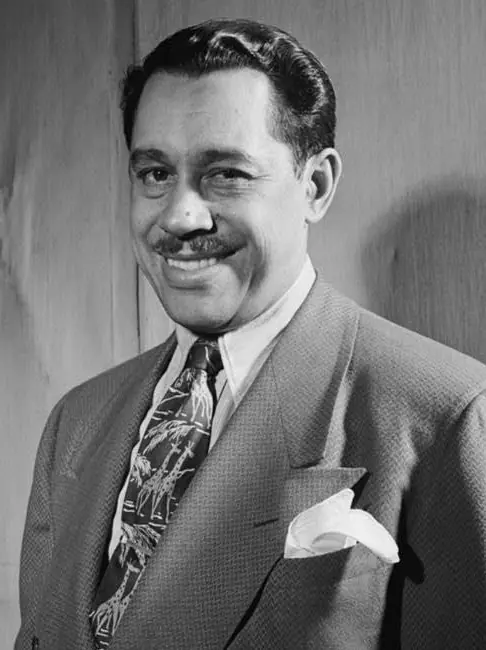
| 16 Quotes | |
| Born as | Cabell Calloway III |
| Occup. | Musician |
| From | USA |
| Born | December 25, 1907 Rochester, New York, US |
| Died | November 18, 1994 Hockessin, Delaware, US |
| Aged | 86 years |
Cabell Calloway III, known to the world as Cab Calloway, was born in 1907 in the United States and grew up in a household that prized education, eloquence, and the arts. Raised largely in Baltimore, he came of age amid the social ferment that fed the Harlem Renaissance. A defining presence in his youth was his older sister, Blanche Calloway, a pioneering bandleader and singer in her own right. Blanche helped open doors for him on the bandstand and in the business of entertainment, modeling a path for a younger brother whose charisma and vocal agility would soon outpace even his remarkable ambition.
Chicago Apprenticeship and Musical Formation
As a young man, Calloway gravitated to Chicago, a crucible for jazz after the Great Migration. There he absorbed lessons from masters who were reshaping American music. Louis Armstrong, in particular, left a deep imprint. Armstrong's phrasing, timing, and scat innovations offered Calloway a vocabulary and a challenge: make the voice an instrument. Calloway approached this not as mimicry but as reinvention, blending theatrical timing with rhythmic play to forge his own brand of scat and a call-and-response showmanship that would become his signature.
The Cotton Club and National Stardom
Calloway's big break came when he took the helm of The Missourians, a band that, with the guidance of the impresario and publisher Irving Mills, evolved into Cab Calloway and His Orchestra. The Cotton Club in Harlem, a glittering yet segregated venue, became his launchpad to national fame. Sharing a high-profile platform with figures such as Duke Ellington, he brought a charismatic, kinetic presence to the stage: white tie and tails, a long baton carving the air, and a voice that swooped from sly whispers to clarion shouts. In 1931 he recorded Minnie the Moocher, a number that showcased his "hi-de-ho" refrains and audience interplay, turning a theatrical gimmick into a national pop phenomenon. Radio broadcasts beamed his band's sound coast to coast, and Calloway's persona crystallized as the urbane, quicksilver ringmaster of a new musical spectacle.
Band, Sidemen, and the Sound
Calloway's orchestra was more than a backdrop; it was a creative engine. The band cultivated a polished, brass-forward swing that left room for improvisation and crackling showpieces. Over the years it became a proving ground for formidable talent. Among the most influential were bassist Milt Hinton, whose tone and time anchored the band; tenor saxophonist Chu Berry, a modern-minded soloist whose lines pushed the music forward; drummer Cozy Cole, whose pulse could shift from elegant to explosive; and trumpeters Jonah Jones and Dizzy Gillespie. Gillespie's brief but memorable tenure in the early 1940s hinted at the bebop revolution to come, even as Calloway kept his ensemble rooted in a crowd-pleasing swing aesthetic. The result was a sound both accessible and sophisticated, tailored for ballrooms, theaters, and the new mass medium of radio.
Film, Cartoons, and Cultural Icon
Calloway's reach extended well beyond the bandstand. In the early 1930s he appeared in Fleischer Studios cartoons built around Betty Boop, where rotoscoped animation captured his slinky dance steps and elastic stagecraft. His image and voice, fused to those animated shorts, became part of American pop iconography. He also appeared on film in musical features and revues. In Stormy Weather, he shared the screen with Lena Horne and performed alongside the Nicholas Brothers, whose virtuosic "Jumpin' Jive" routine with his band has been celebrated as one of cinema's great dance sequences. Decades later, he reintroduced himself to an entirely new audience with an exuberant turn in The Blues Brothers, trading energy with John Belushi and Dan Aykroyd and proving that his command of timing and crowd electricity had not dimmed.
Language, Style, and Influence
Calloway did not merely perform songs; he helped shape the language that surrounded them. His Hepster's Dictionary captured and codified jive slang for a broad public, moving Black vernacular into mainstream awareness while preserving its wit and cadence. As a singer, he balanced narrative clarity with rhythmic play; as a bandleader, he fused theatrical spectacle with disciplined musical craft. The "hi-de-ho" call-and-response became a ritual of participation, blurring the line between stage and audience and anticipating later styles that foregrounded crowd interplay. His fashion and physicality added to the package: the glide, the cane and baton flourishes, and the impeccable evening dress that telegraphed both elegance and flair.
Mid-Career Challenges and Adaptation
The postwar years brought headwinds to big bands. Rising costs, shifts in taste, and the ascendance of small-group bebop forced many ensembles to disband. Calloway contracted his forces without abandoning showmanship. He navigated personnel changes, including a well-known rupture with Dizzy Gillespie after a backstage dispute, yet maintained a professional polish that kept his name viable on the touring circuit. He adjusted repertoire to the times and embraced opportunities in television variety shows and nightclubs, carrying forward the discipline of the swing era into more intimate settings.
Stage Revivals and Later Career
If the ballroom era dimmed, the stage beckoned. Calloway found renewed visibility in theater, taking on roles that welded his charisma to character. In productions of Porgy and Bess, he embodied the sly glamour of Sportin' Life, a part long associated with his brand of urbane mischief. Later, in the Broadway revival of Hello, Dolly! starring Pearl Bailey, he delivered a portrait of Horace Vandergelder that was equal parts authority and charm, showing how a bandleader's timing could animate dialogue as effectively as a song. These roles extended his career into new cultural spaces and introduced him to audiences who might have known little about Cotton Club nights.
Relationships, Mentors, and Proteges
Throughout his career, Calloway operated in a dense web of peers and proteges. Blanche Calloway's example as a pioneering bandleader provided both inspiration and an early professional template. Irving Mills brokered opportunities that magnified his reach. In the orchestra pit and on the road, players like Milt Hinton and Chu Berry refined a language of swing that fed countless later musicians. Encounters with Louis Armstrong in Chicago helped seed Calloway's scat style, while the presence of Dizzy Gillespie at the cusp of bebop linked his orchestra to a generational pivot in jazz. Collaborations in film and on stage with Lena Horne, the Nicholas Brothers, Pearl Bailey, and, much later, screen partners John Belushi and Dan Aykroyd, traced a line of influence from the vaudeville-inflected 1930s into late-20th-century pop culture.
Later Years and Honors
As the decades advanced, Calloway remained active, touring, recording, and appearing on television, where his crisp diction and theatrical timing translated into a friendly authority. He was celebrated by jazz festivals, historical societies, and national arts institutions for a lifetime of contributions to American music and performance. Recognition late in life affirmed his status as a bridge figure: one hand extended to the classic swing era, the other to contemporary audiences who heard in his voice an undimmed theatrical spark.
Legacy
Calloway died in 1994, leaving behind an enduring body of recordings, film and television appearances, and a template for frontmen who fuse musicality with showmanship. His career illuminated the complex pathways by which Black performers shaped national culture even within segregated spaces. The Cotton Club years yielded indelible images of elegance under constraint; the cartoons and films expanded his reach; the theater confirmed his versatility. Beyond the famous refrains of Minnie the Moocher, his legacy includes a way of making performance conversational, answering the crowd while leading it, and turning a bandstand into a shared celebration. Through the musicians who cycled through his orchestra, the language he popularized, and the stages he conquered, Cab Calloway stands as one of the most vivid embodiments of American entertainment in the twentieth century.
Our collection contains 16 quotes who is written by Cab, under the main topics: Music - Equality - Sarcastic - Movie - Work-Life Balance.
Other people realated to Cab: David Merrick (Producer), Ruth Brown (Musician), Pearl Bailey (Actress), Morgan Freeman (Actor)
Source / external links