
Cab Calloway Biography Quotes 16 Report mistakes
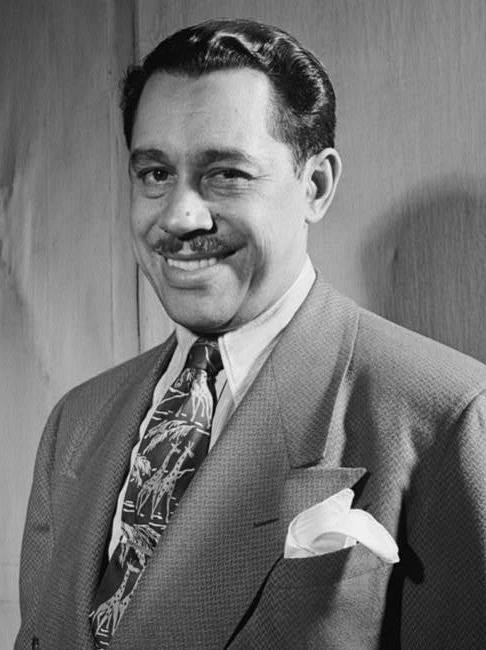
| 16 Quotes | |
| Born as | Cabell Calloway III |
|---|---|
| Occup. | Musician |
| From | USA |
| Born | December 25, 1907 Rochester, New York, US |
| Died | November 18, 1994 Hockessin, Delaware, US |
| Aged | 86 years |
| Cite | |
Citation Formats
APA Style (7th ed.)
Cab calloway biography, facts and quotes. (2026, August 13). FixQuotes. https://fixquotes.com/artists/cab-calloway/
Chicago Style
"Cab Calloway biography, facts and quotes." FixQuotes. August 13, 2026. https://fixquotes.com/artists/cab-calloway/.
MLA Style (9th ed.)
"Cab Calloway biography, facts and quotes." FixQuotes, 13 Aug. 2026, https://fixquotes.com/artists/cab-calloway/. Accessed 5 Oct. 2026.
Early Life and Background
Cabell Calloway III was born on December 25, 1907, in Rochester, New York, into a striving Black middle-class family whose ambitions were shaped by both Reconstruction's afterlife and the hard limits of Jim Crow. His father, Cabell Calloway Jr., worked in law and real estate; his mother, Martha Eulalia Reed Calloway, was a teacher and church organist who pushed culture, polish, and discipline. The family settled in Baltimore, where the young Calloway absorbed a city alive with church music, brass bands, vaudeville, and the migrating sounds of ragtime turning into jazz. He grew up during the Great Migration, when Black performance was becoming both an escape hatch and a new public language of modernity.
As a boy he sang in church, listened obsessively, and developed a taste for spectacle as much as for sound. He attended Frederick Douglass High School, one of the most important Black schools in the country, and came of age in a world where talent had to travel through segregated circuits to be seen. His older sister Blanche Calloway would become a major influence and a pioneer in her own right, leading bands at a time when female Black bandleaders were rare. From the beginning, Cab was not simply a vocalist in formation. He was studying audience behavior, comic timing, dress, movement, and the electricity of public performance - all the ingredients he would later fuse into one of the most identifiable stage personas in American music.
Education and Formative Influences
Calloway briefly attended Crane College in Chicago, but formal study gave way to the harsher education of nightclubs, touring bands, and Black theatrical circuits. In Chicago he encountered a city that was a laboratory of jazz modernity, and he absorbed lessons from Louis Armstrong's rhythmic daring and from the theatrical freedom of entertainers who knew that survival required more than musical accuracy. He sang with the Alabamians, worked as an emcee, and learned how to dominate a room before he ever led one. The influence of scat singing, hot jazz orchestration, and vaudeville patter combined with the polish he had inherited from home. He also learned the economics of entertainment during the Depression: a band had to be disciplined, visually sharp, and instantly memorable if it was to keep bookings and transcend the anonymity of the dance-band marketplace.
Career, Major Works, and Turning Points
After early work in Chicago and national touring, Calloway made his decisive leap in 1930 when he took over a residency at Harlem's Cotton Club, succeeding Duke Ellington in one of the most visible - and racially paradoxical - venues in American entertainment. There he forged the Cab Calloway Orchestra into a precision machine while becoming "The Hi-De-Ho Man", a zoot-suited master of call-and-response whose elastic voice and kinetic conducting turned the bandstand into theater. "Minnie the Moocher" in 1931 made him a star and one of the first Black musicians to sell a million records; songs such as "St. James Infirmary", "Reefer Man" and "The Jumpin' Jive" expanded his range from comic surrealism to dark blues and jive-era swing. His band became a training ground for major players, including Dizzy Gillespie for a period, though Calloway's insistence on discipline sometimes clashed with younger modernists. He appeared in films, published the Hepster's Dictionary as both joke and cultural document, and remained a major stage attraction long after the big-band era waned. In later decades he moved fluidly into musical theater, most famously in the 1978 Broadway revue Bubbling Brown Sugar, and gained renewed mass visibility as Curtis in The Blues Brothers in 1980, where an older Calloway reintroduced "Minnie the Moocher" to a new generation without appearing as a relic.
Philosophy, Style, and Themes
Calloway's art rested on a deceptively difficult principle: total communication. He was a bandleader, singer, dancer, comedian, and visual strategist, but beneath the flamboyance was an almost severe understanding of performance as service. “My audience was my life. What I did and how I did it was all for my audience”. That sentence captures both his generosity and his control. He did not treat popularity as dilution; he treated it as proof of contact. His famous hi-de-ho exchanges were not novelty add-ons but a democratic technology of rhythm, making elite nightclub spectators and ordinary dancers co-authors of the event. Even his white tie, tails, or later zoot-suit extravagance worked psychologically: he turned elegance into command, refusing the diminished social position assigned to Black entertainers by presenting himself as aristocrat, trickster, and ringmaster at once.
That audience-centered instinct also explains his unusual breadth of taste and his resistance to narrow racial or generic categories. Reflecting on opera, he said, “It didn't make no difference what color they were”. , and elsewhere, “You don't think it was because a white man wrote it, a black man wrote it, a green man wrote it. What - doesn't make a difference! Doesn't make a difference. I think he did a good job”. Those remarks were not naive colorblindness; they reveal an entertainer formed inside segregation who still judged art by force, craft, and effect. He understood high and low culture as porous territories linked by voice, drama, and emotional immediacy. His own music did the same, yoking jungle imagery, blues fatalism, comic slang, and orchestral precision into a style that made Black vernacular modernity audible to the world while preserving its speed, wit, and pride.
Legacy and Influence
Cab Calloway died on November 18, 1994, in Hockessin, Delaware, after a career that had spanned nearly the whole arc of 20th-century American popular entertainment. His legacy is larger than a handful of hits. He helped define the visual and verbal grammar of swing-era showmanship, carried Black urban slang into the mainstream without flattening its inventiveness, and demonstrated that a jazz bandleader could be both musical director and total stage author. Later performers from Louis Jordan to James Brown, from rhythm-and-blues revue artists to hip-hop crowd-rockers, inherited aspects of his command of call-and-response, sartorial self-mythology, and kinetic leadership. He also stands as a witness to the contradictions of American culture: adored by mass audiences, shaped by segregated institutions, and yet irreducibly cosmopolitan in taste. To watch Calloway is to see not merely exuberance, but mastery - the conversion of survival, polish, humor, and hunger into public joy.
Last updated August 2026 · Editorial standards
Our collection contains 16 quotes written by Cab, under the main topics: Music - Sarcastic - Movie - Equality - Work-Life Balance.
Other people related to Cab: Ruth Brown (Musician), Dizzy Gillespie (Musician), Billy Eckstine (Musician)
Source / external links