
Casey Abrams Biography Quotes 11 Report mistakes
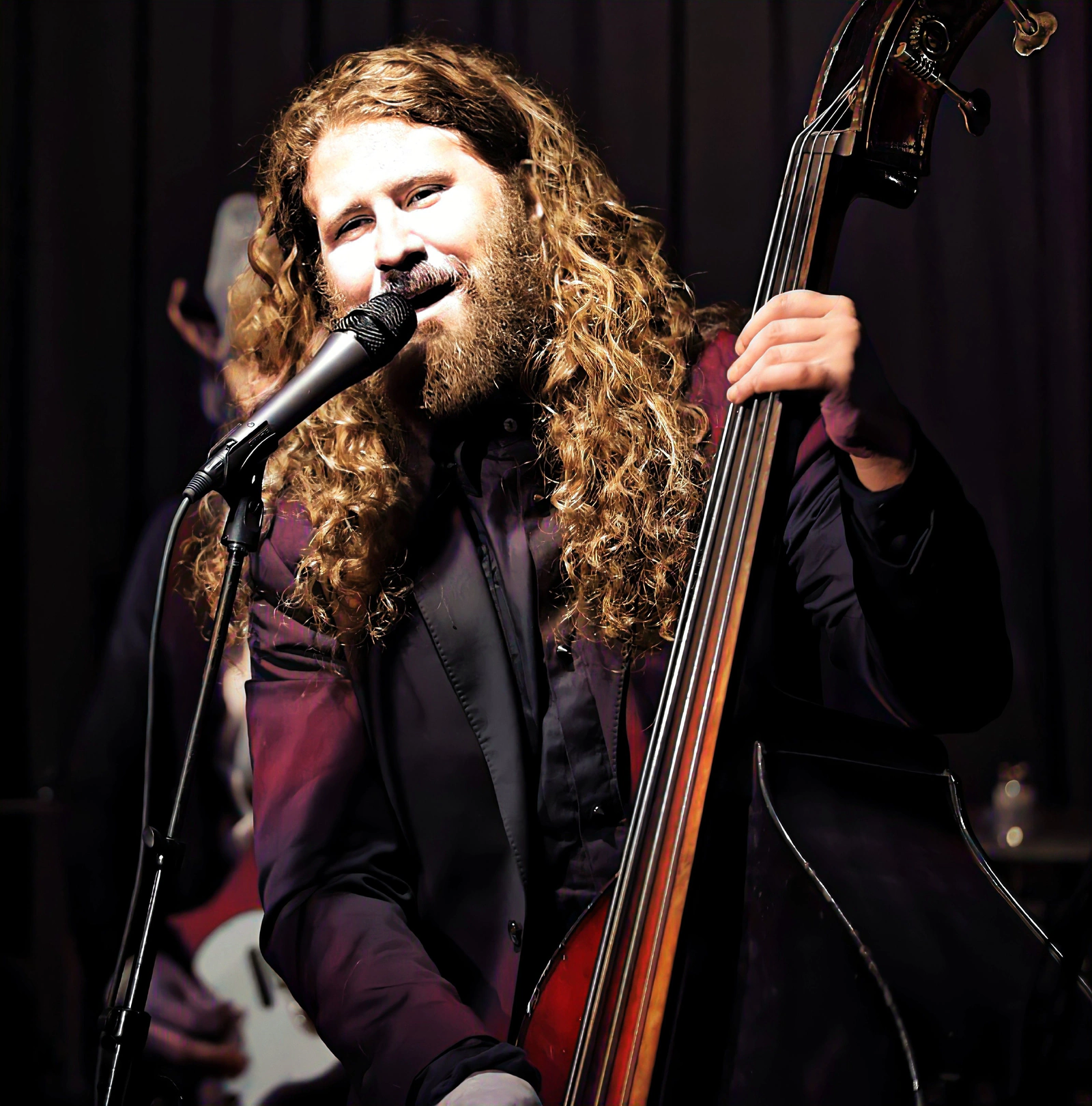
Attr: Justin Higuchi, CC BY 2.0
| 11 Quotes | |
| Occup. | Musician |
| From | USA |
| Born | February 12, 1991 Los Angeles, California, USA |
| Age | 35 years |
| Cite | |
Citation Formats
APA Style (7th ed.)
Casey abrams biography, facts and quotes. (2026, February 11). FixQuotes. https://fixquotes.com/artists/casey-abrams/
Chicago Style
"Casey Abrams biography, facts and quotes." FixQuotes. February 11, 2026. https://fixquotes.com/artists/casey-abrams/.
MLA Style (9th ed.)
"Casey Abrams biography, facts and quotes." FixQuotes, 11 Feb. 2026, https://fixquotes.com/artists/casey-abrams/. Accessed 1 Apr. 2026.
Early Life and Education
Casey Abrams, born in 1991 in the United States, emerged early as a multi-instrumentalist with an ear for jazz harmony and an instinct for playful improvisation. He grew up in Southern California and trained at the Idyllwild Arts Academy, an environment where classical rigor and jazz freedom intersected daily. Surrounded by peers devoted to music and mentors who encouraged experimentation, he gravitated to the upright bass as his signature instrument while also developing fluency on piano, guitar, and melodica. By the time he reached college age, he was gigging, arranging, and internalizing the language of standards, blues, and soul alongside more contemporary pop influences. That blend would become his public calling card: a bassist-vocalist who could anchor an ensemble and simultaneously front it with warmth, humor, and swing.Breakthrough on American Idol
Abrams gained national attention in 2011 on Season 10 of American Idol. He arrived as a musician first and foremost, often reimagining well-known songs with walking bass lines, scat interludes, and jazz-inflected phrasing unusual for the prime-time stage. The judging panel of Steven Tyler, Jennifer Lopez, and Randy Jackson responded to his musicianship and individuality, and music executive Jimmy Iovine helped shape arrangements behind the scenes. In a memorable moment that underscored his artistic promise, the judges used their lone "save" of the season to keep him in the competition after an elimination scare. Abrams ultimately finished in the Top 6, a placement that landed him on the American Idols Live! Tour alongside Scotty McCreery, Lauren Alaina, Haley Reinhart, James Durbin, and others. The tour affirmed his ability to connect with large audiences while remaining unmistakably himself.Health Challenges and Advocacy
During the show, Abrams publicly faced the realities of ulcerative colitis, a chronic condition that at times required hospitalization. Rather than recede from view, he used the platform to demystify the illness, later partnering with the Crohn's & Colitis Foundation to raise awareness. His advocacy emphasized resilience and the importance of access to care, and it demonstrated how an entertainer's visibility can reduce stigma around invisible illnesses. Fans who discovered him through his music came to know him as a candid and empathetic public voice on health.Recording Career and Collaborations
After Idol, Abrams released a self-titled debut album in 2012, translating the spontaneity of his live persona into studio form with a mix of originals and tastefully chosen covers. The record introduced him more broadly as a songwriter, not just an interpreter. He continued to release projects over the following years, leaning into jazz-pop crossover material and acoustic-focused sessions that showcased the grain of his voice and the physicality of the upright bass.Collaboration became a defining feature of his post-Idol life. He reunited often with Haley Reinhart, whose smoky timbre and retro sensibility paired naturally with his bass-and-bop approach; their duets highlighted a conversational vocal chemistry honed on the TV stage and deepened on tour. Abrams also became a recurring featured artist with Scott Bradlee's Postmodern Jukebox, the ever-evolving collective that reframes contemporary hits through vintage styles. With Bradlee curating arrangements and a cadre of rotating singers and players, Abrams slipped easily between roles: anchoring grooves on bass, delivering lead vocals, or adding harmonies and comedic touches. PMJ's global tours and viral videos extended his reach to listeners who might not have discovered him through Idol, and they reinforced his core identity as a genre-bridging entertainer.
Artistry and Instruments
Abrams is best understood as a musician who sings, rather than a singer who happens to play. His upright bass lines are melodic and percussive, often doubling as a counter-voice to his lead. He favors dynamic contrast: quiet, intimate phrases that bloom into full-voice exclamations; a pocketed groove that suddenly yields to scat figures tracing the chord changes. The melodica, an instrument he brought to wide attention on television, became another color in his palette, connecting the playful spirit of street performance to the sophistication of small-group jazz. Onstage he projects lightness and humor, but the underlying craft, time feel, arranging smarts, and a respect for song form, is meticulous.Community, Mentors, and Peers
The people around Abrams have been central to his development and visibility. On Idol, Steven Tyler, Jennifer Lopez, and Randy Jackson amplified his credibility by treating his jazz instincts as an asset rather than a novelty. Jimmy Iovine's guidance reminded viewers that pop artistry includes arranging and ensemble leadership, not just vocal fireworks. Touring with peers like Scotty McCreery and Lauren Alaina proved he could adapt his club-ready sensibility to arenas. In the years that followed, Haley Reinhart remained a close collaborator, their voices interlocking in ballads and swing numbers with an ease that suggested shared references and mutual trust. With Scott Bradlee steering Postmodern Jukebox's aesthetic, Abrams found an artistic home that celebrated his hybrid interests and welcomed his multi-instrumental approach.Continuing Work and Influence
Abrams has continued to record, tour, and appear in performance videos that emphasize musicality over spectacle. He alternates between intimate venues, where the wood of the bass and the air of the room shape the sound, and theaters with full-band energy. His discography, including a self-titled debut and later jazz-oriented releases, reflects curiosity rather than a fixed brand: originals that flirt with pop hooks, standards reframed with modern pocket, and audiophile-leaning sessions that capture the natural resonance of voice and strings.His influence rests less on chart metrics than on the example he sets for young musicians who do not fit neatly into genre boxes. Abrams demonstrates that a bassist can front a band, that humor and seriousness can coexist onstage, and that mainstream platforms can accommodate sophisticated musical ideas when presented with charisma and care. By building durable relationships, with collaborators like Haley Reinhart and Scott Bradlee, with audiences who follow him from club to screen, and with organizations advancing health advocacy, he has carved a career defined by craft, connection, and resilience.
Our collection contains 11 quotes written by Casey, under the main topics: Witty One-Liners - Music - Success - Dog - Contentment.
Other people related to Casey: Pia Toscano (Musician)
Source / external links