
Cat Stevens Biography Quotes 41 Report mistakes
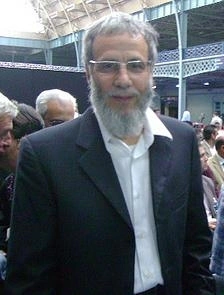
| 41 Quotes | |
| Occup. | Musician |
| From | United Kingdom |
| Born | July 21, 1948 |
| Age | 77 years |
| Cite | |
Citation Formats
APA Style (7th ed.)
Cat stevens biography, facts and quotes. (2026, February 11). FixQuotes. https://fixquotes.com/artists/cat-stevens/
Chicago Style
"Cat Stevens biography, facts and quotes." FixQuotes. February 11, 2026. https://fixquotes.com/artists/cat-stevens/.
MLA Style (9th ed.)
"Cat Stevens biography, facts and quotes." FixQuotes, 11 Feb. 2026, https://fixquotes.com/artists/cat-stevens/. Accessed 24 Mar. 2026.
Early Life and Background
Steven Demetre Georgiou was born on July 21, 1948, in Marylebone, London, and grew up above the family restaurant in the West End. His father, Stavros, was a Greek Cypriot immigrant; his mother, Ingrid Wickman, was Swedish. The household was worldly and working-class-entrepreneurial: the scents and noise of a public dining room downstairs, the private discipline of a family trying to make London pay upstairs. That early mixture of migrant identity, commerce, and city bustle later echoed in his songs, where domestic scenes sit beside wide moral questions.London in the 1950s and 1960s was remaking itself, and the Georgiou boy absorbed its quickened tempo - skiffle, early rock, and the folk revival moving through clubs and radios. He began writing songs as a teenager, busking and gigging while still young enough to be half protected, half exposed. The stage name Cat Stevens, adopted as he entered the professional music world, suited the era's appetite for personas, yet it also gave him a mask for shyness and sensitivity: a public animal-name for a private observer.
Education and Formative Influences
He attended St Joseph's Roman Catholic Primary School and later Hammersmith School of Art, leaving to pursue music full time as the 1960s pop economy offered fast lanes to fame. Songcraft came from a blend of Tin Pan Alley-style structure, British folk storytelling, and a keen ear for melodic hooks, while his reading and listening pushed toward spiritual and philosophical questions - questions sharpened by illness when, in 1968, he contracted tuberculosis and spent months recovering, a forced pause that widened his inner horizon and altered his sense of time, purpose, and fragility.Career, Major Works, and Turning Points
Signed to Deram, he broke through with early hits like "Matthew and Son" and "I'm Gonna Get Me a Gun" (1967), then re-emerged after recovery with a quieter, deeper sound: "Mona Bone Jakon" (1970) set the template, and "Tea for the Tillerman" (1970) and "Teaser and the Firecat" (1971) made him a defining singer-songwriter of the era, with songs such as "Wild World", "Father and Son", "Peace Train", and "Morning Has Broken" becoming standards. After "Catch Bull at Four" (1972) and a run of successful 1970s albums and tours, a near-drowning in 1976 intensified his spiritual searching; in 1977 he embraced Islam, took the name Yusuf Islam, and in 1978 stepped away from mainstream pop stardom. He later devoted substantial energy to family life, education, philanthropy, and interfaith work, returning gradually to recording and touring in the 2000s under names including Yusuf and Yusuf/Cat Stevens, with "An Other Cup" (2006) marking a renewed public musical chapter.Philosophy, Style, and Themes
At his best, Stevens wrote with the deceptive clarity of a bedtime parable that turns, mid-verse, into an adult reckoning. The songs are built from simple chordal frames, intimate vocal phrasing, and acoustic timbres - but the emotional logic is sophisticated: innocence pressed against consequence, freedom argued with responsibility, the self interrogated by conscience. "Father and Son" stages an internal courtroom where neither side fully wins; "The Wind" reduces ego to weather; "Peace Train" turns political desire into communal sing-along, making moral hope feel physically shareable.His later life adds a second interpretive layer: the same writer who once insisted on personal authenticity learned how identity can be both chosen and contested in public. The bittersweet hindsight in his writing finds a precise echo in the confession, “I always knew looking back on my tears would bring me laughter, but I never knew looking back on my laughter would make me cry”. Faith, for Yusuf Islam, is not presented as anti-intellectual refuge but as disciplined attention; he has described revelation as a call to thought: “This is the beauty of the Qur'an: it asks you to reflect and reason, and not to worship the sun or moon but the One who has created everything”. That insistence on reflection sits beside his public optimism - the stubborn, storybook conviction that history can bend toward repair: “I am confident that, in the end, common sense and justice will prevail. I'm an optimist, brought up on the belief that if you wait to the end of the story, you get to see the good people live happily ever after”. Together, these lines map a psychology that seeks harmony without denying loss: a temperament drawn to reconciliation, yet repeatedly tested by fame, controversy, and the long aftershocks of a single decision to change his life.
Legacy and Influence
Cat Stevens/Yusuf Islam endures as a key architect of the modern singer-songwriter vocabulary: concise melodies that carry ethical weight, and narratives that feel private while speaking for crowds. His 1970s catalog has been endlessly covered and sampled, influencing artists across folk, pop, rock, and indie, while his public transformation has made him a lasting case study in the collision of art, belief, and media framing. In an era that often treats identity as branding, his life argues that inner life is destiny - that a hitmaker can choose silence, service, and then, years later, return to song with the same aim that powered the early classics: to make meaning audible.Our collection contains 41 quotes written by Cat, under the main topics: Ethics & Morality - Justice - Music - Freedom - Equality.
Other people related to Cat: Herb Alpert (Musician)
Source / external links