
Cecil Taylor Biography Quotes 7 Report mistakes
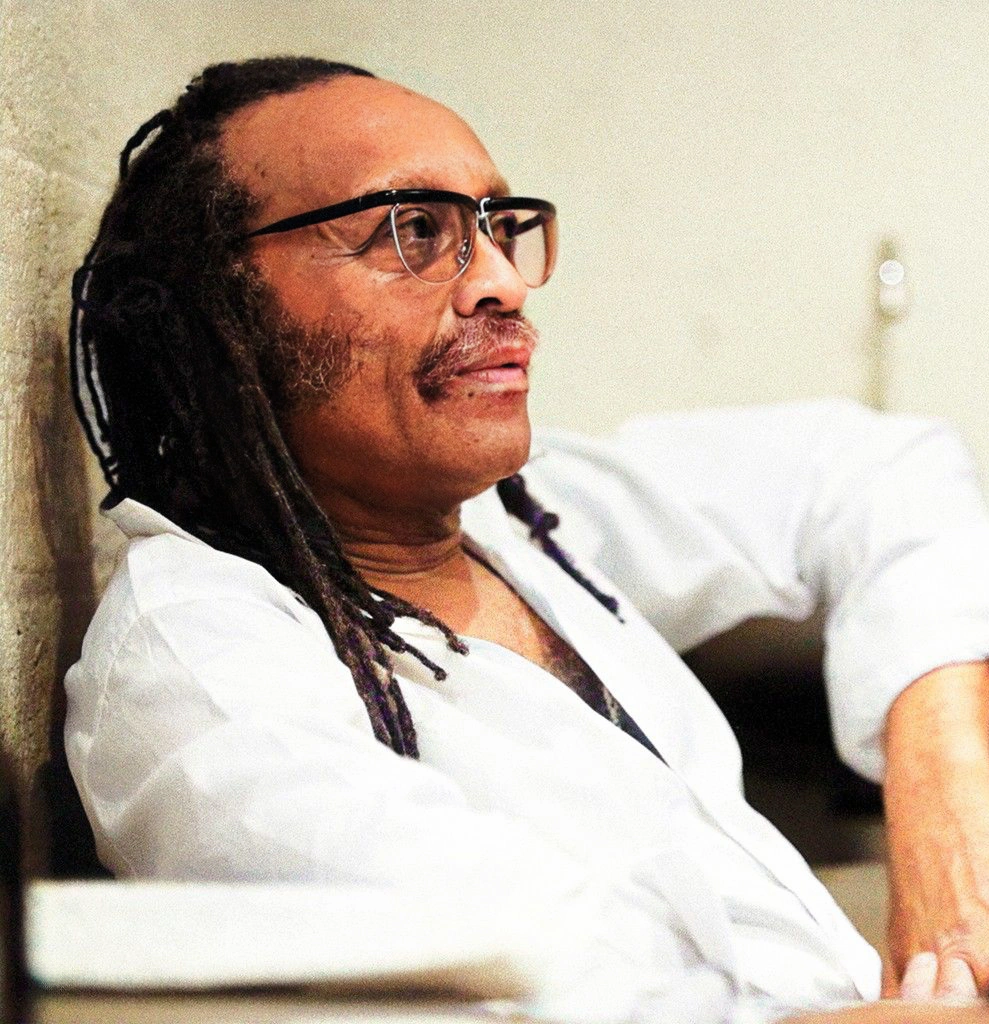
| 7 Quotes | |
| Born as | Cecil Percival Taylor |
| Occup. | Musician |
| From | USA |
| Born | March 25, 1929 Long Island City, New York, USA |
| Died | April 5, 2018 Brooklyn, New York, USA |
| Aged | 89 years |
| Cite | |
Citation Formats
APA Style (7th ed.)
Cecil taylor biography, facts and quotes. (2026, February 11). FixQuotes. https://fixquotes.com/artists/cecil-taylor/
Chicago Style
"Cecil Taylor biography, facts and quotes." FixQuotes. February 11, 2026. https://fixquotes.com/artists/cecil-taylor/.
MLA Style (9th ed.)
"Cecil Taylor biography, facts and quotes." FixQuotes, 11 Feb. 2026, https://fixquotes.com/artists/cecil-taylor/. Accessed 12 Feb. 2026.
Early Life and Education
Cecil Percival Taylor was born on March 25, 1929, in the Long Island City neighborhood of Queens, New York. He began playing piano as a child and was guided early toward rigorous classical training, developing a command of touch, timbre, and dynamics that would remain central to his music. As a teenager he absorbed stride and swing piano from records by Duke Ellington and other bandleaders, while also studying modern European concert music. He attended the New York College of Music and later the New England Conservatory, focusing on harmony, theory, and composition. That mixture of traditions shaped the foundation of a pianist and composer who sought to treat the instrument not only as a melodic vehicle but also as a full orchestral palette.Emergence and First Recordings
By the mid-1950s Taylor was leading ensembles in New York and recording music that sounded strikingly different from the prevailing idioms. His debut album, Jazz Advance (1956), announced a pianist whose approach was percussive yet lyrical, harmonically adventurous, and uninterested in conventional chorus structures. Soon after, he appeared at the Newport Jazz Festival, working with soprano saxophonist Steve Lacy, and recorded Looking Ahead! (1958), which broadened his sonic world by placing the piano in dialogue with vibraphone, bass, and drums. In 1958 he also took part in a notable studio date with John Coltrane, later issued as Coltrane Time, with trumpeter Kenny Dorham, bassist Chuck Israels, and drummer Louis Hayes. The session placed Taylor in a setting closer to hard bop, underscoring the extent to which his vocabulary could intersect with, yet also push against, mainstream practice.Language and Aesthetic
Taylor developed a fiercely personal pianism built on layered rhythms, tone clusters, and long-arc development. He favored cumulative momentum over theme-solo-theme formats, building improvisations that unfolded like suites. He spoke of forms as unit structures, modular ideas that could be combined, superimposed, or reconfigured in real time. His classical training informed his precise control of attack and pedaling, while the jazz tradition grounded his sense of pulse, swing, and call-and-response. He was also a poet who frequently read or chanted his own texts before or during performances, positioning sound, movement, and language as parts of a single expressive continuum.The Unit and Blue Note Period
The enduring core of Taylor's performing life coalesced in the early 1960s with alto saxophonist Jimmy Lyons, whose incisive, bright tone and deep bebop lineage provided a tensile melodic counterweight to the piano's dense harmonies. Drummer Sunny Murray brought a free-floating, coloristic approach that loosened timekeeping and helped define the trio sound documented on the live recordings from Copenhagen, including Nefertiti, the Beautiful One Has Come. By the mid-1960s the drummer's chair passed to Andrew Cyrille, a meticulous and intensely responsive partner. With Lyons and Cyrille as anchors, Taylor recorded the landmark Blue Note albums Unit Structures and Conquistador! (both 1966). Those sessions, featuring colleagues such as trumpeter Eddie Gale, trumpeter-composer Bill Dixon, and bassists Henry Grimes and Alan Silva, distilled Taylor's idea of ensemble motion as a living architecture, allowing multiple tempos, densities, and lines of energy to coexist.Solo Concerts and Expanding Ensembles
Beginning in the late 1960s and early 1970s, Taylor increasingly presented solo recitals that revealed the breadth of his approach. Indent (recorded 1973) and the Montreux concert released as Silent Tongues (1974) displayed how he could sustain narrative sweep and structural logic alone at the piano, using dynamics, register, and motivic development to shape large forms. At the same time, he continued to refine his Unit ensembles and to assemble larger groups for special projects, sometimes incorporating voice and dance. A major retrospective came with the extended series in Berlin in 1988, which captured him in solo, small-group, and large-ensemble contexts and documented his music's range across many nights of performance.Collaborations, Teaching, and Later Groups
Taylor valued creative equals who could confront and redirect his energy. Beyond his central partnerships with Jimmy Lyons, Sunny Murray, and Andrew Cyrille, he found decisive collaborators in drummer Max Roach, with whom he recorded the duo set Historic Concerts in 1979, and in later years with the Feel Trio, featuring bassist William Parker and drummer Tony Oxley. The Feel Trio's extended performances highlighted Taylor's capacity for spontaneous form, with Parker's grounded resonance and Oxley's timbral inventions creating a highly charged, elastic field. He also appeared in the trio setting with saxophonist Dewey Redman and drummer Elvin Jones on Momentum Space, an encounter that brought together three powerful improvisers from different corners of the music. Throughout the 1970s he held teaching and residency posts, including at the University of Wisconsin and Antioch College, where he led workshops that emphasized listening, disciplined practice, and the shared construction of form.Recognition and Influence
Though initially polarizing, Taylor's work steadily earned wide recognition for its originality and rigor. He was named a MacArthur Fellow in 1991, an affirmation of his stature as a major American artist, and in 2014 he received the Kyoto Prize in Arts and Philosophy. Pianists across idioms studied his command of touch and structure, while drummers and bassists learned new ways to conceive time and texture from his exchanges with partners like Andrew Cyrille, Sunny Murray, William Parker, and Tony Oxley. Composers and improvisers alike took up his notion of unit structures, finding in it a method to balance freedom with design. Those who worked closely with him often stressed the discipline behind the apparent turbulence: a focus on preparation, breath, and the physical intelligence of the hands.Final Years and Legacy
Taylor continued to perform and to present his poetry well into his eighties, appearing in solo recitals and in special ensemble projects in the United States and Europe. He died in Brooklyn on April 5, 2018, at the age of 89. By then his music had reshaped the possibilities for jazz piano and ensemble improvisation, offering a model of how tradition and experiment can inhabit the same body of work. The community of musicians who surrounded him over decades, from Jimmy Lyons and Andrew Cyrille to Max Roach, William Parker, Tony Oxley, and many others, helped illuminate the depth of his vision. His recordings, writings, and the memory of his commanding stage presence continue to challenge and inspire, affirming Cecil Taylor as one of the essential figures in twentieth- and early twenty-first-century music.Our collection contains 7 quotes written by Cecil, under the main topics: Art - Music - Life - Free Will & Fate.
Other people related to Cecil: Tom Wilson (Cartoonist), Archie Shepp (Musician), Matthew Shipp (Musician), Mary Lou Williams (Musician)
Source / external links