
David Bowie Biography Quotes 32 Report mistakes
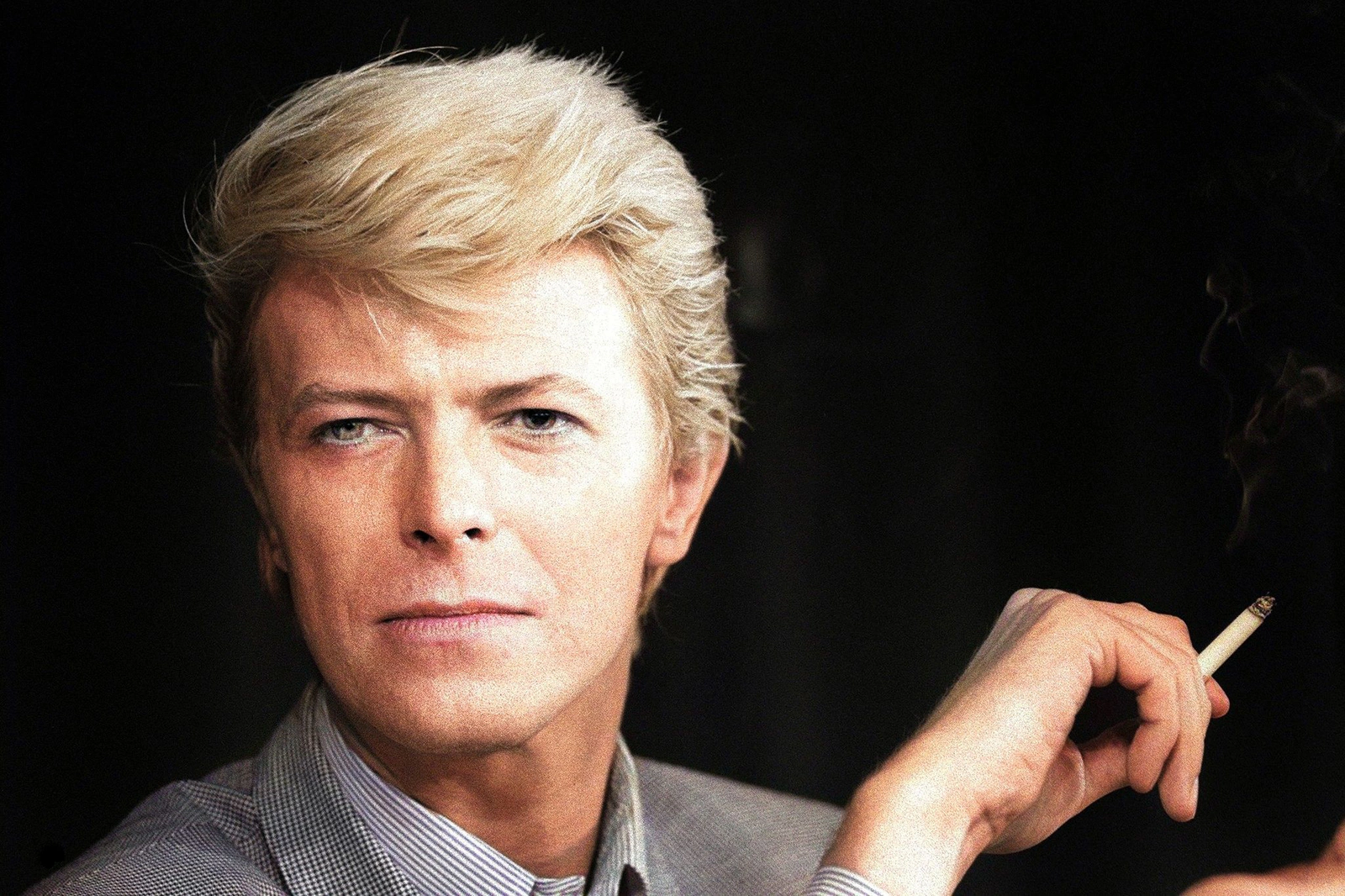
| 32 Quotes | |
| Born as | David Robert Jones |
| Occup. | Musician |
| From | United Kingdom |
| Born | January 8, 1947 Brixton, London, England |
| Died | January 10, 2016 New York City, USA |
| Cause | Liver cancer |
| Aged | 69 years |
| Cite | |
Citation Formats
APA Style (7th ed.)
David bowie biography, facts and quotes. (2026, February 11). FixQuotes. https://fixquotes.com/artists/david-bowie/
Chicago Style
"David Bowie biography, facts and quotes." FixQuotes. February 11, 2026. https://fixquotes.com/artists/david-bowie/.
MLA Style (9th ed.)
"David Bowie biography, facts and quotes." FixQuotes, 11 Feb. 2026, https://fixquotes.com/artists/david-bowie/. Accessed 25 Mar. 2026.
Early Life and Background
David Robert Jones was born on 1947-01-08 in Brixton, South London, into a Britain still ration-scarred and rebuilding its self-image. His mother, Margaret "Peggy" Jones, worked as a waitress and later as a cinema usher; his father, Haywood Stenton "John" Jones, was a promotions officer for the children's charity Barnardo's. Bowie grew up largely in Bromley, Kent, absorbing the postwar spread of American music and style that seeped through radio, film, and imported records. Early on, he showed the alertness of a boy watching culture change in real time, and he learned to treat identity not as a fixed inheritance but as something you could choose, edit, and perform.A defining rupture came in his teens: a fight with a friend left him with a permanently dilated pupil, a visible asymmetry that fed the sense of being marked out. More consequential was the family history of mental illness - most painfully in his half-brother Terry Burns, whose schizophrenia shaped Bowie's imagination and fear. Terry introduced him to jazz, poetry, and the idea that art could be both escape and map. In Bowie's inner life, ambition and dread braided together: the hunger to become unmissable, and the knowledge that the mind can fracture under pressure.
Education and Formative Influences
He attended Bromley Technical High School, studying art, music, and design at a moment when British youth culture was exploding from skiffle to mod to psychedelia. Bowie's apprenticeship ran through saxophone practice, Little Richard-style theatrics, Anthony Newley-inflected vocal phrasing, and a fascination with mime and movement learned from Lindsay Kemp, whose theatrical discipline sharpened Bowie's sense that gesture could carry narrative. The London of the 1960s taught him to read subcultures as languages - clothes, hair, slang, and sound - and to treat the studio and the stage as laboratories for self-invention.Career, Major Works, and Turning Points
After early singles and the self-titled 1967 album failed to ignite, Bowie re-emerged with "Space Oddity" (1969), an uncanny hit that matched the moon-landing era's awe and unease. The breakthrough became a reinvention: the glam-rock Ziggy Stardust persona and The Rise and Fall of Ziggy Stardust and the Spiders from Mars (1972) turned rock stardom into science-fiction theater, followed by Aladdin Sane (1973) and Diamond Dogs (1974), which fused dystopian satire with arena spectacle. He pivoted to American soul on Young Americans (1975) and then to the cold, cocaine-lit paranoia of Station to Station (1976), before fleeing Los Angeles for Berlin with Iggy Pop to regain control. The "Berlin Trilogy" - Low (1977), "Heroes" (1977), Lodger (1979) - with Brian Eno and Tony Visconti, expanded pop into ambient, fractured song forms, and studio modernism. The 1980s brought global scale with Scary Monsters (and Super Creeps) (1980) and Let's Dance (1983), then a long mid-career struggle between mass success and artistic restlessness, including Tin Machine and later late-career resurgence with Heathen (2002) and Reality (2003). After a 2004 health scare, he largely withdrew until the surprise return of The Next Day (2013), and he turned his final months into art with Blackstar (2016), released two days before his death on 2016-01-10 in New York City.Philosophy, Style, and Themes
Bowie's method was metamorphosis with a craftsman's discipline: he treated persona as a tool to expose the era's desires and its anxieties. Under the costumes was a songwriter attuned to harmony as emotional argument; he believed music could carry what ordinary speech could not. “There, in the chords and melodies, is everything I want to say. The words just jolly it along. It's always been my way of expressing what for me is inexpressible by any other means”. That admission is psychological as much as aesthetic - a confession of guardedness, and of a man who translated feeling into timbre, interval, and arrangement when direct confession felt too blunt or too risky.His themes returned obsessively to fame as possession and performance, the body as a mutable surface, and time as a strange loop where beginnings and endings coexist. “The truth is of course is that there is no journey. We are arriving and departing all at the same time”. In practice, that meant albums that behave like simultaneous diaries and masks: the alien visitor who is also the lonely boy; the decadent duke who is also a warning; the late work that treats mortality not as closure but as structure. Yet for all the avant-garde strategies, he kept a stubborn ethical reflex against cynicism, a survival skill learned in the volatile weather of celebrity and self-doubt. “I've never responded well to entrenched negative thinking”. The line reads like a private rule - a way of staying mobile, refusing the paralysis that haunted his family history and his own periods of excess.
Legacy and Influence
Bowie, a musician from the United Kingdom, left a template for modern pop as an art of curated identity: not authenticity versus artifice, but authenticity expressed through artifice skillfully chosen. He widened what a mainstream artist could contain - kabuki and Kraftwerk, soul and ambient, outsider narrative and radio craft - and normalized the idea that reinvention is not betrayal but vocabulary. His influence runs through post-punk, new romantic, alternative rock, electronic music, fashion, video, and performance art; his catalog remains a reference library for artists who want to be both popular and strange. If his final gift was Blackstar's measured confrontation with death, the larger inheritance is the permission he gave generations: to redesign the self, to make style carry meaning, and to treat creativity as a lifelong, shape-shifting practice.Our collection contains 32 quotes written by David, under the main topics: Witty One-Liners - Truth - Art - Music - Mortality.
Other people related to David: Brian Molko (Musician), Slash (Musician), John Deacon (Musician), Robert Fripp (Musician), Iggy Pop (Musician), Tommy Hilfiger (Designer), Michael Parkinson (Journalist), Scott Weiland (Musician), Andrew Eldritch (Musician), David Sanborn (Musician)
Source / external links