
David Gilmour Biography Quotes 10 Report mistakes
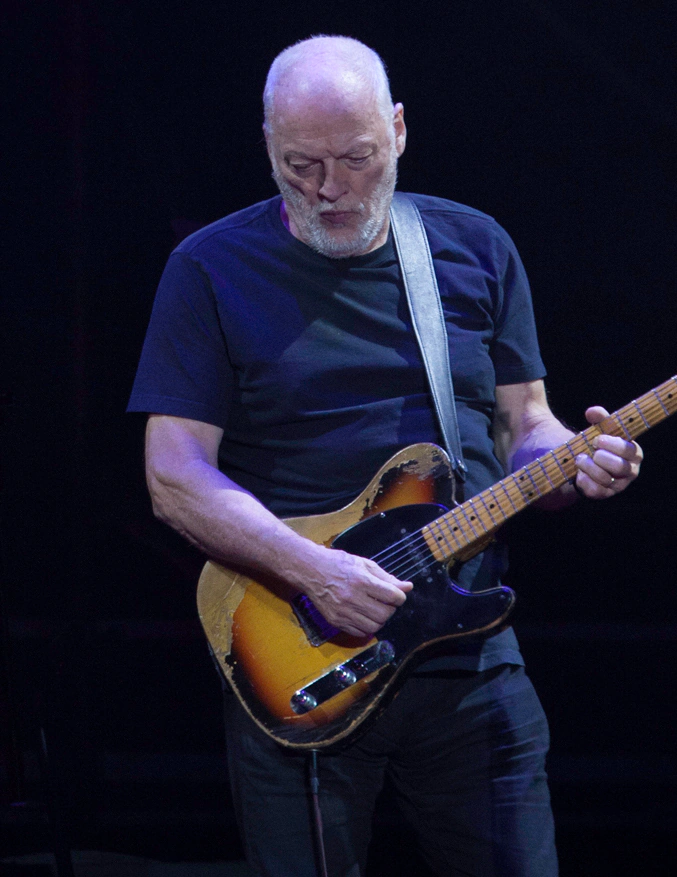
Attr: Jimmy Baikovicius, CC BY-SA 2.0
| 10 Quotes | |
| Born as | David Jon Gilmour |
| Occup. | Musician |
| From | United Kingdom |
| Born | March 6, 1946 Cambridge, England |
| Age | 80 years |
| Cite | |
Citation Formats
APA Style (7th ed.)
David gilmour biography, facts and quotes. (2026, February 11). FixQuotes. https://fixquotes.com/artists/david-gilmour/
Chicago Style
"David Gilmour biography, facts and quotes." FixQuotes. February 11, 2026. https://fixquotes.com/artists/david-gilmour/.
MLA Style (9th ed.)
"David Gilmour biography, facts and quotes." FixQuotes, 11 Feb. 2026, https://fixquotes.com/artists/david-gilmour/. Accessed 27 Mar. 2026.
Early Life and Background
David Jon Gilmour was born on 1946-03-06 in Cambridge, England, into a postwar Britain reshaped by austerity, new universities, and the expanding possibilities of youth culture. His father, Douglas Gilmour, lectured in zoology at the University of Cambridge; his mother, Sylvia, worked as a teacher and film editor at the BBC. That mix of scientific rigor and broadcast-era imagination mattered: Gilmour grew up in a home where curiosity was ordinary and the wider world arrived through radio, records, and the steady hum of cultural change.Cambridge in the late 1950s and early 1960s offered both tradition and escape routes. Skiffle and early rock-and-roll filtered into school halls; American blues and British beat groups became a private education for teenagers with guitars. Gilmour gravitated toward sound as a craft, not a stage identity, developing an ear for tone and dynamics that would later define him. He was also close to two fellow Cambridge students, Syd Barrett and Roger Waters, friendships that formed before fame and later complicated it when their band became a public drama.
Education and Formative Influences
Gilmour attended the Perse School in Cambridge, where he and Barrett shared a fascination with guitars, records, and the new electric vocabulary of the era. He absorbed blues and rock players - notably B.B. King, Hank Marvin, and later Jimi Hendrix - but also learned by doing: playing in local groups such as Joker's Wild and working in the same informal circuit that trained many British musicians. In 1967-1968 he traveled and busked in France, living cheaply and learning resilience, timing, and the social psychology of performance: how to hold attention without spectacle, and how to communicate mood with touch.Career, Major Works, and Turning Points
In January 1968 Gilmour joined Pink Floyd as Syd Barrett's health deteriorated, first as a support guitarist and then, within weeks, as a necessary replacement; the shift turned a psychedelic London club sensation into a band forced to reinvent itself. Over the next decade he became one of rock's most identifiable lead guitar voices, shaping the long-form architectures of Meddle (1971) and The Dark Side of the Moon (1973), then adding emotional narrative weight to Wish You Were Here (1975) and Animals (1977). The 1979-1983 period intensified internal conflict: The Wall (1979) and The Final Cut (1983) reflected Roger Waters' dominance, while Gilmour's playing supplied the human ache within the concepts. After Waters left in 1985, Gilmour assumed leadership through legal and artistic battles, steering A Momentary Lapse of Reason (1987) and The Division Bell (1994) into stadium-scale returns and culminating in the 2005 Live 8 reunion. His solo work - David Gilmour (1978), About Face (1984), On an Island (2006), Rattle That Lock (2015) - emphasized melody, patience, and the pursuit of fresh colors over reinvention-by-shock, while his work for charity and his long stewardship of sound and production reinforced his reputation as a musician's musician.Philosophy, Style, and Themes
Gilmour's public persona has often seemed understated beside Pink Floyd's mythology, but his art reveals a precise inner life: a temperament drawn to clarity, emotional candor, and the slow accrual of meaning. He consistently frames music as a living organism rather than a monument - “Music is an art form that's always changing and evolving. It's never static, and that's what makes it so exciting”. That belief explains his refusal to treat signature tone as a museum piece: even when fans wanted the same solos again, he tended to adjust phrasing, sustain, and texture in live settings, chasing the feeling rather than the replica.His style is defined by space and intention: long bends that arrive like sentences, vibrato used as punctuation, and a willingness to let silence do narrative work. The psychological core is a craftsman's ethic paired with guarded vulnerability. “When you're making music, the only thing that matters is the result, the sound. Everything else is just a means to an end”. In Pink Floyd, this translated into guitar lines that functioned as character - the consoling voice in "Comfortably Numb", the bruised tenderness in "Shine On You Crazy Diamond", the slow-burning accusation in "Dogs". Gilmour also embraces intuition over doctrine; “I don't write lyrics. I write music, and then I listen to it and try to figure out what it's saying”. That approach makes his playing feel like interior monologue: less about display than about discovering, in real time, what the song is trying to confess.
Legacy and Influence
Gilmour endures as a defining architect of modern guitar emotion: a player whose influence is audible in generations of rock, ambient, and post-rock musicians who value tone, restraint, and melodic storytelling over speed. He helped Pink Floyd bridge psychedelic experimentation, studio modernism, and mass-cultural reach, proving that atmosphere could be as commercially potent as hooks when married to craft. Beyond technique, his legacy is ethical: a model of leadership that often favored sound over spectacle, and a reminder that the most lasting rock voices are not the loudest, but the most psychologically legible - the ones that make private feeling feel shared.Our collection contains 10 quotes written by David, under the main topics: Music - Meaning of Life - Self-Improvement.
Other people related to David: Roy Harper (Musician), Peter Munk (Businessman)
Source / external links