
Dee Dee Ramone Biography Quotes 11 Report mistakes
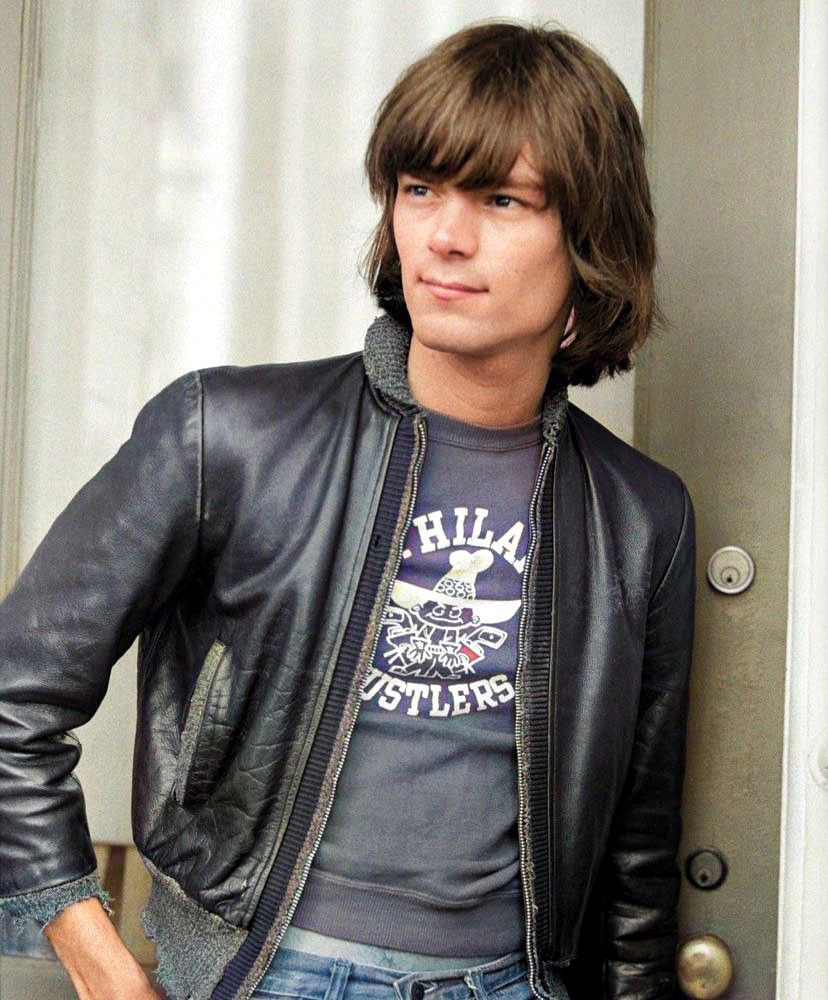
| 11 Quotes | |
| Born as | Douglas Glenn Colvin |
| Occup. | Musician |
| From | USA |
| Spouse | Barbara Zampini |
| Born | September 18, 1952 Fort Lee, Virginia, USA |
| Died | June 5, 2002 Hollywood, California, USA |
| Cause | Heroin overdose |
| Aged | 49 years |
| Cite | |
Citation Formats
APA Style (7th ed.)
Dee dee ramone biography, facts and quotes. (2026, March 20). FixQuotes. https://fixquotes.com/artists/dee-dee-ramone/
Chicago Style
"Dee Dee Ramone biography, facts and quotes." FixQuotes. March 20, 2026. https://fixquotes.com/artists/dee-dee-ramone/.
MLA Style (9th ed.)
"Dee Dee Ramone biography, facts and quotes." FixQuotes, 20 Mar. 2026, https://fixquotes.com/artists/dee-dee-ramone/. Accessed 27 Mar. 2026.
Early Life and Background
Douglas Glenn Colvin was born on September 18, 1951, in Fort Lee, Virginia, though his public biography often circulated the date 1952. He became Dee Dee Ramone, the most combustible original Ramone - bassist, songwriter, yelper, street poet, and self-created delinquent saint of American punk. His childhood was unsettled almost from the start. His father was an American soldier, his mother a German woman he met while stationed in Europe, and the family moved between the United States and Germany before settling for a time in Berlin. That divided upbringing mattered. Postwar Germany exposed him to the psychic residue of ruin and authority; America, when he returned, offered no stable counterweight. He grew up amid military discipline, family strain, and economic insecurity, conditions that sharpened both his defiance and his craving for structure.
When the family relocated to Forest Hills, Queens, the outer shape of the future Ramones came into view, but Dee Dee's inner life remained volatile. He struggled with alienation, petty crime, drugs, and periods of near-feral independence while still young. The neighborhood was middle-class on paper, yet for him it became a theater of exclusion, boredom, and fantasy. He absorbed comic books, horror imagery, bubblegum hooks, 1960s radio, and the stripped-down glamour of street toughness. Even before fame, he had the split consciousness that would define him: impulsive and self-mocking, sentimental and self-destructive, capable of childish absurdity one moment and raw autobiographical clarity the next. That tension would become the emotional engine of both his songwriting and his public mythology.
Education and Formative Influences
Dee Dee's formal education was fragmentary and secondary to the education of the street, the record bin, and the band room. In New York he fell into a circle that included John Cummings and Thomas Erdelyi - later Johnny and Tommy Ramone - and shared with them a fascination with the speed, simplicity, and force of pre-arena rock: the Beatles in their lean early phase, the Beach Boys, girl groups, the Stooges, the New York Dolls, glam, garage rock, and comic-book caricature. He was not a theoretician of punk; he was one of its instinctive inventors. His fragmented German-American identity, his fascination with rhythm, and his appetite for repetition all fed into the Ramones' reductionist attack. He supplied not only bass lines but much of the band's first vocabulary: chant-like choruses, juvenile menace, deadpan humor, and a vision of urban life reduced to sirens, boredom, chemicals, and survival.
Career, Major Works, and Turning Points
In 1974 he co-founded the Ramones in Queens, taking the surname that linked the band into a single cartoon family. Though Joey soon became lead singer, Dee Dee remained central as bassist, count-off machine, and principal lyric writer on many foundational songs. On the 1976 debut Ramones and the albums that followed - Leave Home, Rocket to Russia, Road to Ruin, End of the Century, and beyond - he helped write or co-write songs that became the DNA of punk: "53rd & 3rd", "Commando", "Pinhead", "Rockaway Beach", "Chinese Rocks", and many others. His writing compressed addiction, hustling, violence, and infantile wit into miniatures of startling economy. Yet success never brought psychic stability. Heroin addiction, erratic behavior, and the exhausting discipline of Ramones life wore him down. He left the band in 1989, though he continued to write for them intermittently, and pursued solo projects that ranged from hard rock to the notorious rap experiment Standing in the Spotlight under the name Dee Dee King. Later records such as I Hate Freaks Like You and Hop Around showed that his melodic gift endured even when the marketplace had moved on. He also published the memoir Lobotomy: Surviving the Ramones, one of the most revealing self-portraits to emerge from punk. He died of a drug overdose in Los Angeles on June 5, 2002, after years of uneven recovery, cult reverence, and continued creation.
Philosophy, Style, and Themes
Dee Dee's art came from compression - short songs, blunt images, slogans that opened into autobiography. He wrote as if every line had to hit before consciousness collapsed. The Ramones' speed often disguises how much of his work is about shame, dependency, loneliness, and the seductions of numbness. "53rd & 3rd" is the clearest example: beneath the macho pose is a portrait of exposure and panic. He returned obsessively to institutions, uniforms, violence, intoxication, and juvenile identity because he experienced adulthood not as mastery but as an unstable costume. The famous Ramones style - hyper-simple, funny, brutal, catchy - was for Dee Dee a survival mechanism, a way to turn psychic disorder into repeatable form. His stage persona, all barked counts and twitch energy, gave chaos meter and ritual.
He was also more musically restless and psychologically porous than the Ramones brand allowed. “I got tired of the Ramones around the time I quit and I really got into rap. I thought it was the new punk rock. LL Cool J was my biggest idol”. That remark is revealing not as trend-chasing but as autobiography: Dee Dee was always searching for a form raw enough to match his nerves and immediate enough to outrun nostalgia. His self-parody could be a shield against humiliation - “I'd like to congratulate myself, and thank myself, and give myself a big pat on the back”. - but the joke also exposes a man trying to manufacture affirmation before the world can deny it. Even his practical aside, “I like the guitar better these days. I like the bass, too, but it's hard to fit a bass amp in a small car”. , carries his characteristic mixture of antic comedy and hard living: art reduced to portability, survival, and motion. Across his songs and interviews, the consistent theme is not rebellion in the abstract but endurance at street level.
Legacy and Influence
Dee Dee Ramone endures as one of punk's essential architects because he gave the genre both its velocity and much of its emotional content. Without his riffs, chants, and lyrical obsessions, the Ramones would still matter, but they would not feel as dangerous, funny, or wounded. Generations of punk, hardcore, alternative rock, and pop-punk musicians inherited his economy: say less, hit harder, make the hook childish enough to be immortal. Yet his deeper legacy lies in the permission he gave artists to be contradictory - tough and frightened, ridiculous and profound, self-invented yet autobiographically exposed. He remains a cult figure not only because he helped start a revolution, but because he never ceased sounding like someone trying to survive one minute at a time.
Our collection contains 11 quotes written by Dee, under the main topics: Music - Self-Love - Travel.
Other people related to Dee: Johnny Ramone (Musician), Richard Hell (Musician), Joey Ramone (Musician)
Source / external links