
Doc Severinsen Biography Quotes 6 Report mistakes
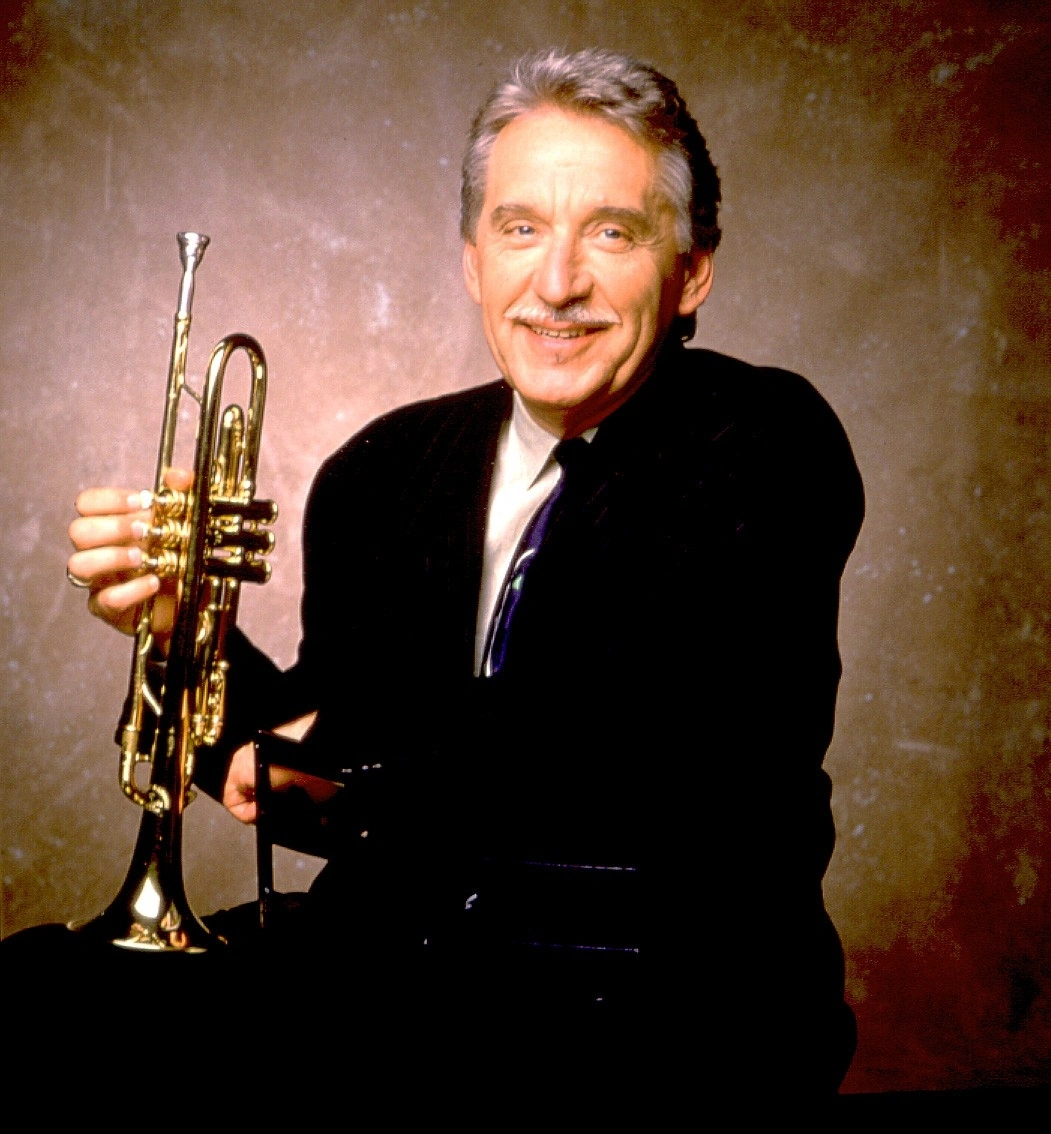
| 6 Quotes | |
| Born as | Carl Hilding Severinsen |
| Occup. | Musician |
| From | USA |
| Born | July 7, 1927 Arlington, Oregon |
| Age | 98 years |
| Cite | |
Citation Formats
APA Style (7th ed.)
Doc severinsen biography, facts and quotes. (2026, February 11). FixQuotes. https://fixquotes.com/artists/doc-severinsen/
Chicago Style
"Doc Severinsen biography, facts and quotes." FixQuotes. February 11, 2026. https://fixquotes.com/artists/doc-severinsen/.
MLA Style (9th ed.)
"Doc Severinsen biography, facts and quotes." FixQuotes, 11 Feb. 2026, https://fixquotes.com/artists/doc-severinsen/. Accessed 28 Mar. 2026.
Early Life and Background
Carl Hilding "Doc" Severinsen was born July 7, 1927, in Arlington, Oregon, a small Columbia River town where distance and self-reliance were facts of daily life. His father, an amateur dentist who played violin, and his mother, who encouraged music in the home, helped make sound and discipline inseparable early on. The nickname "Doc" arrived in childhood, attached to his precocious competence and a fast-growing local reputation that he could do grown-up work with a horn.In the Pacific Northwest of the Depression and wartime years, civic bands, radio, and school orchestras were cultural lifelines. Severinsen absorbed the era's mixed musical economy - concert repertory on the stand, dance music in the air, and jazz as a kind of private language traded among musicians. That combination became an inner template: virtuosity was not a single destination but a set of tools for getting through any room, any audience, any night.
Education and Formative Influences
He studied trumpet seriously while still a teenager, learning the classical fundamentals that would later anchor his endurance and accuracy, then entered the professional world early, gaining union experience and working in big-band settings as the postwar entertainment machine accelerated. His formative influences were as much practical as artistic: the rigors of sight-reading, the necessity of blending in a section, and the psychological calibration required to sound fearless under pressure - traits that would define his later life in television studios, on symphony stages, and on the road.Career, Major Works, and Turning Points
After military service in the U.S. Army during the 1940s, Severinsen worked as a studio and band musician, including stints that placed him in the orbit of national broadcast music. The crucial turning point came with NBC: he rose through network orchestra work and became leader of the band on "The Tonight Show", ultimately shaping what audiences came to know as the NBC Orchestra during Johnny Carson's long reign. Night after night, he fused a lead trumpeter's authority with a showman's timing - bright jackets, unblinking high notes, and a band sound that could pivot from swing to TV fanfare in seconds. Away from the desk, he recorded under his own name, notably the jazz-forward "Brass Roots" (1966), and later broadened into pops and symphonic appearances that made him a familiar guest with orchestras well beyond New York and Los Angeles.Philosophy, Style, and Themes
Severinsen's style was built on a paradox: maximal brilliance achieved through hidden routine. His lead trumpet sound - ringing, centered, and often spectacularly high - depended on a classical conception of tone production married to jazz phrasing and big-band aggression. He understood that virtuosity is partly social: it reassures other players and gives an audience permission to trust the room. That instinct was sharpened by television, where repetition creates familiarity and familiarity dissolves resistance: “Television is so influential that when an audience sees you day-in and day-out there's a certain acceptance that sets in; you're no longer a threatening personality. They become more willing to accept whatever you present”. The line reads like strategy, but it also reveals a musician who knew how quickly display can be misread as ego, and how carefully he had to convert power into welcome.His inner life, as suggested by his later reflections, was never satisfied with a single identity. For him, genres were not tribes but complementary muscles: “Personally, I think young musicians need to learn to play more than one style. Jazz can only enhance the classical side, and classical can only enhance the jazz. I started out playing classical, because you have to have that as a foundation”. That philosophy explains the second act of his career, when the nightly television grind gave way to a more itinerant, musician-centered life: “I still play jazz, and I've always got that trumpet very handy, but I'm coming to feel the classical venues are where my main focus is, in the realm of symphonic pops”. Under the technical talk is a psychological through-line - a man chasing freshness, resisting the trap of becoming a mascot for his own past, and choosing stages where the music, not the camera, sets the tempo.
Legacy and Influence
Severinsen endures as one of the defining American trumpeters of the broadcast era: a bridge between the big-band tradition and mass television, and proof that popular visibility need not dilute musicianship. He influenced generations of brass players who learned, from his example, that lead playing is an art of stamina, intonation, and nerve - and that showmanship can be a form of respect for the audience rather than a substitute for craft. Just as importantly, his career maps a broader American story: postwar networks turning musicians into nightly companions, and a virtuoso refusing to be confined by a single format, carrying the trumpet from studio spotlight to symphonic pops with the same unembarrassed joy in sound.Our collection contains 6 quotes written by Doc, under the main topics: Witty One-Liners - Music - Movie - Legacy & Remembrance - Joy.
Source / external links