
Doc Watson Biography Quotes 7 Report mistakes
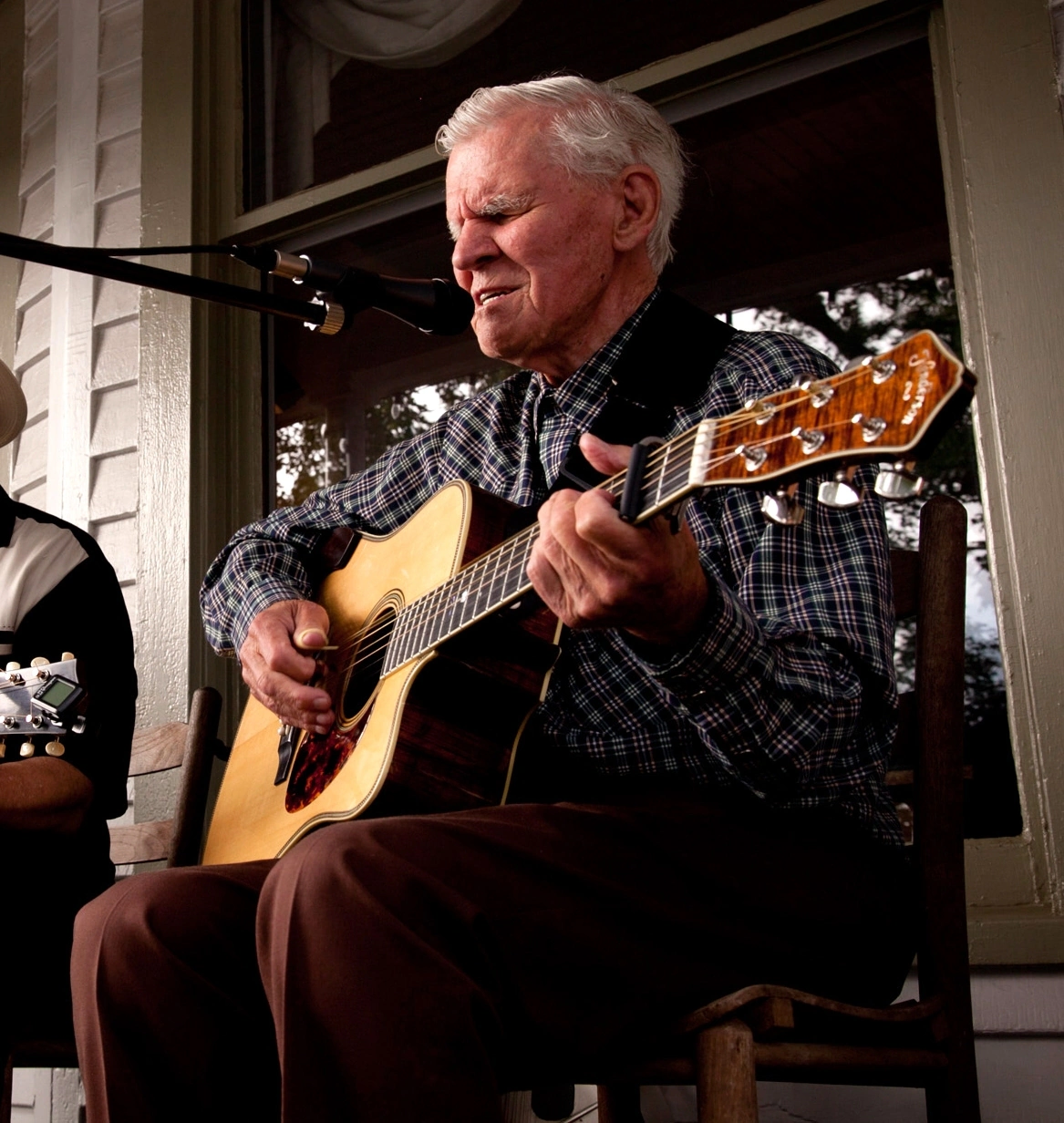
| 7 Quotes | |
| Born as | Arthel Lane Watson |
| Occup. | Musician |
| From | USA |
| Born | March 3, 1923 Deep Gap, North Carolina US |
| Age | 103 years |
| Cite | |
Citation Formats
APA Style (7th ed.)
Doc watson biography, facts and quotes. (2026, February 11). FixQuotes. https://fixquotes.com/artists/doc-watson/
Chicago Style
"Doc Watson biography, facts and quotes." FixQuotes. February 11, 2026. https://fixquotes.com/artists/doc-watson/.
MLA Style (9th ed.)
"Doc Watson biography, facts and quotes." FixQuotes, 11 Feb. 2026, https://fixquotes.com/artists/doc-watson/. Accessed 6 Mar. 2026.
Early Life and Background
Arthel Lane "Doc" Watson was born on March 3, 1923, in Deep Gap, North Carolina, a mountain community above Watauga County where farming, timber work, and churchgoing set the rhythms of life. The Watson household was large and musical, and the region's soundscape was a living archive: old-time fiddle tunes, ballads carried through generations, and the hard, bright pulse of dance music that traveled from front porches to schoolhouses.Blind from early childhood after an eye infection, Watson grew up listening with an intensity that became both refuge and training. In an era when disability often meant exclusion, he built an identity around capability - learning by ear, memorizing structures, and turning constraint into a fiercely practical musicianship. Nicknamed "Doc" because of his interest in radios and electronics, he also absorbed the mechanics behind sound, a curiosity that would later serve him on stages and in studios without loosening his small-town grounding.
Education and Formative Influences
Watson attended the North Carolina School for the Deaf and Blind in Raleigh, where formal instruction met the informal university of peer exchange: repertoire traded after hours, techniques passed hand-to-hand, and the wider world of recorded music entering the dorms. He learned banjo and then guitar, taking in Jimmie Rodgers, the Carter Family, and the emerging language of swing and early country, while remaining rooted in the fiddle tunes and modal ballads of the Blue Ridge. That blend - local tradition sharpened by national radio and 78s - formed the template of a style that could speak "home" and still travel.Career, Major Works, and Turning Points
By the 1940s and 1950s, Watson was working in and around North Carolina, playing for dances and on local radio, adapting to whatever the room demanded. A key turning point came when folklorists and revival audiences "discovered" him in the early 1960s, bringing him onto the national folk circuit at a moment hungry for authenticity and virtuosity. His recordings for Folkways and later Vanguard introduced a flatpicking approach that sounded both ancient and startlingly modern, especially on traditional reels and breakdowns that he rendered with surgical clarity. Another decisive partnership was with his son Merle Watson, whose rhythmic drive and shared instinct for arrangement deepened the live show into a two-man engine; Merle's death in 1985 was a profound personal rupture that reshaped Watson's later years, though he continued to tour and record, carrying both grief and continuity in the repertoire. Across decades - from festival stages to concert halls - he remained an emblem of American roots music done without affectation, anchoring traditional material while quietly expanding its technical ceiling.Philosophy, Style, and Themes
Watson's inner life, as heard in interviews and phrasing, centered on practicality and belonging rather than mythmaking. He resisted celebrity as an identity category, insisting, “I feel about me like I'm one of the working people, just like you, and everybody else. I don't fit the part of a celebrity”. That stance was more than humility; it was a psychological strategy for staying oriented - a way to keep the self intact while moving through a music industry built to inflate personas. The result was an art that felt like craft: tune after tune presented as useful, shareable, and earned.His sound joined elegance to plain speech. Flatpicked guitar lines came out clean and percussive, as if the melody were being chiseled from the beat; his singing favored directness over drama, and his repertoire moved freely between sacred hymns, murder ballads, blues, and fiddle tunes. Underneath was an intimate, almost domestic idea of performance: “Intimacy comes from being yourself on the stage and making the audience feel, without trying, that you're sittin' down there with 'em, playing, and that can happen in a big hall, if you have a good audience that want to listen”. Even his jokes carried a philosophy of perception and adaptation, as when he observed, “I'd think learning to play the guitar would be very confusing for sighted people”. The line is funny, but it also reveals his deeper method - hearing as navigation, touch as certainty, and simplicity as a kind of freedom.
Legacy and Influence
Doc Watson died in 2012, but his influence remains structural: he helped define modern acoustic guitar flatpicking, set a benchmark for timing and tone, and proved that traditional music could be both historically faithful and technically dazzling. Generations of pickers cite his recordings as a primary text, while singers and bandleaders study his balance of restraint and swing - how to make old songs feel newly inhabited. Just as enduring is the ethical model he offered: a musician can tour the world, shape a genre, and still speak from the posture of a neighbor, not an icon.Our collection contains 7 quotes written by Doc, under the main topics: Witty One-Liners - Music - Humility - Contentment - Nostalgia.
Other people related to Doc: Earl Scruggs (Musician)
Source / external links