
Dolly Parton Biography Quotes 21 Report mistakes
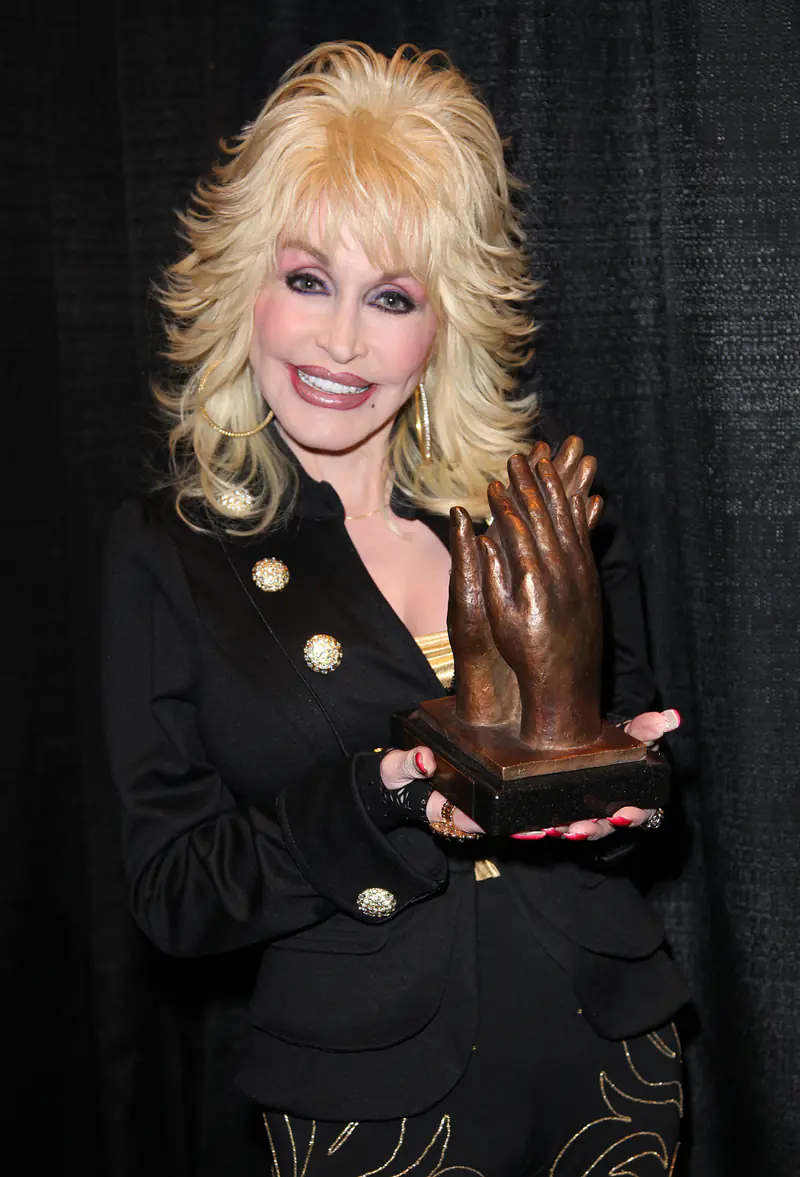
Attr: Curtis Hilbun, CC BY 3.0
| 21 Quotes | |
| Born as | Dolly Rebecca Parton |
| Occup. | Musician |
| From | USA |
| Spouse | Carl Dean (1966) |
| Born | January 19, 1946 Sevierville, Tennessee, USA |
| Age | 79 years |
Dolly Rebecca Parton was born on January 19, 1946, in the Great Smoky Mountains of East Tennessee, in the hamlet of Locust Ridge near Sevierville. She grew up one of 12 children in a family that lived close to subsistence, shaped by the postwar rural South where cash was scarce, faith was abundant, and music was a social currency. Her father, Robert Lee Parton, worked as a farmer and construction laborer; her mother, Avie Lee Owens Parton, carried ballads and hymnody that became Dolly's earliest repertoire. Those sounds - Sacred Harp harmonies, mountain gospel, and radio country - fused into an inner sense that singing was not ornament but survival.
The Partons' poverty was not a footnote but a formative pressure that sharpened her ambition and her empathy. Even as a child she framed performance as a path out and a way back in: out of hardship, back toward dignity for people like her family. That double impulse would later explain why her career became both glittering spectacle and serious philanthropy, why she could embody fantasy while speaking plainly about work, hunger, and pride.
Education and Formative Influences
Parton attended local schools in Sevier County and graduated from Sevier County High School in 1964, already a regional performer with early singles and appearances on Knoxville television. Her education was also the informal curriculum of Pentecostal churches, radio, and the discipline of writing: she studied how a three-minute song could carry a whole life, and how a performer could be at once relatable and mythic. The Nashville she dreamed of was less a place than a promise that craft and nerve could outrun class limits, especially for a young woman with a sharpened pen.
Career, Major Works, and Turning Points
The day after graduation she moved to Nashville, marrying Carl Dean in 1966 and building a writing career before stardom - a crucial sequencing that gave her leverage. She broke nationally through Porter Wagoner's television show in the late 1960s, then made the risky, defining split to pursue a solo identity. The 1970s delivered her authorial canon: "Jolene", "I Will Always Love You", and "Coat of Many Colors" - songs that function as short stories with melodies. In the 1980s she executed a second reinvention, crossing into pop with "9 to 5" and film roles while maintaining credibility as a songwriter. Later decades added the theme-park and hospitality empire centered on Dollywood, a return to bluegrass roots, and a public image that proved unusually durable: she became, for many Americans, a form of trustworthy celebrity, funny and generous without seeming naive.
Philosophy, Style, and Themes
Parton's inner life is best read through her self-authored contradictions: she is both the Appalachian girl and the self-made mogul, both devout and mischievous, both private in marriage and radically public in persona. Her resilience is not merely sentimental; it is engineered. "The way I see it, if you want the rainbow, you gotta put up with the rain". That is less a slogan than a cognitive strategy - an acceptance of hardship as the entry fee to beauty, and an insistence that suffering can be metabolized into art rather than bitterness.
Her style blends plainspoken narrative with gleaming hooks, often staging moral complexity inside familiar country forms. She writes in archetypes - the jealous rival in "Jolene", the dignified leaver in "I Will Always Love You", the child interpreting poverty as love in "Coat of Many Colors" - then undercuts stereotype with self-awareness. "I'm not going to limit myself just because people won't accept the fact that I can do something else". That refusal explains her genre-hopping, her business expansion, and her refusal to let glamour be mistaken for frivolity. Even her jokes about appearance are protective armor and social intelligence, inviting the audience in while controlling the gaze: "You'd be surprised how much it costs to look this cheap!" Legacy and Influence
Parton's influence runs on three tracks: songwriting craft, cultural symbolism, and civic impact. As a composer she has supplied standards that travel far beyond country, with "I Will Always Love You" becoming a global anthem through Whitney Houston and confirming Parton's authority as an American writer. As a figure she redefined what a female country star could be - commercially dominant, comedically fearless, and authorially respected - while making crossovers without surrendering her accent or origins. And as a philanthropist, her Imagination Library and other efforts tie her fame back to the constraints that first shaped her, turning personal ascent into a public staircase for others.
Our collection contains 21 quotes who is written by Dolly, under the main topics: Witty One-Liners - Motivational - Music - Resilience - Embrace Change.
Other people realated to Dolly: Daryl Hannah (Actress), Barry Gibb (Musician), Charley Pride (Athlete), Suzy Bogguss (Musician), Brad Paisley (Musician), Olympia Dukakis (Actress), Robin Gibb (Musician), Solomon Burke (Musician), Cynthia Weil (Musician), Elizabeth Wilson (Actress)
Source / external links