
Doug E. Fresh Biography Quotes 3 Report mistakes
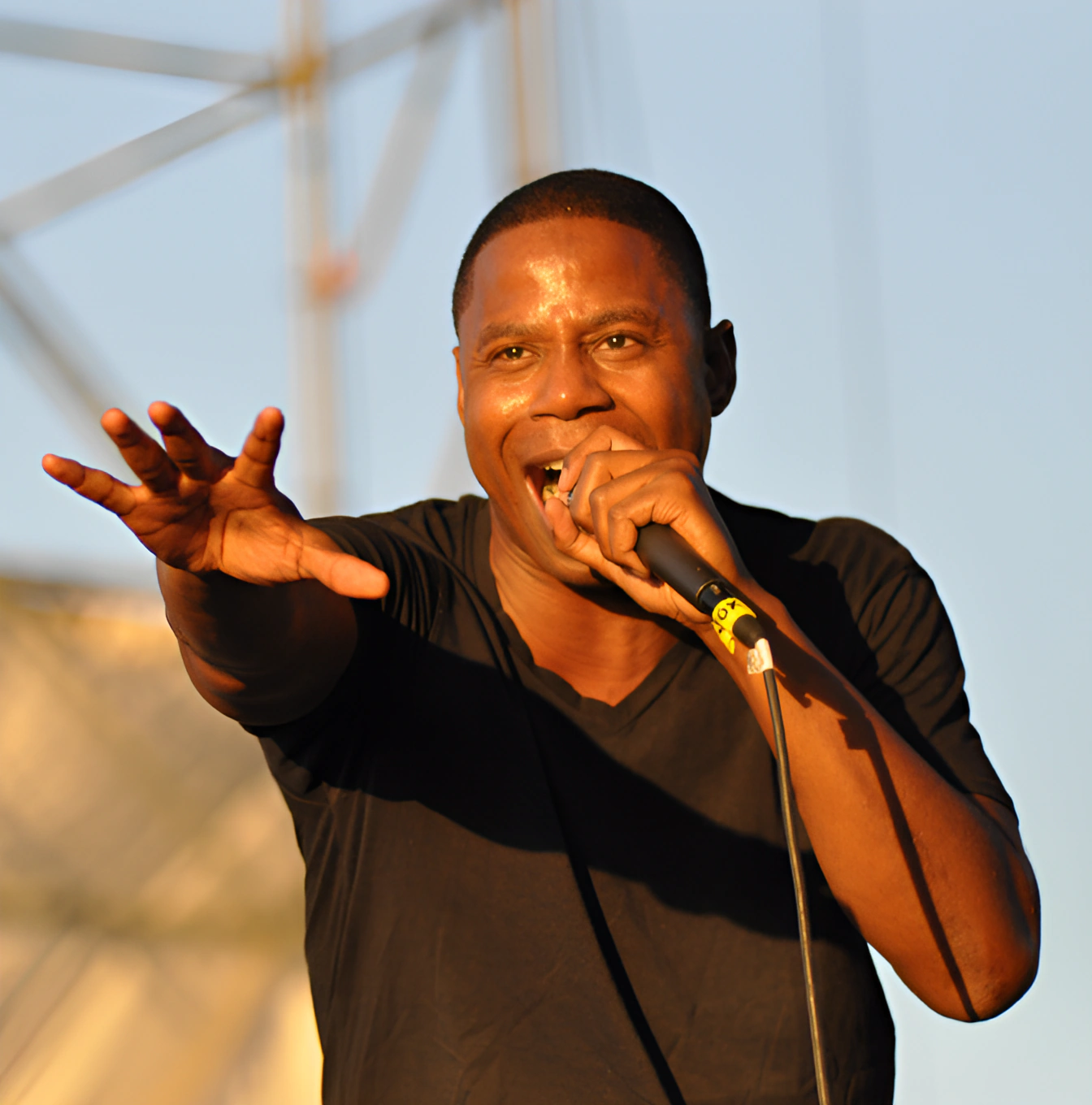
| 3 Quotes | |
| Born as | Douglas E. Davis |
| Occup. | Musician |
| From | USA |
| Born | September 17, 1966 |
| Age | 59 years |
| Cite | |
Citation Formats
APA Style (7th ed.)
Doug e. fresh biography, facts and quotes. (2026, February 20). FixQuotes. https://fixquotes.com/artists/doug-e-fresh/
Chicago Style
"Doug E. Fresh biography, facts and quotes." FixQuotes. February 20, 2026. https://fixquotes.com/artists/doug-e-fresh/.
MLA Style (9th ed.)
"Doug E. Fresh biography, facts and quotes." FixQuotes, 20 Feb. 2026, https://fixquotes.com/artists/doug-e-fresh/. Accessed 6 Mar. 2026.
Early Life and Background
Douglas E. Davis, known worldwide as Doug E. Fresh, was born on September 17, 1966, in Barbados and raised in Harlem, New York City, at a moment when the city was fraying under fiscal crisis even as block parties and park jams were inventing a new vernacular. His childhood sat between Caribbean family rhythms and the street-level improvisation of 1970s Harlem - the cadence of church, calypso, funk records, and the portable sound systems that turned rec rooms and playgrounds into laboratories for beat, voice, and swagger.What made him singular was not simply talent but an early instinct for performance as community service. Before major labels had language for beatboxing, he was already treating his mouth as a drum kit and his voice as a horn section, building the kind of self-contained show that could hold a crowd with nothing but breath control, timing, and a natural comedian's feel for surprise. That attention to crowd psychology - when to tease, when to explode, when to leave a pocket of silence - became the hidden engine of his later records and battles.
Education and Formative Influences
Fresh was shaped less by formal schooling than by New York's informal conservatory: the DJ culture of the Bronx and Harlem, the early MC circuits, and the fierce peer review of park audiences who decided in real time whether you stayed on the mic. He absorbed the innovations of pioneers like Kool Herc, Grandmaster Flash, and early vocal percussionists such as Biz Markie, then pushed further by making the human voice imitate not only drums but turntable scratches and full-band textures - a skill that required obsessive practice, acute listening, and a willingness to be both entertainer and technician.Career, Major Works, and Turning Points
By the early 1980s he had become a defining figure of hip-hop's second wave, breaking nationally with Doug E. Fresh and the Get Fresh Crew. His signature releases fused party energy with narrative craft: "The Show" and "La Di Da Di" (1985) became foundational texts, with the latter - performed with Slick Rick - turning minimal backing and vocal precision into a blueprint for countless later rappers and producers. Fresh's beatboxing moved from novelty to instrument, and his live reputation made him a bridge between hip-hop's park origins and its stage-and-studio future; later visibility, including collaborations and appearances across decades, reinforced him as a public ambassador for the culture even as the genre splintered into many commercial forms.Philosophy, Style, and Themes
Fresh's inner life as an artist revolves around discipline disguised as play. The beatbox, for him, is not a gimmick but a way to keep hip-hop tethered to human presence - breath, body, and the immediacy of a room. That is why his ethos consistently frames the music as social work rather than mere product: “Hip-hop is supposed to uplift and create, to educate people on a larger level and to make a change”. In his best performances, the grin and the showmanship are paired with an almost moral insistence that the crowd leave energized, more awake, and more connected to one another.His style is built on economy and theatrical clarity - tight routines, crisp vocal textures, and a storyteller's sense of pace. Yet he describes himself not as a finished master but as a perpetually unfinished craftsperson, a stance that explains his longevity in a fast-moving genre: “I'm forever learning, and that's why I'm always able to create new styles and new dimensions of hip-hop”. That apprenticeship mentality also reveals a psychological strategy for survival in hip-hop's competitive ecosystem - staying curious to avoid calcifying into nostalgia. It is consistent with his refusal to claim final authority even when others treat him as one: “People can look to me as a teacher, but I consider myself a student of hip-hop”. The result is a persona that leads by example: mastery that remains porous, performance that stays rooted in the culture's collective invention.
Legacy and Influence
Doug E. Fresh endures as "the Human Beatbox" not because he was the first to vocalize drums, but because he helped define what the role could mean: a one-man rhythm section, a ringmaster, and a cultural translator who made hip-hop legible to mainstream audiences without severing it from its street-born ingenuity. "La Di Da Di" alone became one of the most sampled and referenced recordings in rap history, and his live-oriented craft influenced generations of beatboxers, MCs, and stage performers who learned that technical skill is only half the job - the other half is commanding a room with generosity, timing, and joy.Our collection contains 3 quotes written by Doug, under the main topics: Music - Learning - Student.
Other people related to Doug: Kool Moe Dee (Musician)
Source / external links