
Erykah Badu Biography Quotes 34 Report mistakes
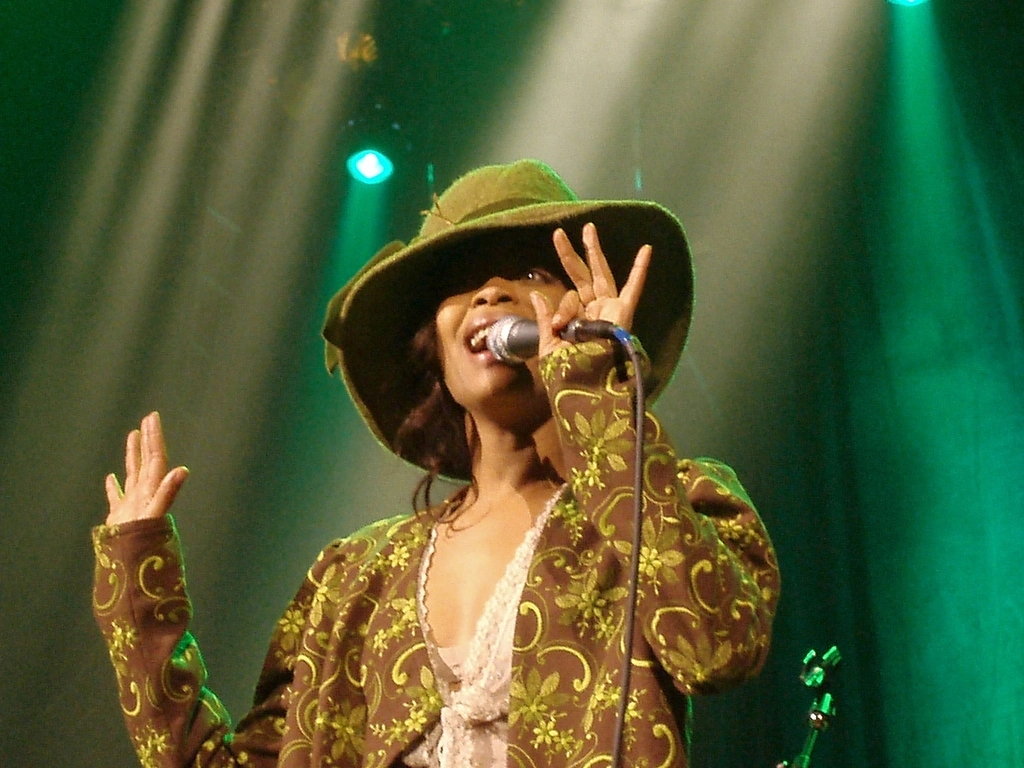
| 34 Quotes | |
| Born as | Erica Abi Wright |
| Occup. | Musician |
| From | USA |
| Born | February 26, 1971 Dallas, Texas United States |
| Age | 55 years |
| Cite | |
Citation Formats
APA Style (7th ed.)
Erykah badu biography, facts and quotes. (2026, February 11). FixQuotes. https://fixquotes.com/artists/erykah-badu/
Chicago Style
"Erykah Badu biography, facts and quotes." FixQuotes. February 11, 2026. https://fixquotes.com/artists/erykah-badu/.
MLA Style (9th ed.)
"Erykah Badu biography, facts and quotes." FixQuotes, 11 Feb. 2026, https://fixquotes.com/artists/erykah-badu/. Accessed 25 Mar. 2026.
Early Life and Background
Erykah Badu was born Erica Abi Wright on February 26, 1971, in Dallas, Texas, and raised primarily in South Dallas. Her family life was shaped early by separation and by the matriarchal steadiness of her mother, Kolleen Wright, who kept the household afloat while nurturing her childrens creativity. Dallas in the 1970s and 1980s offered both church-rooted musical tradition and the hard edges of neighborhood survival, and Badu absorbed both: the discipline of performance and the alertness of someone watching how identity is made and unmade in public.Before she became a symbol of neo-soul, she was a local performer in a city where blues, gospel, rap, and jazz braided together on radio and in clubs. She gravitated to spaces that valued voice as storytelling - church choirs, school stages, and community theaters - and learned to treat style as message. The deliberate headwraps and self-authored vocabulary that later became part of her public image started as private tools for composure and self-definition.
Education and Formative Influences
Badu attended Booker T. Washington High School for the Performing and Visual Arts in Dallas, an incubator that also produced artists across jazz, R&B, and hip-hop. She later studied theater at Grambling State University in Louisiana, then returned to Dallas, where spoken word nights and jam sessions sharpened her sense of rhythm and persona. Jazz phrasing, gospel emotion, and hip-hop candor became her core influences, alongside the lineage of Billie Holiday, whose intimate delivery offered Badu a model for turning vulnerability into authority.Career, Major Works, and Turning Points
By the mid-1990s she was singing and performing poetry around Dallas, including at the venue Club Prophet Bar, and her demos brought attention from Kedar Massenburg and Universal. Her debut album, Baduizm (1997), arrived as neo-soul crystallized into a movement, with "On & On" and "Next Lifetime" presenting a voice that sounded ancient and current at once; it won her a Grammy and made her an instant reference point for a generation seeking alternatives to glossy R&B. Live (1997) emphasized improvisation and audience communion, while Mamas Gun (2000) deepened her musical palette and emotional range. New Amerykah Part One (4th World War) (2008) and New Amerykah Part Two: Return of the Ankh (2010) marked a pivot toward denser politics and interior reckoning, and throughout the 2000s and 2010s she balanced music with motherhood, selective releases, and headline-grabbing performance art, including the controversial "Window Seat" video in 2010 that fused body, protest, and spectacle.Philosophy, Style, and Themes
Badu has always treated music less as product than as a living practice - a way to metabolize experience and transmit it back to the community. Her stage name, her fashion, and her elliptical humor all function as protective architecture around a highly porous inner life. She frames her work as dialogue rather than instruction, insisting, “I love to leave the interpretation of my music up to the listener. It's fun to see what they'll say it is”. That openness is not evasiveness; it is a philosophy of autonomy, granting the listener the same freedom she demands for herself.Her singing style blends jazz timing, gospel gravity, and hip-hop phrasing, with lyrics that move between aphorism and confession. She is also explicit about the intentionality behind the mystique: “I planned my success. I knew it was going to happen”. In Badu, destiny and discipline coexist - spiritual language alongside the practical craft of rehearsal, bandleading, and curating a sonic world. When she accepts comparisons to Billie Holiday, it is not simply flattery but an ethical claim about art as emotional service: “I thought the Billie Holiday comparison was beautiful. I think, Wow, what a wonderful, creative, helpful spirit. She's someone who wanted to help others by sharing her emotion. That's what I do, too, so I think that's a great comparison”. Across her catalog, themes recur: self-possession, the cost of fame, Black womanhood as both sanctuary and battleground, and the tension between spiritual yearning and social reality.
Legacy and Influence
Badu helped define neo-soul as an aesthetic and an attitude - organic musicianship, retro futurism, and lyrical inwardness that still shapes contemporary R&B, hip-hop, and alternative pop. Her influence runs through artists who privilege timbre, improvisation, and self-mythology, from Jill Scott and DAngelo collaborators to later voices like Janelle Monae, Solange, and SZA. More than a hitmaker, she remains a cultural node: an artist whose public life tests how a woman can be both icon and experiment, and whose music keeps arguing that freedom begins with the right to name your own meaning.Our collection contains 34 quotes written by Erykah, under the main topics: Art - Justice - Music - Writing - Freedom.
Other people related to Erykah: Lauryn Hill (Musician), John Legend (Musician), Jill Scott (Musician)
Source / external links