
Frank Sinatra Biography Quotes 25 Report mistakes
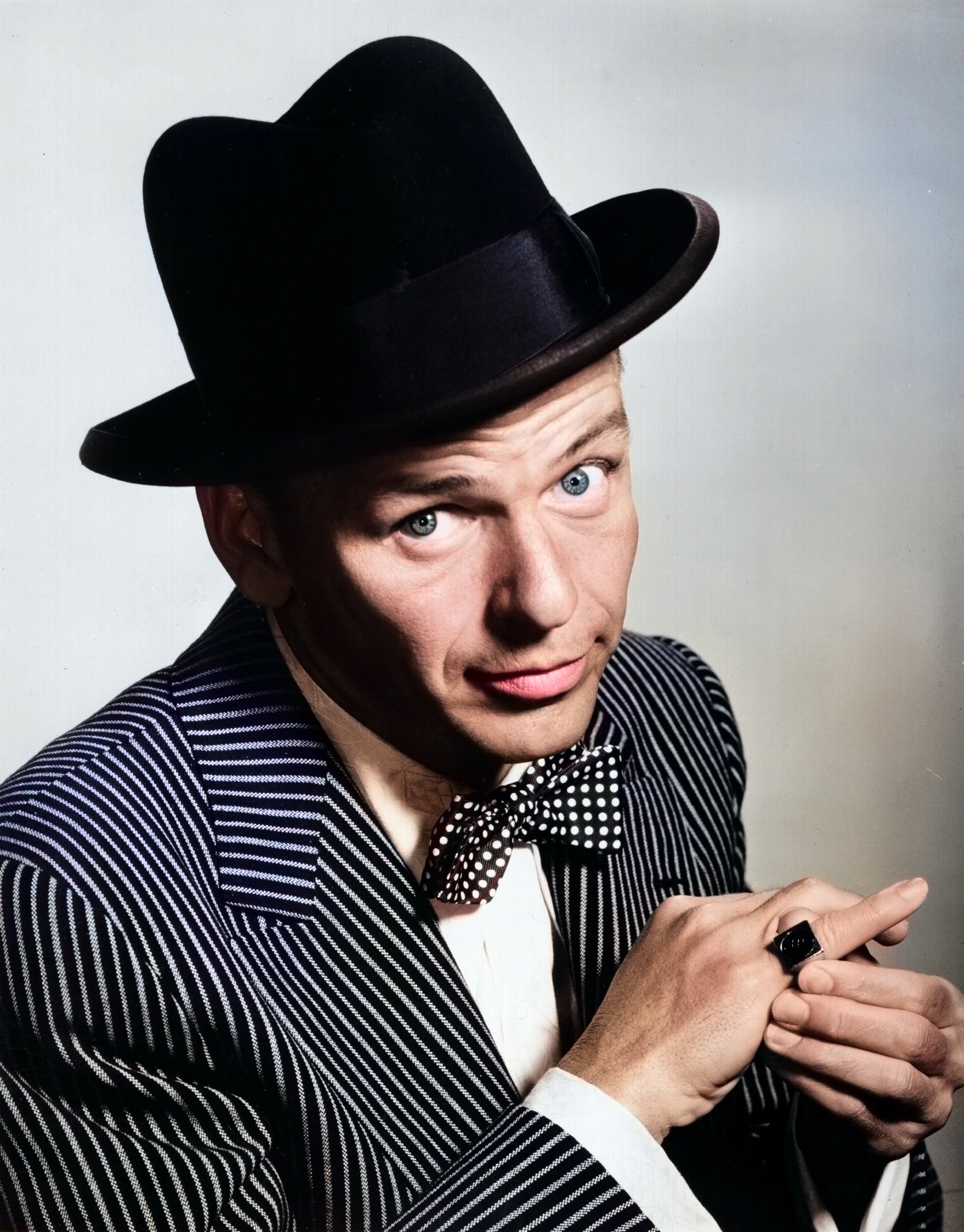
| 25 Quotes | |
| Born as | Francis Albert Sinatra |
| Occup. | Musician |
| From | USA |
| Spouse | Barbara Marx Sinatra |
| Born | December 12, 1915 Hoboken, New Jersey, USA |
| Died | May 14, 1998 Los Angeles, California, USA |
| Cause | Cardiac arrest |
| Aged | 82 years |
| Cite | |
Citation Formats
APA Style (7th ed.)
Frank sinatra biography, facts and quotes. (2026, February 11). FixQuotes. https://fixquotes.com/artists/frank-sinatra/
Chicago Style
"Frank Sinatra biography, facts and quotes." FixQuotes. February 11, 2026. https://fixquotes.com/artists/frank-sinatra/.
MLA Style (9th ed.)
"Frank Sinatra biography, facts and quotes." FixQuotes, 11 Feb. 2026, https://fixquotes.com/artists/frank-sinatra/. Accessed 25 Mar. 2026.
Early Life and Background
Francis Albert Sinatra was born December 12, 1915, in Hoboken, New Jersey, the only child of Italian American parents. His mother, Natalina "Dolly" Garaventa, was politically connected in Hudson County and forceful in temperament; his father, Antonino Martino Sinatra, a former boxer turned fireman, was quieter, steady, and wary of conflict. Sinatra grew up in a tight immigrant neighborhood where reputation traveled fast, money was thin, and a boy learned early that charm could be a form of armor.A difficult birth left him with facial scars and a damaged eardrum, marks that fed both self-consciousness and a lifelong insistence on control - over his image, his sound, and the room itself. As a teenager he haunted the waterfront bars and radio shops, absorbing popular singers and the new intimacy of the microphone. By the time the Depression tightened its grip, he had already decided he would not be trapped by Hoboken's small horizons, and that his voice would be his way out.
Education and Formative Influences
Sinatra attended Demarest High School in Hoboken but did not graduate; he was restless, frequently in trouble, and drawn more to nightlife than classrooms. His true education came from records, radio, and the performance styles of Bing Crosby and jazz phrasing from Louis Armstrong, filtered through the discipline of listening hard and repeating lines until they sounded like speech. He learned that the microphone rewarded understatement and that a singer could act, not merely project - lessons that would define the modern pop vocalist.Career, Major Works, and Turning Points
He began professionally in the late 1930s, first attracting attention with the Hoboken Four on the radio, then breaking through as the featured vocalist for Harry James (1939) and, decisively, Tommy Dorsey (1940-1942), whose breath control and legato became Sinatra's technical template. Going solo, he became a wartime phenomenon: "bobby-soxer" hysteria, hit records, and film roles, followed by a steep slump in the early 1950s as tastes shifted and his voice and reputation frayed. The comeback was surgical: the Oscar-winning role in From Here to Eternity (1953), a Capitol Records contract, and a sequence of concept albums with Nelson Riddle and others - In the Wee Small Hours (1955), Songs for Swingin' Lovers! (1956), Only the Lonely (1958), and Nice 'n' Easy (1960) - that remade adult pop as narrative mood. After forming Reprise Records (1960), he expanded artistic control and empire-building, anchoring the Rat Pack era in Las Vegas and Hollywood, landing signature singles like "Strangers in the Night" (1966) and "My Way" (1969), and staging late-career resets including the Duets albums in the 1990s before his death on May 14, 1998, in Los Angeles.Philosophy, Style, and Themes
Sinatra's public persona was a braid of elegance and menace, tenderness and steel. His style fused bel canto line with jazz time: he sang behind the beat, leaned into consonants, and used phrasing like a camera cut, implying thought between words. The repertory he chose - saloon laments, nocturnal confessionals, bravado anthems - let him dramatize the modern male psyche without sounding literary. In the postwar era of rising affluence and private anxiety, his voice offered a script for how to be vulnerable while still insisting on command.Psychologically, he treated attitude as both costume and truth, a daily act of self-making. “Cock your hat - angles are attitudes”. The line reads like style advice, but it is also a survival strategy from Hoboken: if you control the angle, you control the gaze. His ambition, often described as ruthlessness, was in part a refusal to be diminished by critics, rivals, or the humiliations of failure: “The best revenge is massive success”. Yet beneath the swagger he cultivated an almost fatalistic simplicity about existence and work, a workingman's metaphysics that explains his relentless touring and late-night circuitry: “I'm gonna live till I die”. Across the arc of the Capitol albums to "My Way", the themes remain consistent - loneliness as theater, love as risk, and success as both proof and pressure - delivered with an actor's sense of motive and a bandleader's sense of swing.
Legacy and Influence
Sinatra endures as a template for the 20th-century singer: microphone intimacy, phrasing as narrative, albums as coherent emotional worlds, and the performer as brand-builder with real artistic leverage. He helped normalize the concept album in popular music, expanded what a "pop" voice could communicate, and set a standard for orchestral accompaniment in the studio. His influence runs through Tony Bennett, Elvis Presley, Ray Charles, Aretha Franklin, and later interpreters from Harry Connick Jr. to Michael Buble, not because they copied his timbre, but because he proved that a singer could be both craftsman and auteur - turning personal temperament into public art, and making the American songbook feel like lived experience.Our collection contains 25 quotes written by Frank, under the main topics: Witty One-Liners - Ethics & Morality - Music - Love - Live in the Moment.
Other people related to Frank: Nancy Sinatra (Musician), Billie Holiday (Musician), Tom Waits (Musician), Amy Winehouse (Musician), Dean Martin (Actor), Jacob Lusk (Musician), Nat King Cole (Musician), Rich Little (Comedian), Jacqueline Bisset (Actress), George Sidney (Director)
Source / external links