
Frank Zappa Biography Quotes 25 Report mistakes
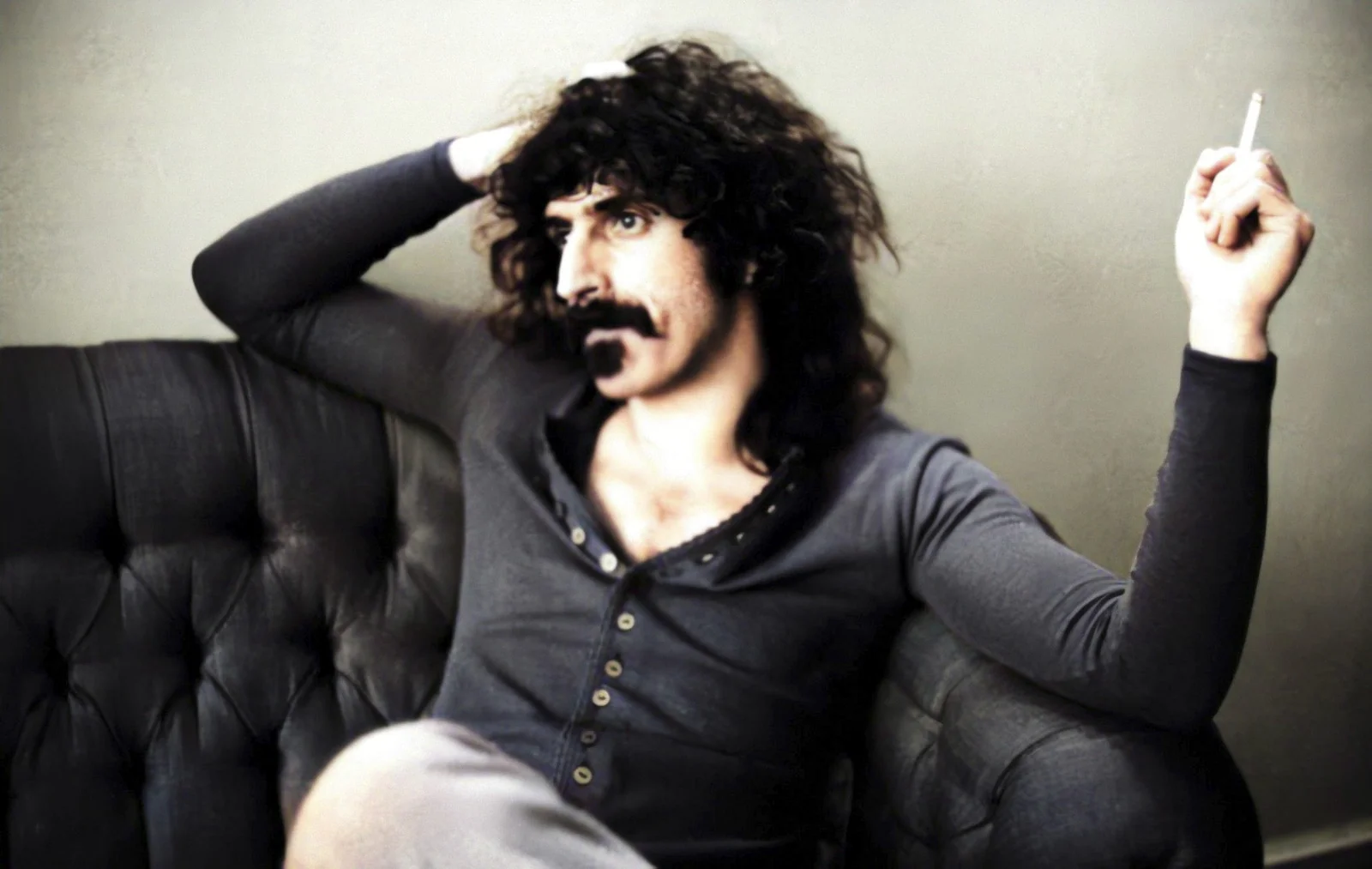
| 25 Quotes | |
| Occup. | Musician |
| From | USA |
| Born | December 21, 1940 Baltimore, Maryland |
| Died | December 4, 1993 |
| Aged | 52 years |
| Cite | |
Citation Formats
APA Style (7th ed.)
Frank zappa biography, facts and quotes. (2026, February 1). FixQuotes. https://fixquotes.com/artists/frank-zappa/
Chicago Style
"Frank Zappa biography, facts and quotes." FixQuotes. February 1, 2026. https://fixquotes.com/artists/frank-zappa/.
MLA Style (9th ed.)
"Frank Zappa biography, facts and quotes." FixQuotes, 1 Feb. 2026, https://fixquotes.com/artists/frank-zappa/. Accessed 21 Mar. 2026.
Early Life and Background
Frank Vincent Zappa was born on December 21, 1940, in Baltimore, Maryland, into a mid-century America shaped by war industry, suburban expansion, and the first wave of mass-media youth culture. His father, a chemist and mathematician who worked in defense-related industries, moved the family repeatedly through the 1940s and 1950s, a restlessness that left Zappa both socially detached and intensely observant. Asthma and chronic illness marked his childhood; the combination of physical vulnerability and a household steeped in technical work helped form a mind that trusted systems, facts, and craft more than sentiment.In the mid-1950s the Zappas settled in Southern California, a region where aerospace, car culture, and new entertainment economies overlapped. Zappa absorbed this landscape as raw material: the promises of postwar prosperity, the hypocrisies of conformity, and the noise of radio. He listened as closely to doo-wop on street corners as he did to modern classical records, and he learned early to treat American life as a spectacle that could be rearranged, sampled, and satirized.
Education and Formative Influences
Zappa attended Antelope Valley High School in Lancaster, California, but his real education happened in band rooms, record bins, and late-night listening. Edgard Varese, Igor Stravinsky, and Anton Webern offered a model of composition as audacious architecture, while rhythm and blues taught him immediacy and showmanship; the collision of these worlds became his signature. He played drums and guitar, wrote early scores, made tape experiments, and even scored a low-budget film, The World's Greatest Sinner (1962), sharpening an instinct for narrative and montage that later shaped his albums.Career, Major Works, and Turning Points
After hustling in local clubs and studios, Zappa became the leader of the Mothers, soon billed as the Mothers of Invention, and broke through with Freak Out! (1966), a sprawling debut that treated rock LPs as conceptual canvases. In quick succession came Absolutely Free (1967), We're Only in It for the Money (1968), and Uncle Meat (1969), works that fused pop pastiche, musique concrete, and social parody into a single grammar. A key turning point arrived with the 1971 Montreux casino fire and, days later in London, an onstage assault that left him seriously injured and altered his voice; the episode deepened his resolve and sharpened his managerial control. Through the 1970s and 1980s he led relentlessly rehearsed bands, wrote orchestral works (including commissions and collaborations with Pierre Boulez), built projects around guitar-driven virtuosity (Hot Rats, 1969), and later embraced the Synclavier to realize complex scores. In 1985 he founded Barking Pumpkin Records to protect his catalog and autonomy. In 1991 he was diagnosed with prostate cancer; he continued composing, released The Yellow Shark (1993) with Ensemble Modern, and died on December 4, 1993, in Los Angeles.Philosophy, Style, and Themes
Zappa's inner life reads as a sustained argument against laziness - intellectual, musical, and civic. He distrusted groupthink and prized creative friction, insisting, “Without deviation progress is not possible”. That line was not a slogan but a working method: abrupt stylistic pivots, nested motifs across albums, and arrangements designed to expose whether musicians were truly listening. Even his humor functioned as quality control, a way to puncture cant and force attention back to structure, rhythm, and meaning.His style married composerly density to street-level vernacular: odd meters, tight counterpoint, sudden edits, and guitar solos that felt like spoken monologues. He treated public life as theater and indicted it with a deadpan precision that matched his music's exactitude. “Politics is the entertainment branch of industry”. The satire could be bawdy, but the target was often power - censorship, consumerism, and the ways media trains audiences to accept simplified stories. In later years he also argued for a hard boundary between calculation and feeling, warning that technique alone cannot carry human expression: “The computer can't tell you the emotional story. It can give you the exact mathematical design, but what's missing is the eyebrows”. The remark doubles as autobiography: a rationalist who still hunted for the flicker of personality inside the grid.
Legacy and Influence
Zappa left a vast catalog that reshaped what rock composition could contain and how an artist could operate outside corporate permission. He influenced progressive rock, avant-garde composition, jazz fusion, metal, and comedy-adjacent songwriting; just as importantly, he modeled a producer-composer as auteur, obsessive about rehearsal, sonics, and rights ownership. His 1980s testimony against the PMRC made him a lasting symbol of artistic free speech, while his posthumous releases, vault projects, and continuing scholarship reveal an oeuvre built like a city - interconnected, argumentative, and alive with detail. In an era that rewards branding, Zappa's endurance comes from craft: the sense that every bar, joke, and edit was placed by someone who refused to drift.Our collection contains 25 quotes written by Frank, under the main topics: Witty One-Liners - Wisdom - Art - Justice - Love.
Other people related to Frank: Don Van Vliet (Artist), Alice Cooper (Musician), Dweezil Zappa (Musician), Warren Cuccurullo (Musician), Jimmy Carl Black (Musician), Aynsley Dunbar (Musician), Scott Ian (Musician), Ahmet Zappa (Musician), Alex Winter (Actor), Moon Unit Zappa (Musician)