
Freddie Mercury Biography Quotes 36 Report mistakes
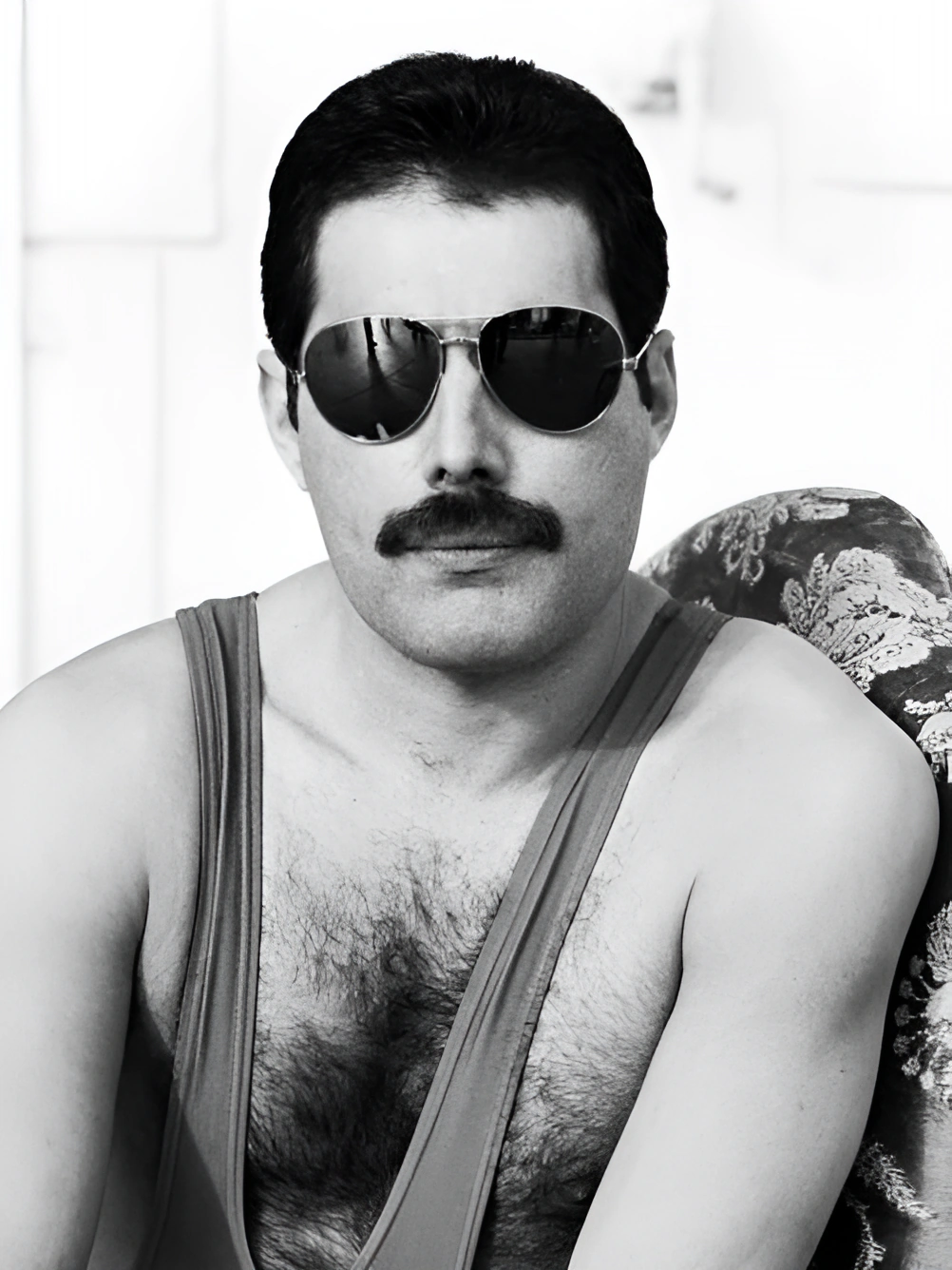
Attr: artphotolimited.com
| 36 Quotes | |
| Born as | Farrokh Bulsara |
| Occup. | Musician |
| From | United Kingdom |
| Born | September 5, 1946 Stone Town, Zanzibar |
| Died | November 24, 1991 London, England |
| Cause | AIDS-related bronchopneumonia |
| Aged | 45 years |
| Cite | |
Citation Formats
APA Style (7th ed.)
Freddie mercury biography, facts and quotes. (2026, February 11). FixQuotes. https://fixquotes.com/artists/freddie-mercury/
Chicago Style
"Freddie Mercury biography, facts and quotes." FixQuotes. February 11, 2026. https://fixquotes.com/artists/freddie-mercury/.
MLA Style (9th ed.)
"Freddie Mercury biography, facts and quotes." FixQuotes, 11 Feb. 2026, https://fixquotes.com/artists/freddie-mercury/. Accessed 13 Feb. 2026.
Early Life and Background
Freddie Mercury was born Farrokh Bulsara on 1946-09-05 in Stone Town, Zanzibar, then a British protectorate shaped by Indian Ocean trade and late-colonial politics. His parents, Bomi and Jer Bulsara, were Parsi (Zoroastrian) Indians; Bomi worked as a cashier for the British Colonial Office. That mixed world - Persian-rooted faith, Gujarati family culture, British institutions, Swahili streets - formed a child attuned to masks and codes, to belonging and not-belonging at once.In 1964, amid the Zanzibar Revolution and violent upheaval, the Bulsaras fled, relocating to Middlesex, England, as postwar Britain was absorbing new immigrant communities while its pop culture exploded. Farrokh, now in the United Kingdom, shortened his name and, eventually, remade his persona as Freddie Mercury - a self-authored identity that offered both protection and freedom. The private cost was real: he learned early to keep his interior life guarded, channeling intensity into performance, wit, and relentless control over how he was seen.
Education and Formative Influences
He spent formative school years in India at St Peter's School, Panchgani, where classmates already nicknamed him "Freddie" and where he studied piano, joined the choir, and played in his first band, the Hectics. Later in London he studied art and design at Ealing Art College (graduating with a diploma in graphic art and design in 1969), absorbing pop art, fashion, and the grammar of visual spectacle. That training was not ornamental: it taught him how to compose an image, design a logo (he later created Queen's crest), and treat a stage show as total theater, with lighting, silhouette, and gesture as musical elements.Career, Major Works, and Turning Points
Mercury moved through late-1960s London's music scene, befriending guitarist Brian May and drummer Roger Taylor (then in Smile) before pushing for a new band vision that became Queen in 1970 with bassist John Deacon. From early albums to the breakthrough of "Sheer Heart Attack" (1974) and "A Night at the Opera" (1975), he fused hard rock with operatic collage, camp humor, and pop precision - culminating in "Bohemian Rhapsody", a studio-built drama that reshaped what a single could be. In the 1980s, as punk and then synth-pop altered the landscape, Queen expanded into arena pop ("Another One Bites the Dust") and global touring; Mercury also pursued solo work, notably "Mr. Bad Guy" (1985) and the operatic collaboration with Montserrat Caballe, "Barcelona" (1988). The Live Aid performance in 1985 became a defining public turning point: a concentrated masterclass in crowd command that re-cemented Queen's stature. Privately, the AIDS crisis darkened the era; Mercury was diagnosed later in the decade, continued recording with striking urgency, and died in Kensington, London, on 1991-11-24.Philosophy, Style, and Themes
Mercury's art was driven by an almost clinical understanding that identity is constructed - and therefore can be transcended. His ambition was not merely to succeed but to become unavoidable: "I won't be a rock star. I will be a legend". That sentence reads like bravado, yet it also reveals a psychological strategy: if your private self is fragile or endangered, you build a public self that cannot be erased. The legend becomes armor. His songwriting often stages this tension between vulnerability and command - the cracked-open confession of "Love of My Life", the self-mythology of "We Are the Champions", the yearning and defiance threaded through "Somebody to Love".Style, for Mercury, was never secondary to sound; it was the language of power, seduction, and distance. "Onstage, I am a devil. But I'm hardly a social reject". The line captures his central duality: the ferocious performer who could dominate stadiums, and the cautious man who guarded intimacy, negotiating fame, queerness, and privacy in a tabloid-saturated Britain. Even his humor about excess had a thesis embedded in it - pleasure as self-justification, glamour as self-definition - and his insistence on theatricality was a declaration that rock could be as composed as opera, as designed as couture. Underneath, the themes repeat: transformation, the price of desire, the ache for communion, and the insistence that art can outshout mortality.
Legacy and Influence
Mercury's influence endures because it is both technical and existential: a rare singer with elastic range and rhythmic bite, a songwriter who could move from music-hall pastiche to arena anthem, and a frontman who turned the concert into participatory theater. His death, publicly linked to AIDS a day after he confirmed his diagnosis, became a cultural marker in how the world spoke about the epidemic and about stigma. Queen's catalog remains a global vernacular, while Mercury's model of self-invention - immigrant, outsider, auteur, maximalist - continues to shape performers across rock, pop, and musical theater, from vocal stylists to image architects who treat the stage as a place to become more than a person.Our collection contains 36 quotes written by Freddie, under the main topics: Witty One-Liners - Motivational - Art - Dark Humor - Mortality.
Other people related to Freddie: Brian May (Musician), George Michael (Musician), Sam J. Jones (Actor)