
George Harrison Biography Quotes 24 Report mistakes
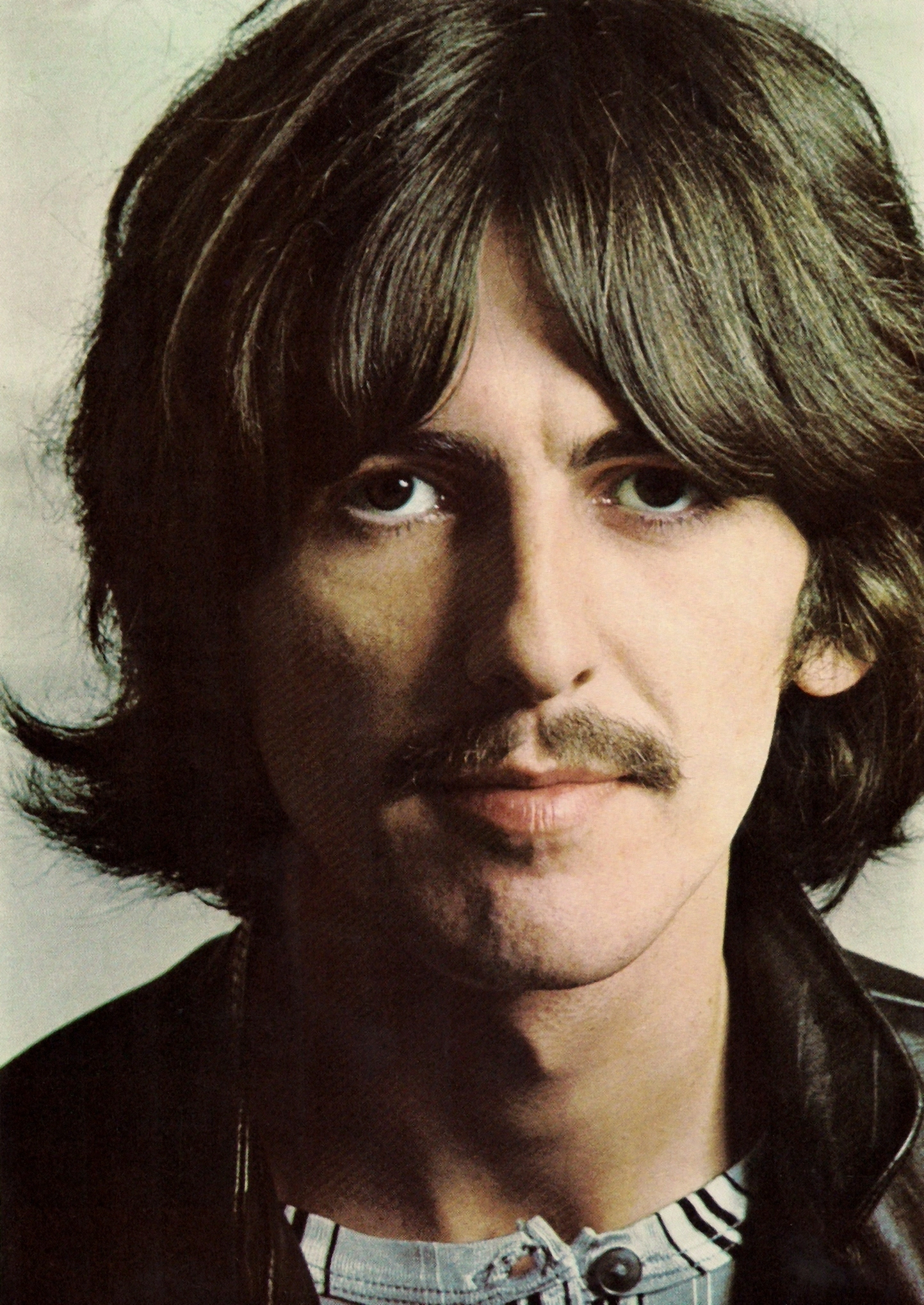
| 24 Quotes | |
| Known as | Carl Harrison, L'Angelo Misterioso, Hari Georgeson, Nelson/Spike Wilbury, George Harrysong |
| Occup. | Musician |
| From | United Kingdom |
| Born | February 25, 1943 Liverpool, England, UK |
| Died | November 29, 2001 Los Angeles, California, US |
| Aged | 58 years |
| Cite | |
Citation Formats
APA Style (7th ed.)
George harrison biography, facts and quotes. (2026, February 11). FixQuotes. https://fixquotes.com/artists/george-harrison/
Chicago Style
"George Harrison biography, facts and quotes." FixQuotes. February 11, 2026. https://fixquotes.com/artists/george-harrison/.
MLA Style (9th ed.)
"George Harrison biography, facts and quotes." FixQuotes, 11 Feb. 2026, https://fixquotes.com/artists/george-harrison/. Accessed 25 Mar. 2026.
Early Life and Background
George Harrison was born on February 25, 1943, in Liverpool, England, the youngest of four children in a working-class family shaped by wartime austerity and postwar rationing. His father, Harold, was a bus conductor; his mother, Louise, kept the household steady and encouraged music in small, practical ways. Liverpool in the 1940s and 1950s was a port city of hard labor and imported sound, where American records and local skiffle groups offered escape from gray streets and limited horizons.From early on, Harrison carried a quiet intensity: observant, private, and stubborn when cornered. As a teenager he gravitated to the guitar not as a social accessory but as a craft, drilling chord changes and lead lines with the patience of someone trying to build an inner life strong enough to outlast his surroundings. That inwardness - part shyness, part discipline - would later become a defining tension as global fame collided with his preference for distance and control.
Education and Formative Influences
He attended the Liverpool Institute, where he met Paul McCartney on the school bus and, through McCartney, joined John Lennon's circle. The citys "Merseybeat" ferment mixed with American rock and roll - Carl Perkins, Chuck Berry, Buddy Holly - and Harrison absorbed it with a technicians ear, learning how tone, timing, and economy could turn simple songs into hooks. Equally formative was the feeling of being underestimated: younger than Lennon and McCartney, he fought for space, sharpening both his musical precision and a lifelong skepticism toward authority and hype.Career, Major Works, and Turning Points
Harrison became lead guitarist of the Beatles, whose rise from the Cavern Club to worldwide fame transformed popular music and youth culture in the 1960s. While initially pigeonholed as "the quiet Beatle", he evolved rapidly as a writer - from early contributions like "Dont Bother Me" to landmark songs such as "If I Needed Someone", "While My Guitar Gently Weeps", "Here Comes the Sun", and "Something". His embrace of the sitar and Indian classical concepts, guided by Ravi Shankar, widened the bands palette ("Norwegian Wood" was Lennons, but Harrisons playing drove the turn; later "Within You Without You" made his spiritual interests explicit). After the Beatles breakup, he released the expansive triple album All Things Must Pass (1970) and organized The Concert for Bangladesh (1971), a turning point for benefit concerts as a modern form. Later chapters included the underappreciated Dark Horse era, the polished comeback of Cloud Nine (1987), the Traveling Wilburys collaboration, and his work as a film producer through HandMade Films, which helped bring Life of Brian and other British projects to the screen. An attempted stabbing at his home in 1999 and his long fight with cancer darkened his final years, but he continued to record and shape his legacy through the posthumous Brainwashed (2002).Philosophy, Style, and Themes
Harrisons inner life turned on a search for steadiness amid noise. He repeatedly framed fame as an intrusion rather than an achievement, a distinction that clarifies both his guarded public manner and his periodic withdrawals from the spotlight: “I wanted to be successful, not famous”. Success, for him, meant craft, autonomy, and the ability to follow conviction - whether that led to country-tinged guitar lines, devotional chanting, or the unglamorous work of assembling musicians for a humanitarian cause.Spiritually, his songwriting often reaches for release rather than triumph. He treated the ego as a problem to be managed, not indulged, and his best melodies sound like they are trying to float above conflict rather than win it. That aim is explicit in his maxim, “When you've seen beyond yourself, then you may find, peace of mind is waiting there”. The gentleness of "Here Comes the Sun" and the weary wisdom of "All Things Must Pass" are not escapist so much as diagnostic: he heard impermanence everywhere, and he used harmony and phrasing to make impermanence bearable. Yet he was not naive about human behavior; his distrust of corrosive chatter and media mythology sharpened with experience, summed up in the aphorism “Gossip is the Devil's radio”. That suspicion fed a style that prized understatement - lyrical directness, economical solos, and a preference for feeling over virtuoso display.
Legacy and Influence
Harrison endures as a guitarist-composer who expanded rock music without abandoning its emotional center. He normalized the idea that a pop musician could be both commercially decisive and spiritually exploratory, and his integration of Indian instrumentation and philosophy helped open Western ears - sometimes clumsily in the hands of imitators, but permanently in the culture. As an author within the Beatles, he proved that a "third" voice could define an era; as a solo artist and organizer, he helped invent the modern benefit concert and modeled collaboration over competition. His influence lives in the melodic restraint of countless guitarists, in singer-songwriters who treat interior life as worthy subject matter, and in the ongoing argument - which he embodied - that art can be a vehicle for conscience as well as craft.Our collection contains 24 quotes written by George, under the main topics: Ethics & Morality - Truth - Music - Love - Deep.
Other people related to George: Tom Petty (Musician), Mike Love (Musician), Roy Orbison (Musician), Phil Spector (Businessman), Eleanor Bron (Actress), Richard Lester (Director), Eric Idle (Comedian), Todd Rundgren (Musician), Terry Jones (Comedian), Jeff Lynne (Musician)
Source / external links