
Gerry Mulligan Biography Quotes 29 Report mistakes
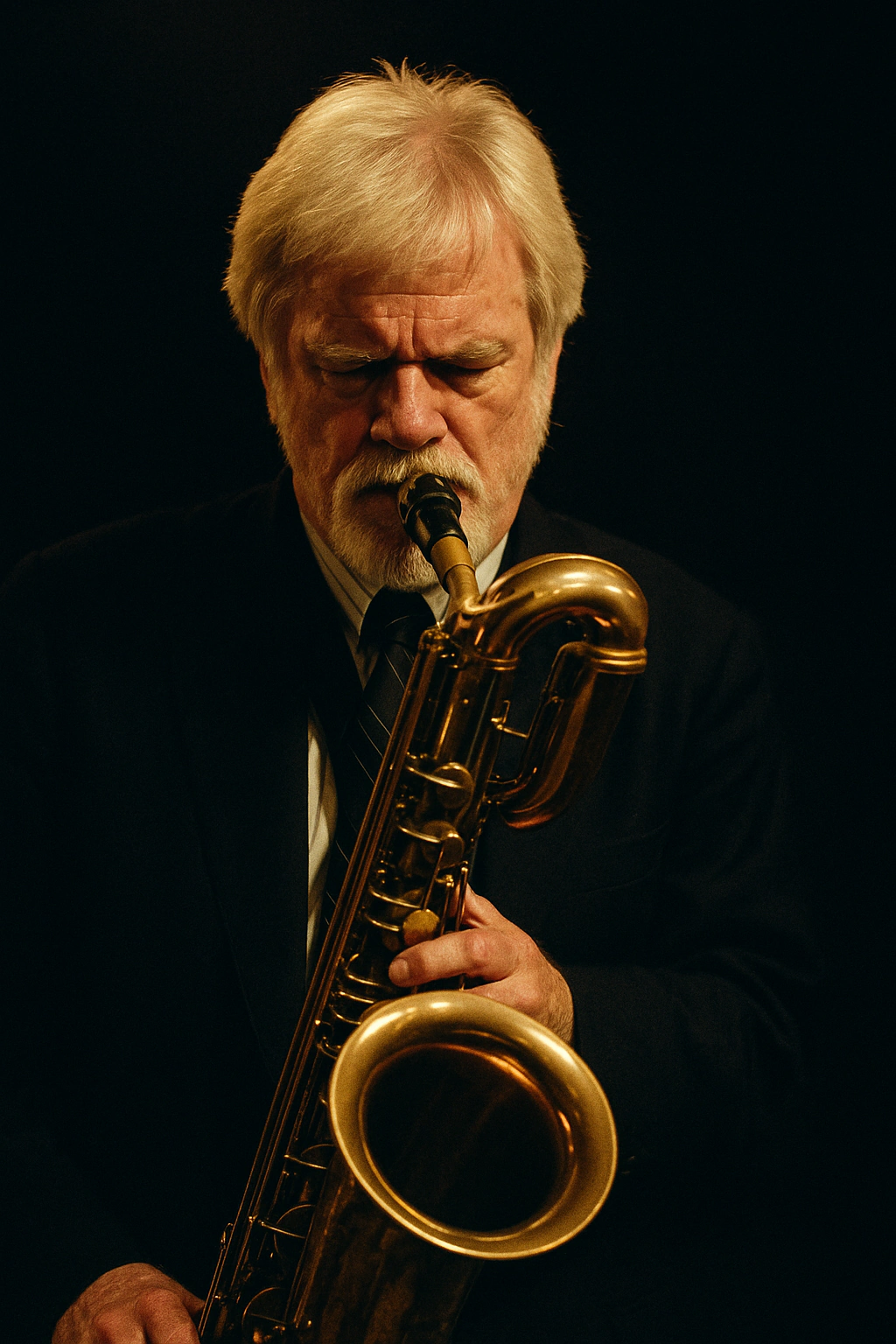
| 29 Quotes | |
| Born as | Gerald Joseph Mulligan |
| Occup. | Musician |
| From | USA |
| Born | April 6, 1927 Queens Village, Queens, New York |
| Died | January 20, 1996 |
| Aged | 68 years |
| Cite | |
Citation Formats
APA Style (7th ed.)
Gerry mulligan biography, facts and quotes. (2026, February 11). FixQuotes. https://fixquotes.com/artists/gerry-mulligan/
Chicago Style
"Gerry Mulligan biography, facts and quotes." FixQuotes. February 11, 2026. https://fixquotes.com/artists/gerry-mulligan/.
MLA Style (9th ed.)
"Gerry Mulligan biography, facts and quotes." FixQuotes, 11 Feb. 2026, https://fixquotes.com/artists/gerry-mulligan/. Accessed 12 Feb. 2026.
Early Life and Musical Beginnings
Gerald Joseph Mulligan, known worldwide as Gerry Mulligan, was born on April 6, 1927, in Queens, New York, and grew up in a family that moved frequently through the American Northeast and Midwest. In his teens he gravitated toward arranging and reed instruments, developing a practical understanding of voicing and counterpoint by writing for dance bands and radio ensembles. By the mid-1940s he was earning recognition as an arranger as well as a saxophonist, setting the stage for a career that would make the baritone saxophone an eloquent lead voice in modern jazz.Arranger, Baritone Saxophonist, and the Emergence of a Style
Mulligan's early professional years unfolded in the vibrant postwar band scene. He contributed arrangements to prominent orchestras and quickly distinguished himself with sleek lines, transparent textures, and rhythmic lift. As a baritone saxophonist, he embraced a light, singing tone that contrasted with the gruff sonorities often associated with the instrument. His melodic conception emphasized clarity, balance, and a sense of ease, qualities that soon placed him at the center of the development of so-called cool jazz.Birth of the Cool and Collaborations with Gil Evans and Miles Davis
A pivotal chapter began when Mulligan worked with arranger Gil Evans and trumpeter Miles Davis on the sessions later known as Birth of the Cool. In Evans's informal salon, Mulligan shared ideas about instrumentation, register, and voicing that favored chamber-like colors and contrapuntal motion. For the Davis Nonet he contributed both arrangements and compositions, including Jeru and Venus de Milo, and performed on baritone saxophone. Those recordings, made between 1949 and 1950, became touchstones: they showcased Mulligan's gift for clear, interlocking lines and shaped the vocabulary of modern jazz arranging for small ensembles with orchestral awareness.West Coast Innovations: The Pianoless Quartet
Mulligan's move to the West Coast in the early 1950s led to his most famous performing group: the pianoless quartet with trumpeter Chet Baker. Working at the Haig in Los Angeles, he crafted a sound defined by graceful counterpoint between trumpet and baritone saxophone, with bass and drums providing buoyant support. Without a piano, harmonic responsibilities shifted into moving lines and implied chords, giving the ensemble a weightless feel. The rapport between Mulligan and Baker became one of jazz's legendary dialogues, captured on recordings that included distinctive readings of standards and Mulligan's own tunes such as Walkin' Shoes and Line for Lyons. Early rhythm-section partners like bassist Carson Smith and drummer Chico Hamilton contributed to the quartet's poise and forward motion, while producer Dick Bock helped bring the music to a wider audience.Setbacks and Resilience
Mulligan's rapid ascent was checked by a mid-1950s arrest and a period away from the bandstand, after which he rebuilt his career with characteristic tenacity. Although Chet Baker moved on to lead his own groups, Mulligan soon formed new ensembles and renewed his pursuit of chamber-like jazz forms. He began partnering with musicians who could share his conversational approach to improvisation and arrangement, using counterlines and space to carry the harmony and shape momentum.Dialogues with Peers: Brookmeyer, Getz, Desmond, and Others
From the mid-1950s onward, Mulligan explored new front-line pairings that kept the pianoless concept alive while expanding its possibilities. His partnership with valve trombonist Bob Brookmeyer was especially fruitful: together they spun intricate, witty counterpoint that sustained both spontaneity and structural clarity. Mulligan also engaged in memorable meetings with tenor saxophonist Stan Getz, creating a balance of warmth and agility, and recorded with alto saxophonist Paul Desmond, whose dry lyricism complemented Mulligan's buoyant baritone. Encounters with trumpeter Art Farmer and collaborations with pianist Dave Brubeck further broadened his circle, each partnership affirming Mulligan's status as an ideal musical conversationalist.The Concert Jazz Band
In 1960 Mulligan turned his arranging imagination toward a larger canvas by founding the Concert Jazz Band. The ensemble retained his hallmark transparency while harnessing the power and coloristic range of a big band. With players such as Bob Brookmeyer, trumpeter Clark Terry, bassist Bill Crow, and drummer Mel Lewis among its important contributors, the band married tight writing to flexible improvisation. Mulligan's charts favored open voicings, buoyant swing, and counter-melodies that kept the music airborne. The group's performances and recordings demonstrated that large-ensemble jazz could maintain intimacy and spontaneity without sacrificing richness of sound.Composer and Cross-Genre Collaborator
Beyond small-group and big-band settings, Mulligan increasingly wrote extended works and explored collaborations outside the usual jazz frameworks. He composed pieces for larger ensembles and created symphonic projects that treated the baritone saxophone as a solo voice alongside orchestra, reflecting his long-standing interest in classical form and instrumental color. Among his most striking cross-genre ventures was his collaboration with Argentine bandoneon master Astor Piazzolla, whose nuevo tango aesthetic met Mulligan's lyricism and sense of structure in recordings that highlight the expressive range of both artists. These projects affirmed Mulligan's identity as a composer as much as an improviser and showed how his musical language could adapt to varied contexts while retaining its core voice.Sound, Method, and Musical Values
Mulligan's tone on baritone saxophone was light yet full, with a vocal quality that made melodies sing rather than bark. He favored economy over display, building solos from lucid motifs and shaping long phrases with relaxed authority. His arranging style treated ensembles as balanced ecosystems: inner voices were as important as leads, rhythms breathed, and every line had purpose. The pianist-free groups he pioneered did not reject harmony; they transformed it into motion, letting lines outline changes in constant conversation. Whether in duet with a horn partner like Chet Baker or Bob Brookmeyer, or in front of a well-drilled ensemble, Mulligan upheld clarity, swing, and melodic logic as guiding ideals.Recording and Performance Milestones
Over several decades Mulligan recorded prolifically for major labels and independent imprints, leaving a catalog that documents both continuity and growth. Sessions tied to the Birth of the Cool legacy, the classic West Coast quartets, and the Concert Jazz Band form the spine of his discography. Additional highlights include encounters with Stan Getz and Paul Desmond, as well as projects that placed him in chamber-like contexts or reunited him with long-time collaborators. Mulligan's presence at jazz festivals, concert halls, and clubs on both sides of the Atlantic kept him visible and influential, and his ensembles served as proving grounds for younger musicians who learned from his emphasis on listening, balance, and form.Mentors, Peers, and the Web of Influence
Mulligan's artistry was shaped by and in turn shaped a network of major figures. Gil Evans's workshop offered a forum where Mulligan's ideas about instrumentation and texture took root; Miles Davis's leadership of the nonet provided a platform for those ideas to reach the public. On the West Coast, Chet Baker's lyrical trumpet made him an ideal foil, while the partnership with Bob Brookmeyer deepened Mulligan's concept of two-voice counterpoint. Collaborations with Stan Getz, Paul Desmond, Art Farmer, Clark Terry, Mel Lewis, Bill Crow, and others created a shared language of melodic improvisation and understated swing that influenced generations of players. Producers and label heads, including Dick Bock during the Los Angeles years, helped frame Mulligan's innovations for a broad audience.Education, Advocacy, and Legacy
As his career advanced, Mulligan increasingly engaged in educational and archival efforts. He participated in clinics and master classes, spoke about arranging and ensemble balance, and helped document his work so that future musicians could study his methods. His manuscripts, recordings, and personal papers were preserved with care, ensuring a lasting resource for scholars and performers. Mulligan's widow, Franca Rota Mulligan, played a key role in safeguarding and promoting his legacy, supporting access to his archives and advocating for arts education in his name.Later Years and Passing
In his later years Mulligan continued to perform, compose, and lead ensembles that extended his aesthetic. He revisited earlier concepts without repeating them, often refining voicings or renewing collaborations to suit changing contexts. He remained active into the 1990s and died on January 20, 1996, in Darien, Connecticut. The breadth of his career, from the postwar arranging boom through the cool-jazz breakthroughs and beyond, made him one of the most enduringly influential baritone saxophonists in jazz.Enduring Impact
Gerry Mulligan transformed expectations for the baritone saxophone, proving that it could lead with lyricism, agility, and grace. He brought arranger's logic to small-group interplay and big-band architecture alike, demonstrating that clarity and swing are not opposites but partners. Through foundational collaborations with Gil Evans and Miles Davis, a defining partnership with Chet Baker, the counterpoint-rich companionship of Bob Brookmeyer, and dialogues with peers like Stan Getz and Paul Desmond, he helped write a central chapter in modern jazz. His compositions, recordings, and preserved papers continue to inform musicians and listeners, ensuring that the voice he gave the baritone saxophone and the values he championed remain integral to the art form.Our collection contains 29 quotes written by Gerry, under the main topics: Mortality - Music - Writing - Life - Technology.
Other people related to Gerry: Lee Konitz (Musician), Mose Allison (Musician), Chico Hamilton (Musician), Ben Webster (Musician), Stan Kenton (Musician), Dave Brubeck (Musician)
Frequently Asked Questions
- Gerry also known as? Jeru
- Gerry Mulligan Quartet: Famed 1952-53 pianoless quartet with Chet Baker.
- Gerry Mulligan height: Not publicly documented.
- Gerry Mulligan wife: Franca Rota (1976-1996); previously Arlyne Brown (1953-1959).
- Gerry Mulligan songs: Line for Lyons; Walkin' Shoes; Five Brothers; Jeru; Festive Minor.
- Gerry Mulligan instrument: Baritone saxophone.
- Gerry Mulligan died: January 20, 1996, Darien, Connecticut, USA.
- Gerry Mulligan - Night Lights: 1963 jazz album by Gerry Mulligan.
- How old was Gerry Mulligan? He became 68 years old
Source / external links