
Grant Tinker Biography Quotes 2 Report mistakes
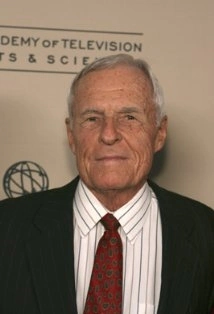
| 2 Quotes | |
| Born as | Grant Almerin Tinker |
| Occup. | Musician |
| From | USA |
| Born | January 11, 1925 Stamford, Connecticut |
| Age | 101 years |
| Cite | |
Citation Formats
APA Style (7th ed.)
Grant tinker biography, facts and quotes. (2026, February 11). FixQuotes. https://fixquotes.com/artists/grant-tinker/
Chicago Style
"Grant Tinker biography, facts and quotes." FixQuotes. February 11, 2026. https://fixquotes.com/artists/grant-tinker/.
MLA Style (9th ed.)
"Grant Tinker biography, facts and quotes." FixQuotes, 11 Feb. 2026, https://fixquotes.com/artists/grant-tinker/. Accessed 26 Mar. 2026.
Early Life and Background
Grant Almerin Tinker was born on January 11, 1925, in New York City, into a United States poised between the aftershocks of World War I and the oncoming turbulence of the Depression. The city around him was loud with radio, newspapers, vaudeville, and the first hints of mass celebrity - a climate that made entertainment feel less like a luxury than a civic bloodstream. Though later public profiles often reduced him to the calm executive with an unshowy manner, his early life was shaped by the pragmatic New York expectation that talent mattered most when it could be turned into a working craft.He came of age as American media consolidated into national networks and advertising-driven programming, with radio already training audiences to accept a scheduled cultural life. For Tinker, the era encouraged a double consciousness: a belief in artistry and a respect for the machinery that carried it. That balance - creative ambition coupled with an operator's realism - would become his signature temperament, even when his name was later associated less with performance than with making room for other people to perform at their highest level.
Education and Formative Influences
Tinker attended Dartmouth College, a setting that placed him among the postwar managerial class just as television began to outgrow its experimental phase into a dominant national medium. The discipline he absorbed was less about a single doctrine than about systems: how institutions steer taste, how budgets become creative constraints, and how leadership is as much about selecting people as directing them. This was the seedbed for the management style that later defined him - a preference for clear standards, lean bureaucracy, and the belief that strong, self-directed professionals produce the best work when they are trusted.Career, Major Works, and Turning Points
After military service during World War II, Tinker entered television through advertising and network operations, eventually becoming a key executive within NBC. His most fateful professional turn came with his marriage to Mary Tyler Moore and their shared decision to build a company that protected creative independence: MTM Enterprises, founded in 1969, with Tinker as the business architect and Moore as its luminous on-screen center. MTM produced a stream of era-defining work including "The Mary Tyler Moore Show" (1970-1977), "The Bob Newhart Show" (1972-1978), and later "Hill Street Blues" (1981-1987), shows that proved sophisticated writing and character-based comedy-drama could win both audiences and critical respect. Tinker returned to NBC as chairman and CEO (1981-1986), where he helped steer a dramatic turnaround in network fortunes through talent-centered scheduling and a renewed emphasis on quality, then later remained a prominent industry figure and philanthropist. His personal life included his divorce from Moore in 1981 and a later marriage to television executive Patricia "Pat" Kennedy.Philosophy, Style, and Themes
Tinker was not a musician in the conventional sense of composing or performing for the public, but he had a musician's ear for ensemble - the way individual voices must be distinct yet harmonize into a coherent whole. The "sound" he pursued in television was human-scaled and emotionally truthful: intelligent comedy built from character rather than punch lines, drama that treated workplaces as moral ecosystems, and a modern realism that trusted viewers to follow nuance. That approach was partly aesthetic and partly ethical. He seemed to feel that entertainment was an education in social perception - a way people rehearse empathy, ambition, disappointment, and dignity.His managerial psychology was unusually revealing in the aphorisms he repeated. “First be best, then be first”. The line is not merely about competition; it betrays a private anxiety about shortcuts and a conviction that reputation is earned through craft long before it is rewarded by power. Likewise, “I assume you know what to do with this. That's why you were hired”. That sentence is both empowering and demanding: it grants autonomy, but it also removes excuses, implying that creative adults should not need constant supervision to meet a shared standard. Together, the quotes sketch an inner life governed by restraint and expectation - a leader who measured success by the steadiness of the work, not the noise of self-promotion, and who tried to build organizations where excellence could become habitual.
Legacy and Influence
Tinker's enduring influence lies in how he helped recalibrate American television toward writer-driven, performance-centered storytelling at a time when networks often treated programs as interchangeable containers for ads. MTM's production culture became a template for the modern "quality TV" pipeline: strong rooms, clear tones, consistent character worlds, and respect for audience intelligence. At NBC, his talent-first strategy contributed to the network's 1980s resurgence and validated the idea that leadership can be quietly transformational when it sets standards, hires well, and then gets out of the way. He died in 2016, remembered less for celebrity than for the durable ecosystem he helped build - one where creative people could do their best work and, in doing so, change what mainstream entertainment dared to be.Our collection contains 2 quotes written by Grant, under the main topics: Motivational - Management.
Other people related to Grant: Mary Tyler Moore (Actress), Valerie Harper (Actress), Cloris Leachman (Actress)
Source / external links