
Hit-Boy Biography Quotes 8 Report mistakes
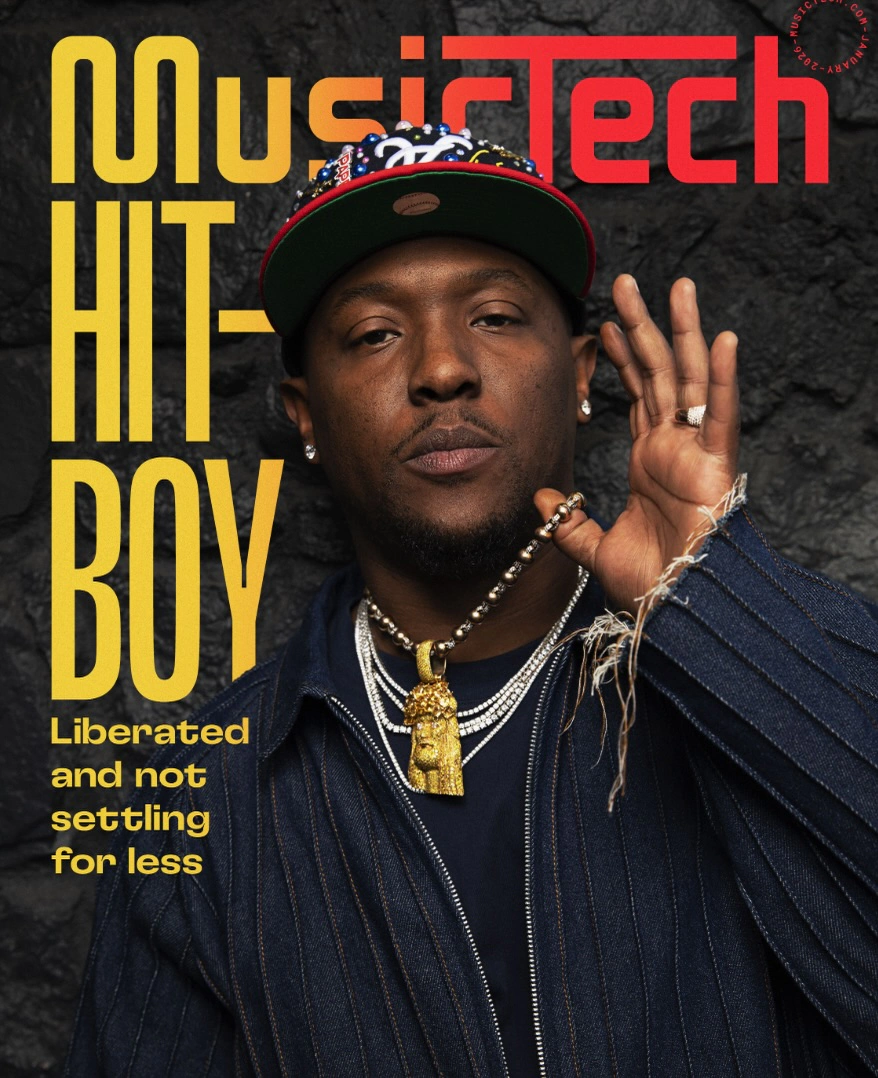
| 8 Quotes | |
| Born as | Chauncey Alexander Hollis Jr. |
| Occup. | Musician |
| From | USA |
| Born | May 21, 1987 Fontana, California, USA |
| Age | 38 years |
| Cite | |
Citation Formats
APA Style (7th ed.)
Hit-boy biography, facts and quotes. (2026, February 11). FixQuotes. https://fixquotes.com/artists/hit-boy/
Chicago Style
"Hit-Boy biography, facts and quotes." FixQuotes. February 11, 2026. https://fixquotes.com/artists/hit-boy/.
MLA Style (9th ed.)
"Hit-Boy biography, facts and quotes." FixQuotes, 11 Feb. 2026, https://fixquotes.com/artists/hit-boy/. Accessed 25 Mar. 2026.
Early Life and Background
Chauncey Alexander Hollis Jr., known professionally as Hit-Boy, was born in 1987 and grew up between Los Angeles County worlds that rarely touch cleanly - the working grit and street-level hustle of the Inland Empire area he has often referenced (notably Fontana) and the industry gravity of greater Los Angeles. That split geography mattered: it gave him both distance from the glamour and proximity to the pipeline. In the late 1990s and early 2000s, Southern California rap was shifting from G-funk’s afterglow into a more fragmented, internet-driven era, and he came of age watching local scenes compete with a newly borderless digital marketplace.Family life shaped his sense of urgency. He has spoken about a father who was musically connected (his father is linked to the group Hit Squad), a detail that added both inspiration and complicated expectations. The result was a young artist attentive to the reality that opportunity does not arrive as a gift - it is negotiated, earned, and defended. That early mix of access and instability helped form a personality that prizes output, professionalism, and the ability to adapt without losing self-definition.
Education and Formative Influences
Hit-Boy’s real education was apprenticeship-by-obsession: learning software, studying radio arrangements, and reverse-engineering how drums, bass, and melody create emotional pressure. The producer generation he belongs to was raised on the last years of CD culture and the first years of bedroom production becoming credible at the highest levels; forums, leaks, mixtapes, and YouTube made style both instantly shareable and instantly disposable. In that climate, versatility became survival, and he developed a habit of building beats as complete records - not just loops - absorbing West Coast bounce, Southern knock, and polished pop-rap structure while aiming for clarity and impact.Career, Major Works, and Turning Points
He broke through in the early 2010s as part of the Surf Club collective and quickly graduated from promising newcomer to hitmaker, with major credits that defined the era’s sound - including Kanye West and Jay-Z’s "Niggas in Paris" (2011) and Jay-Z’s "Clique" (2012). Those records did more than chart: they cemented him as a producer who could deliver stadium-scale rhythm while keeping street-level bite. Rather than freeze in that moment, he expanded his identity through artist projects (including his "All I Ever Dreamed Of" series), high-level collaborations across the industry, and a significant creative partnership with Nas that culminated in the King’s Disease trilogy (2020-2022) and Magic (2021), a late-career renaissance for Nas and a public reframing of Hit-Boy as an executive-level craftsman capable of shaping an entire album’s narrative, pacing, and sonic world.Philosophy, Style, and Themes
At the center of Hit-Boy’s inner life is a compulsion to make, refine, and outwork doubt. “I’m always creating. That’s my therapy”. Read psychologically, the line is not branding - it is a coping strategy for an industry that rewards attention more than stability. Creation becomes a way to metabolize pressure: if the business is chaotic, the studio is controllable. That mindset explains his unusually consistent output and his tendency to treat each placement as both craft and proof of self-worth.His style is defined by range without vagueness: hard drums, crisp spatial mixing, and hooks that feel engineered for memory. He resists being locked into a single regional signature, because his ambition is durability, not trend-chasing. “I never wanted to be put in a box. I can do more than one sound”. The stance doubles as a business philosophy for the streaming age, when audiences fragment and algorithms punish sameness. Yet his versatility is not shapeless - it often carries a theme of ascent, the conversion of environment into fuel. “I’m inspired by being from where I’m from and making it out, turning that into music”. That impulse - turning origin into propulsion - helps explain why his best work balances sheen with hunger, celebration with the faint tension of someone who remembers what failing would cost.
Legacy and Influence
Hit-Boy’s enduring influence sits in two lanes that rarely coexist: the singles era and the album craft revival. On one hand, he helped define a decade of high-impact rap records built for arenas and playlists; on the other, his work with Nas proved that a producer could still function as a narrative architect, reintroducing the idea of cohesive, producer-led rap albums to a mainstream conversation dominated by quick drops. For younger producers, he models a template of the modern career - collective-driven beginnings, brand-level placements, then a pivot into authorship - and his legacy increasingly reads as longevity through elasticity: a musician-producer who treats sound not as a signature to protect, but as a language to keep mastering.Our collection contains 8 quotes written by Hit-Boy, under the main topics: Music - Work Ethic - Mental Health - Legacy & Remembrance - Confidence.
Source / external links