
Iggy Pop Biography Quotes 11 Report mistakes
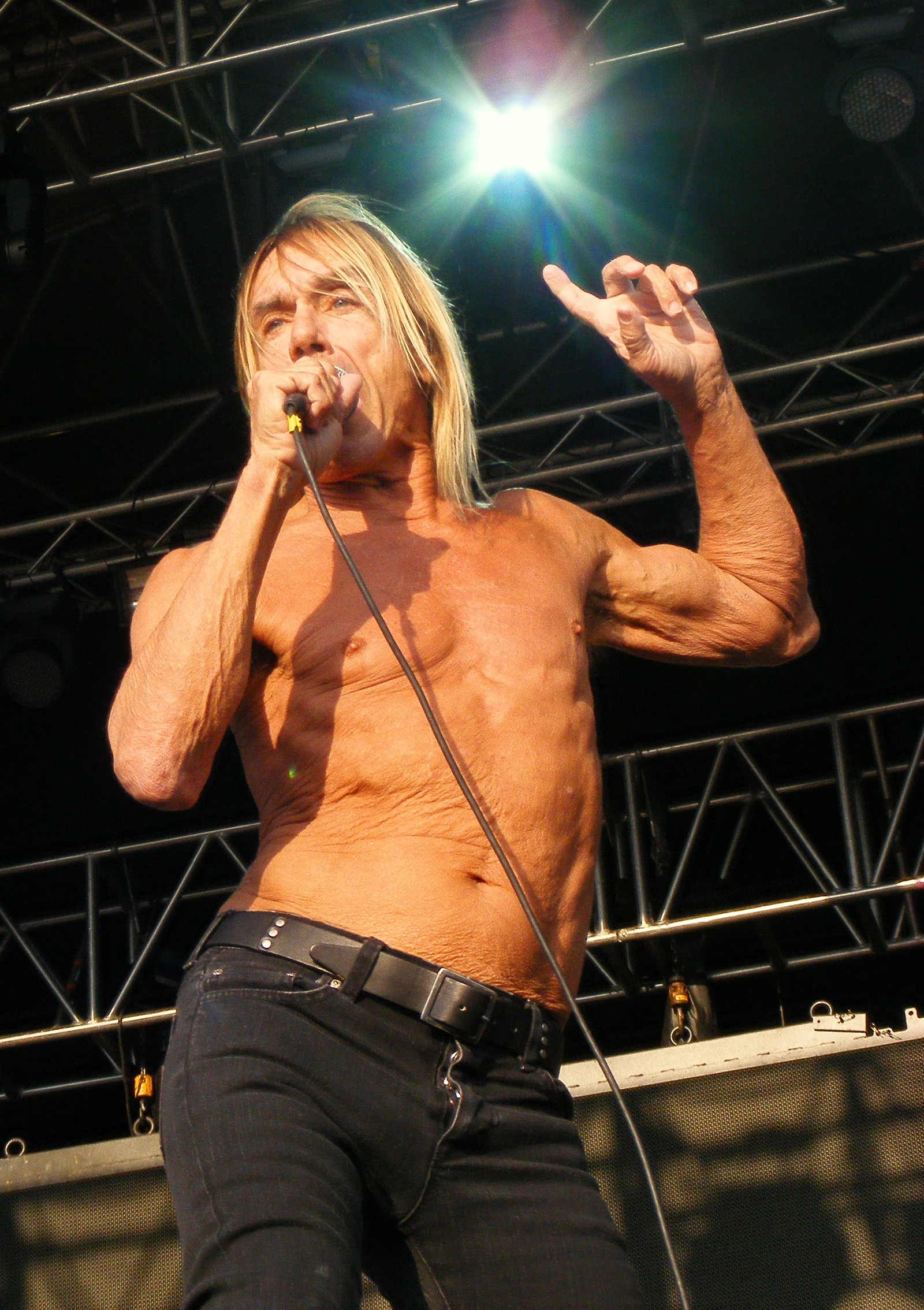
Attr: Man Alive!, CC BY 2.0
| 11 Quotes | |
| Born as | James Newell Osterberg Jr. |
| Occup. | Musician |
| From | USA |
| Born | April 21, 1947 Muskegon, Michigan, USA |
| Age | 78 years |
| Cite | |
Citation Formats
APA Style (7th ed.)
Iggy pop biography, facts and quotes. (2026, February 11). FixQuotes. https://fixquotes.com/artists/iggy-pop/
Chicago Style
"Iggy Pop biography, facts and quotes." FixQuotes. February 11, 2026. https://fixquotes.com/artists/iggy-pop/.
MLA Style (9th ed.)
"Iggy Pop biography, facts and quotes." FixQuotes, 11 Feb. 2026, https://fixquotes.com/artists/iggy-pop/. Accessed 5 Mar. 2026.
Early Life and Background
James Newell Osterberg Jr. was born on April 21, 1947, in Muskegon, Michigan, and raised in nearby Ann Arbor, a college town whose libraries, radio stations, and bars gave a restless kid both escape routes and stages. His father, a high school English teacher, and his mother, a homemaker, encouraged his interest in sound even when it was loud, strange, and anti-social; the family moved into a trailer so he could have room to rehearse. That small domestic concession mattered - it treated noise as a vocation, not merely a phase.Before he was "Iggy Pop", he was a working-class Midwestern drummer absorbing the grit of factories and the bohemian crosscurrents of the early 1960s. The era offered competing scripts - the clean virtuosity of mainstream rock, the folk revival's moral posture, and the raw thump of R&B - and Osterberg gravitated toward whatever felt most bodily and least polite. By the time the Vietnam years sharpened American generational conflict, he was already training himself to be a provocation: a performer who would make the crowd complicit, not comfortable.
Education and Formative Influences
He attended Ann Arbor High School and briefly enrolled at the University of Michigan, but his real schooling came from bands and pilgrimage. He played drums with local groups, including the Iguanas (from which "Iggy" stuck), then traveled to Chicago to study blues up close - soaking in clubs, learning the economy of Muddy Waters-style phrasing, and grasping how repetition can become trance. That apprenticeship in Black American music, combined with the avant-garde and political edge of Ann Arbor's counterculture, formed his lifelong tension: reverence for roots, and a desire to tear the stage apart.Career, Major Works, and Turning Points
In 1967 he formed the Psychedelic Stooges with the Asheton brothers (Ron and Scott) and Dave Alexander, soon becoming The Stooges - a band that treated rock not as craft but as impact. Their albums The Stooges (1969) and Fun House (1970) fused primitive riffs, saxophone abrasion, and confrontational performance into a template for punk; Raw Power (recorded 1972, released 1973) pushed the violence of the sound further, even as addiction and instability fractured the group. A crucial turning point came through David Bowie, who helped revive Osterberg in the mid-1970s: in Berlin and beyond, Iggy made The Idiot and Lust for Life (both 1977), balancing mechanized cool with street-level hunger, and scoring enduring songs like "Lust for Life" and "The Passenger". Later decades brought continued reinvention - from the hard rock of the late 1970s and 1980s to the reflective tones of Avenue B (1999) and the reunion-era Stooges records, while his live shows remained the core text: risk, endurance, communion.Philosophy, Style, and Themes
Iggy Pop's inner life is a negotiation between exposure and armor. He built a persona that seems indestructible - shirtless, smeared in sweat, daring the crowd to look away - yet he often frames memory and identity as survival strategies, not triumphs. “I have a hot memory, but I know I've forgotten many things, too, just squashed things in favor of survival”. That line reads like a private autobiography inside a public stunt: the body takes the hits, the mind edits the archive, and the art becomes the place where the unspeakable can still leak through as rhythm, shout, and repetition.His style rejects prettiness in favor of sensation, pursuing the moment when music stops being entertainment and becomes a physical weather system. “I like music that's more offensive. I like it to sound like nails on a blackboard, get me wild”. Offense, for him, is less cruelty than contact - a way to bypass irony and moral posturing. “If I don't terrorize, I'm not Pop”. Terrorize here means rupture: breaking the contract of passive spectatorship, forcing a crowd to feel its own appetite for danger, sex, and freedom, and then refusing to pretend that any of it is clean. Across his best work, themes recur with blunt clarity - lust as propulsion, boredom as enemy, the city as both trap and muse, and the self as a moving target that must be reinvented before it ossifies.
Legacy and Influence
Iggy Pop became one of the central architects of punk and its descendants, not only through The Stooges' foundational recordings but through a performance language that prefigured hardcore, post-punk, grunge, and alternative rock. Artists from the Sex Pistols, Ramones, and Joy Division to Nirvana, Queens of the Stone Age, and beyond have echoed his stripped-down structures and his insistence that charisma can be feral rather than polished. He also endured long enough to complicate his own myth: a figure once reduced to chaos who later demonstrated craft, wit, and surprisingly tender reflection, proving that the same voice that can snarl can also narrate a life lived at full volume without surrendering to nostalgia.Our collection contains 11 quotes written by Iggy, under the main topics: Funny - Music - Sarcastic - Resilience - God.
Other people related to Iggy: Tony Visconti (Musician), Alex Cox (Director), Joshua Homme (Musician), Mike Watt (Musician)
Source / external links