
Isaac Albeniz Biography Quotes 1 Report mistakes
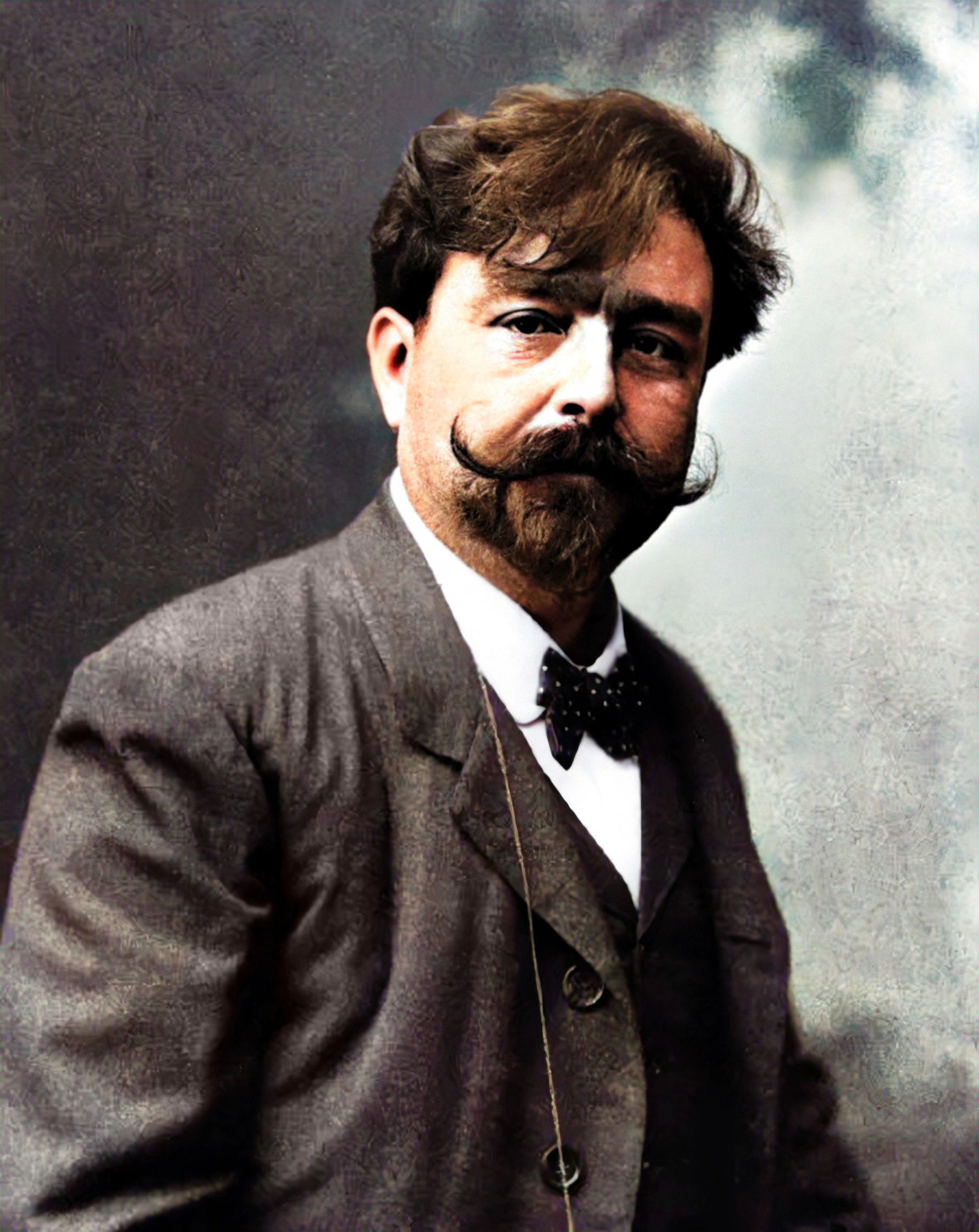
| 1 Quotes | |
| Born as | Isaac Manuel Francisco Albéniz y Pascual |
| Occup. | Musician |
| From | Spain |
| Born | May 29, 1860 Camprodon, province of Girona |
| Died | May 18, 1909 |
| Aged | 48 years |
| Cite | |
Citation Formats
APA Style (7th ed.)
Isaac albeniz biography, facts and quotes. (2026, February 11). FixQuotes. https://fixquotes.com/artists/isaac-albeniz/
Chicago Style
"Isaac Albeniz biography, facts and quotes." FixQuotes. February 11, 2026. https://fixquotes.com/artists/isaac-albeniz/.
MLA Style (9th ed.)
"Isaac Albeniz biography, facts and quotes." FixQuotes, 11 Feb. 2026, https://fixquotes.com/artists/isaac-albeniz/. Accessed 5 Mar. 2026.
Early Life and Background
Isaac Manuel Francisco Albeniz y Pascual was born on 29 May 1860 in Camprodon, a Pyrenean town in Catalonia, into a Spain still unsettled by the aftershocks of the Carlist conflicts and the oncoming crisis that would topple Isabella II. His father, a customs official, moved the family frequently, and the boy grew up amid stations and borderlands - Barcelona, other provincial postings, and the mixed musical life of theaters, salons, and street bands. That restlessness became part of his legend: the child pianist who seemed unable to remain contained by lessons, schedules, or even geography.From very early on, Albeniz displayed the two traits that would define his inner life: audacity and a hunger for sound-worlds larger than his immediate surroundings. As a child he performed publicly in Barcelona and was soon marketed as a prodigy, a role that promised independence but also demanded constant motion. The young pianist learned to read rooms as well as scores - how to win an audience quickly, how to improvise when necessary, and how to turn risk into charisma, habits that later fed both his virtuoso career and his compositional imagination.
Education and Formative Influences
His training was piecemeal but intense, shaped by teachers in Barcelona and Madrid and by his own stubborn self-education at the keyboard; later, more stable study in Paris helped refine his craft. The crucial formative influence was not a single academy but the collision between Iberian popular idioms (dance rhythms, guitar gestures, regional song) and the broader European pianistic tradition of Chopin and Liszt, whose concert bravura and harmonic daring offered a model for turning national color into large-scale art. He also absorbed the cosmopolitan currents of the fin de siecle - new harmonies, new orchestral thinking, and the rising prestige of "Spanish" exoticism abroad - and began to imagine a Spain rendered from within rather than performed for outsiders.Career, Major Works, and Turning Points
Albeniz built his early reputation as a touring pianist, then gradually pivoted toward composition, a shift accelerated by the pull of Paris and London musical life and by the example of Spanish contemporaries seeking a modern national voice. His stage ambitions produced zarzuela and opera projects, but his enduring monument is the piano: suites that translate regional Spain into advanced keyboard writing, culminating in "Iberia" (1905-1909), a set of twelve pieces whose density of rhythm, layered sonorities, and near-orchestral textures stretched the instrument and redefined what "Spanish piano music" could mean. In his final years, illness narrowed his physical range even as his inner range expanded; he died on 18 May 1909 in Camboles-les-Bains, France, leaving a late style that sounded both rooted and startlingly modern.Philosophy, Style, and Themes
Albeniz's art is often described as "nationalist", but his nationalism was aesthetic rather than programmatic: he sought not a political slogan but a lived atmosphere - architecture, light, and memory translated into harmony and rhythm. He wanted a Spain that could carry the weight of high art without losing its local grain, and he was especially drawn to Andalusia as an imaginative crucible where histories overlapped. “I want the Arabic Granada, that which is art, which is all that seems to me beauty and emotion”. The sentence reveals a psychology of longing: he pursued not the Granada of guidebooks but an inward Granada, an "Arabic" past as a metaphor for layered identity, sensuality, and loss.Technically, he solved that longing through sound. Guitar-like figurations, habanera and seguidilla impulses, and cante-like melodic turns are not pasted on - they are dissolved into pianistic counterpoint and advanced chromatic harmony, creating the illusion of streets, courtyards, and distant singing without literal quotation. In "Iberia", the listener hears motion and heat, but also a mind arranging experience into complex, almost symphonic structures: repeated cells become obsessions, rhythmic snap becomes a form of will, and shimmering chordal fields become memory itself. The result is music that performs its own inner conflict - between the virtuoso's outward brilliance and the composer's private, meticulously constructed dream of place.
Legacy and Influence
Albeniz helped secure a modern Spanish voice in European music, offering later composers a model for fusing vernacular rhythm with sophisticated harmony and form. "Iberia" became a touchstone for pianists and a provocation to composers: its innovations fed the French imagination (notably in the broader Impressionist and post- Impressionist palette) while giving Spanish successors a standard of craft and ambition. More than a picturesque miniaturist, he left a portrait of Spain as remembered, reinvented, and intensely felt - a psychological geography that continues to shape how the piano can evoke culture without reducing it to costume.Our collection contains 1 quotes written by Isaac, under the main topics: Music.
Other people related to Isaac: Arthur Rubinstein (Musician)
Source / external links