
Jack Brymer Biography Quotes 1 Report mistakes
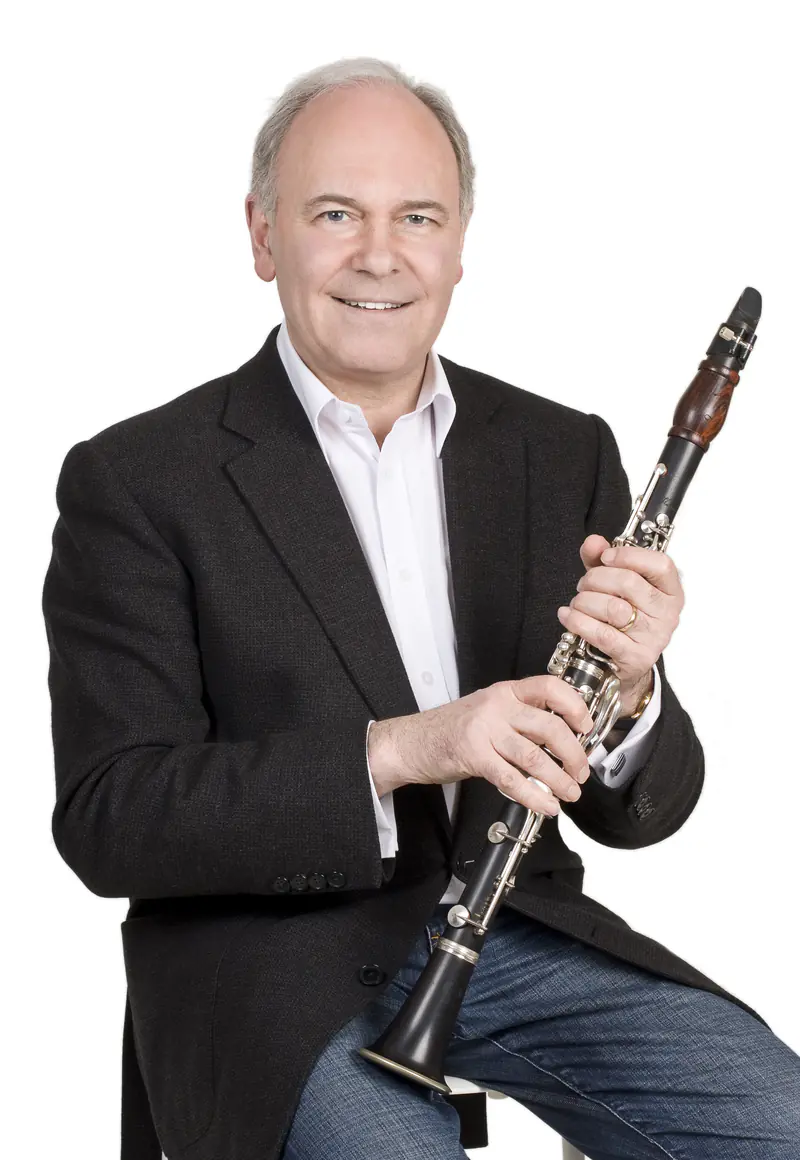
| 1 Quotes | |
| Born as | John Alexander Brymer |
| Occup. | Musician |
| From | United Kingdom |
| Born | January 27, 1915 South Shields, England |
| Died | September 15, 2003 Redhill, Surrey, England |
| Aged | 88 years |
John Alexander "Jack" Brymer was born on January 27, 1915, in South Shields, County Durham, into a Britain still under the long shadow of the First World War. His childhood unfolded in the industrial North, where municipal bands, church music, and the BBCs growing reach gave ordinary households a new kind of access to culture. He later came to embody a specifically British musical ideal - unshowy, exacting, and humane - at a moment when the countrys orchestras were professionalizing fast and national taste was being shaped by radio.
Music entered early and practically. Brymer was not raised as a prodigy with conservatoire pedigree so much as a gifted, self-directed musician whose ear and discipline were nurtured in local ensembles and in the habit of making the most of what was at hand. That combination - modest circumstances, intense listening, and a preference for quiet mastery over display - would become a psychological throughline in his playing: an ability to sound effortlessly lyrical while privately solving difficult problems of tone, tuning, and blend.
Education and Formative Influences
Rather than a straight path through elite training, Brymers formation mixed study, teaching, and voracious listening, and it unfolded alongside the rapid modernization of British musical life between the wars. He trained as a schoolteacher and worked in education, a background that sharpened his clarity of explanation and his patient, analytical approach to technique. By the late 1930s and 1940s, as British orchestras tightened standards and the BBC normalized high-level performance for mass audiences, Brymer absorbed not only repertoire but also the new expectation that a principal wind player should have a signature sound - recognizable on the radio, yet always in service to the line.
Career, Major Works, and Turning Points
Brymers decisive professional turn came after the Second World War, when he was appointed principal clarinet of the Royal Philharmonic Orchestra under Sir Thomas Beecham - a post that placed him at the center of British orchestral prestige and of a conductor famed for wit, exacting standards, and an instinct for color. With Beecham and the RPO, Brymer became a first-call artist for recordings and broadcasts, and his tone - warm, speaking, unforced - helped define how British listeners expected a clarinet to sound in Mozart, Brahms, and the lighter Beecham repertory alike. Beyond orchestral work he was a high-profile soloist, a chamber musician, and a broadcaster and writer on the instrument, shaping public understanding of the clarinet at a time when LPs and radio made a players identity portable, repeatable, and influential.
Philosophy, Style, and Themes
Brymers art was built on a paradox: the appearance of ease achieved through relentless problem-solving. He rejected the fantasy of flawless equipment and treated the clarinet as a living, slightly unruly partner that demanded constant negotiation. "The ability to play the clarinet is the ability to overcome the imperfections of the instrument. There's no such thing as a perfect clarinet, never was and never will be". The sentence reads like practical advice, but it also sketches his inner life: a temperament that distrusted grandiosity, accepted limits without resentment, and turned constraint into elegance. In performance this became a kind of poised intimacy - the sense that every phrase had been weighed, but nothing was forced.
That mindset fed his signature style: long-breathed legato, careful dynamic shading, and a way of blending into an orchestral fabric while remaining unmistakably himself. Brymer prized human speech in tone and phrasing - the clarinet as a lyrical narrator rather than an acrobat - and he favored line over effect. When the music demanded brilliance he could supply it, but his deepest theme was candor: bringing out the emotional truth of a phrase without making it theatrical. In the postwar decades, as British musical identity balanced continental tradition with a homegrown confidence, Brymer offered a model of authority without bombast - a sound that suggested both refinement and approachability, and a technique whose core ethic was responsibility to the music rather than to ego.
Legacy and Influence
Jack Brymer died on September 15, 2003, having become, for many listeners and players, the defining British clarinet voice of the twentieth century. His influence endures less as a single school of method than as a standard of musical character: the belief that style is inseparable from honesty, and that mastery means making peace with imperfection while refusing to be limited by it. Through landmark recordings, decades of broadcast presence, and the quiet authority of his example, he helped elevate the clarinet from orchestral color to speaking protagonist in British musical life, and he left a template for generations of principals - sound first, line always, and technique as the invisible labor behind apparent ease.
Our collection contains 1 quotes who is written by Jack, under the main topics: Music.
Source / external links