
Jacqueline du Pre Biography Quotes 4 Report mistakes
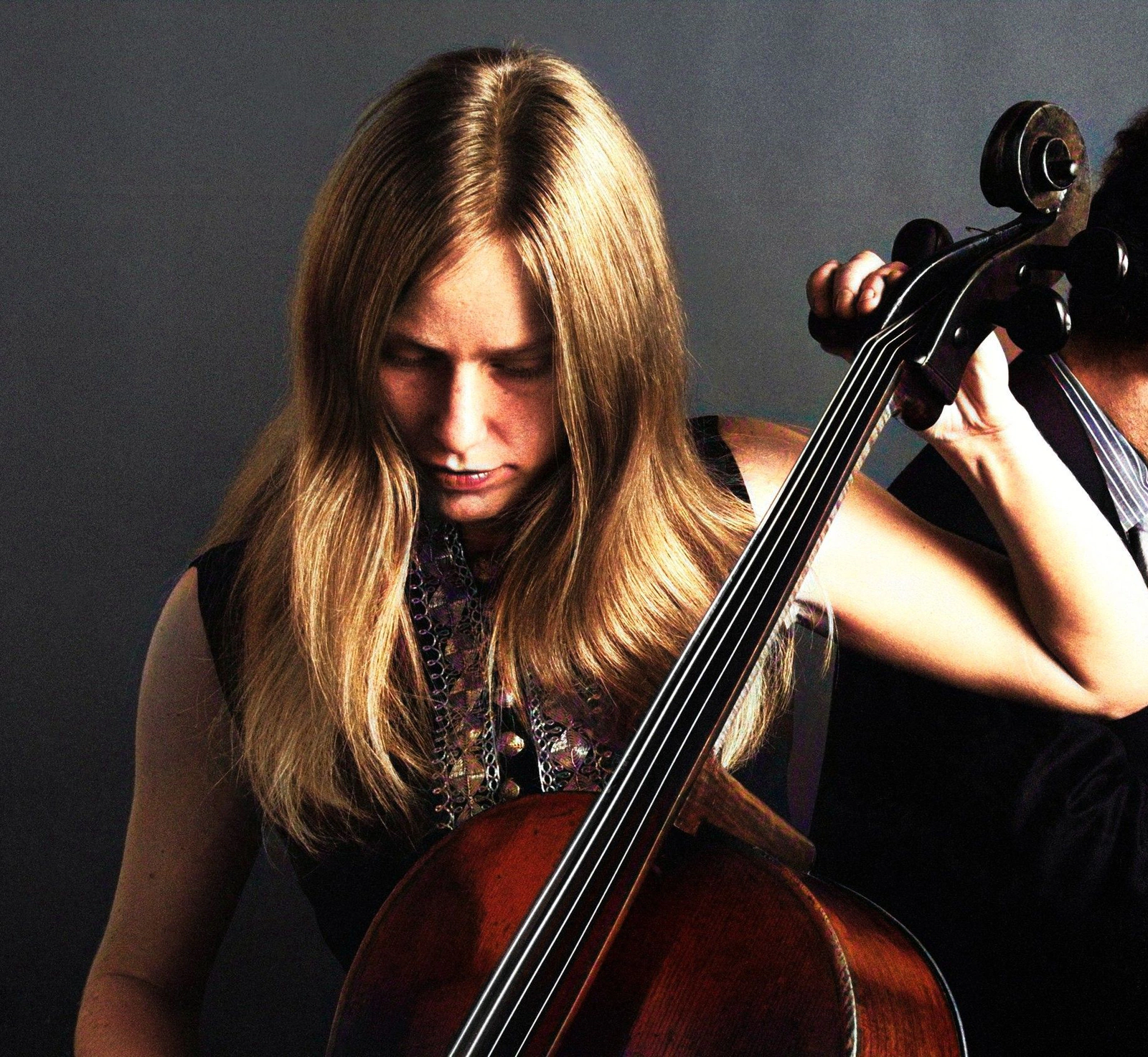
| 4 Quotes | |
| Born as | Jacqueline Mary du Pré |
| Native name | Jacqueline du Pré |
| Occup. | Musician |
| From | United Kingdom |
| Spouse | Daniel Barenboim |
| Born | January 26, 1945 Oxford, England, United Kingdom |
| Died | October 19, 1987 London, England, United Kingdom |
| Cause | Multiple sclerosis |
| Aged | 42 years |
| Cite | |
Citation Formats
APA Style (7th ed.)
Jacqueline du pre biography, facts and quotes. (2026, March 22). FixQuotes. https://fixquotes.com/artists/jacqueline-du-pre/
Chicago Style
"Jacqueline du Pre biography, facts and quotes." FixQuotes. March 22, 2026. https://fixquotes.com/artists/jacqueline-du-pre/.
MLA Style (9th ed.)
"Jacqueline du Pre biography, facts and quotes." FixQuotes, 22 Mar. 2026, https://fixquotes.com/artists/jacqueline-du-pre/. Accessed 3 Apr. 2026.
Early Life and Background
Jacqueline Mary du Pre was born in Oxford on 26 January 1945, as Britain emerged from war and entered an age that prized reconstruction, discipline, and cultural seriousness. She grew up in a musical household shaped by both aspiration and devotion: her father, Derek du Pre, worked in finance and retained a cultivated love of music, while her mother, Iris du Pre, was a gifted pianist and teacher who became the first architect of Jacqueline's talent. The family soon settled in London, where postwar concert life was recovering its prestige and where radio and recordings could carry a child prodigy into national consciousness. According to family lore, Jacqueline asked for a cello after hearing its sound on the radio at about age four; what began as fascination quickly became vocation.
From the beginning, her gift was not merely technical precocity but an unusually direct emotional transmission. She studied first with her mother and showed the kind of concentration that made adults feel they were witnessing not childish promise but a formed musical instinct. Yet her childhood was not one of cold regimentation. Accounts of her early years emphasize humor, spontaneity, and physical exuberance - qualities that later became inseparable from her playing style. In an era when British classical performance could still lean toward reserve, du Pre seemed almost startlingly unguarded. That contrast between discipline and abandon, training and instinct, would define both her artistry and the public myth that formed around her.
Education and Formative Influences
Du Pre's formal training quickly moved into elite circles. She studied at the London Cello School with William Pleeth, the teacher most deeply associated with her musical formation; from him she learned not only technical control but a way of making the cello speak as if it were an extension of breath and nerve. She later worked in master classes with Pablo Casals in Switzerland, met Mstislav Rostropovich, and absorbed the larger European cello tradition at a moment when recording culture was turning virtuosi into international symbols. Her adolescence unfolded inside an unusually rich musical network: she won the Guildhall School of Music and Drama Gold Medal while still very young, appeared on BBC television, and made a Wigmore Hall debut that announced not simply another prodigy but a singular temperament. Pleeth's influence gave her structure, but she was equally formed by the romantic mainstream she loved - Elgar, Brahms, Schumann, Dvorak - and by a distinctly postwar belief that great music demanded total personal risk.
Career, Major Works, and Turning Points
The 1960s made du Pre a star with uncommon speed. Her 1965 recording of Elgar's Cello Concerto with Sir John Barbirolli and the London Symphony Orchestra became one of the defining classical recordings of the century: not only a benchmark interpretation but a cultural event that joined English melancholy, youthful intensity, and a sense of national rediscovery. She performed widely across Europe, the Soviet Union, and North America, and her repertoire - especially the concertos of Elgar, Dvorak, Haydn, Schumann, and the chamber music of Beethoven, Brahms, and Schubert - revealed a player drawn to lyric urgency over decorative polish. Her 1967 marriage to pianist and conductor Daniel Barenboim created a highly visible artistic partnership, amplified by collaborations with Itzhak Perlman, Pinchas Zukerman, and Zubin Mehta; these performances helped turn chamber music into a public drama of friendship and competitive brilliance. But the same decade that crowned her also carried the seeds of catastrophe. In the early 1970s she began to lose sensation and coordination, symptoms eventually diagnosed as multiple sclerosis. Publicly, the change was bewildering; privately, it was annihilating for an artist whose identity was inseparable from bodily command. By 1973 her performing career was essentially over. She taught for a time and remained a magnetic presence, but the central fact of her later life was the brutal severing of genius from instrument. She died in London on 19 October 1987, aged forty-two.
Philosophy, Style, and Themes
Du Pre's art was grounded in a rare union of sensuous physicality and spiritual transport. She did not approach music as abstraction or cerebral architecture alone; she approached it as something lived through the body, as pressure, contact, breath, and release. “Playing lifts you out of yourself into a delirious place”. That sentence is unusually revealing: ecstasy for her was not a metaphor but a working condition, a state in which self-consciousness dissolved and expression became nearly involuntary. Her performances often looked risky because they were risky. She leaned into phrases with visible abandon, attacked climaxes with fierce bow weight, and let tenderness arrive without irony. This made her vulnerable to charges of excess from cooler listeners, but it also explains why audiences felt not merely impressed but shaken. She was not displaying emotion; she was undergoing it in public.
Just as important, du Pre's psychology was rooted in an earthy sense of belonging, beauty, and immediacy. “I have the same feeling when I walk in a very beautiful place that I have when I play and it goes right”. The comparison is exact and characteristic: musical rightness, for her, resembled being restored to the world rather than elevated above it. A related remark makes the point even more fully: “I love the physical thing of being on the earth that bore you. I have the same feeling when I walk in a very beautiful place that I have when I play and it goes right”. These are not decorative pastoral sentiments. They reveal a temperament that experienced art as an intensified form of presence - rooted, bodily, almost elemental. That helps explain both the radiance of her best interpretations and the devastation of her illness. For a musician whose selfhood was mediated through touch, sound, and kinetic freedom, multiple sclerosis was not only a medical crisis but an existential theft.
Legacy and Influence
Du Pre's legacy rests on a paradox: a relatively brief career produced an enduring standard of musical truthfulness. Her Elgar remains the touchstone against which nearly every later cellist is measured, not because it is definitive in some final scholarly sense, but because it captures the terrifying freshness of total commitment. She helped enlarge the modern image of the classical performer from dignified interpreter to fully legible personality, and she made the cello itself seem newly vocal, intimate, and heroic. Her life also became inseparable from larger narratives - genius and suffering, marriage and collaboration, celebrity and illness - explored in memoirs, documentaries, and the film Hilary and Jackie, though these representations have often been contested. What survives beyond controversy is the sound: ardent, singing, impulsive, unmistakable. In the history of twentieth-century music, du Pre endures as a figure who made interpretation feel like revelation and whose curtailed career only sharpened the sense that something irreplaceable had appeared, and then been taken away too soon.
Our collection contains 4 quotes written by Jacqueline, under the main topics: Music - Nature.
Source / external links