
James Levine Biography Quotes 32 Report mistakes
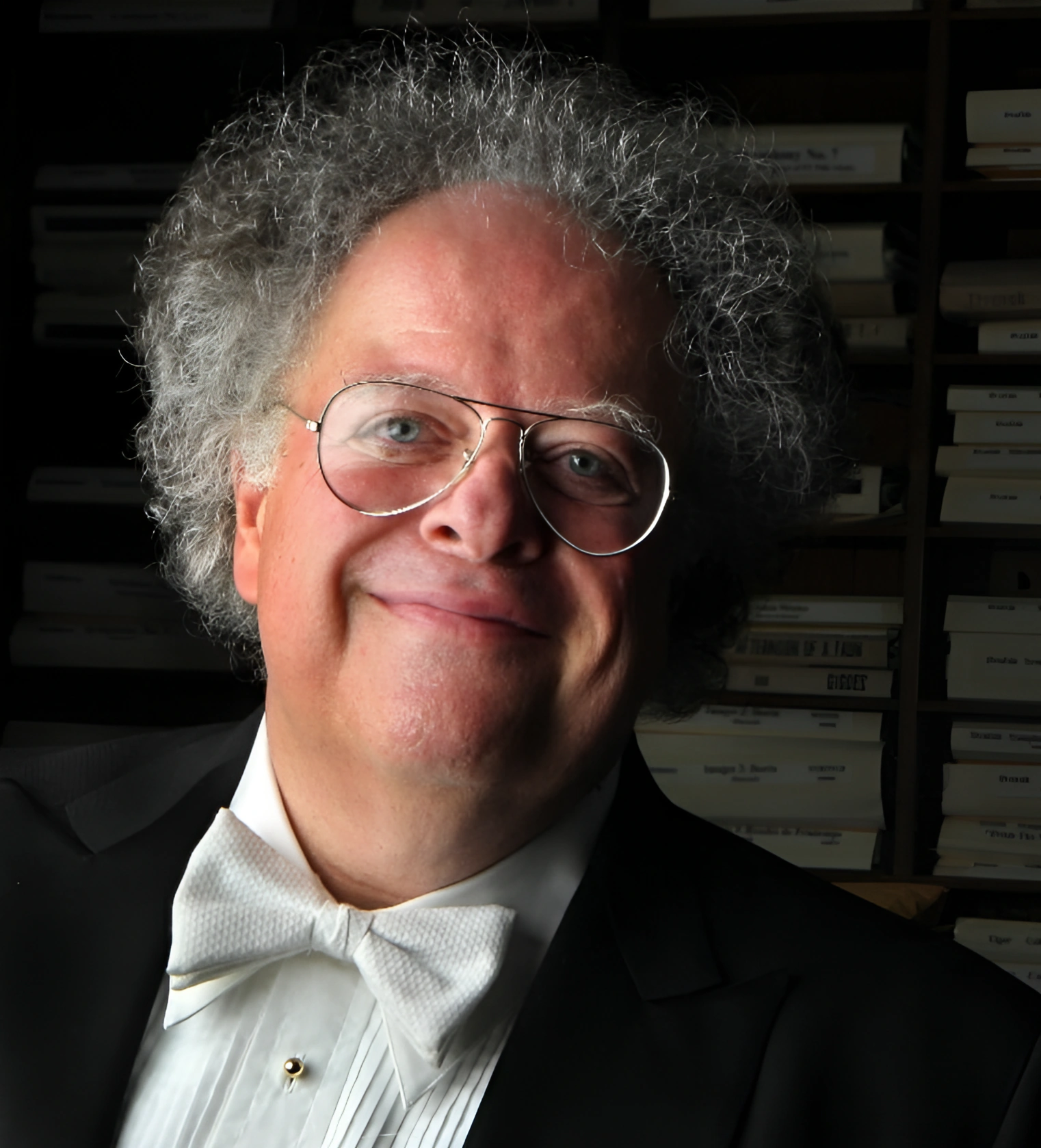
| 32 Quotes | |
| Born as | James Lawrence Levine |
| Occup. | Musician |
| From | USA |
| Born | May 24, 1943 Cincinnati, Ohio |
| Age | 82 years |
| Cite | |
Citation Formats
APA Style (7th ed.)
James levine biography, facts and quotes. (2026, February 11). FixQuotes. https://fixquotes.com/artists/james-levine/
Chicago Style
"James Levine biography, facts and quotes." FixQuotes. February 11, 2026. https://fixquotes.com/artists/james-levine/.
MLA Style (9th ed.)
"James Levine biography, facts and quotes." FixQuotes, 11 Feb. 2026, https://fixquotes.com/artists/james-levine/. Accessed 26 Mar. 2026.
Early Life and Background
James Lawrence Levine was born on May 23, 1943, in Cincinnati, Ohio, into a Jewish family that treated music as both craft and language. His father, Lawrence Levine, played violin in dance bands and local orchestras; his mother, Helen, supported the household and the young prodigy's strict routine. Cincinnati in the 1940s and 1950s was not a cosmopolitan capital, but it was a serious American music town - with a major symphony, strong radio culture, and a belief that European repertoire could be made native through discipline.From earliest childhood Levine displayed an unusually "adult" ear: he listened for balance, intonation, and architectural line more than for show. He studied piano first and appeared on television as a boy, the kind of precocity that can harden into performance anxiety or, in Levine's case, a craving for the deeper power behind the keyboard - the power to shape an entire room of sound. That craving, alongside a perfectionist temperament, became the engine of his life: an appetite for immersion, and a belief that rehearsal was where truth was earned.
Education and Formative Influences
Levine trained at the College-Conservatory of Music at the University of Cincinnati, studying piano, theory, and conducting, then moved into the professional crucible by apprenticing at the Cleveland Orchestra under George Szell in the early 1960s. Szell's exacting standards - the insistence on clarity, rhythmic spine, and structural inevitability - gave Levine a model of authority that did not depend on theatrics. He also absorbed the postwar American paradox: orchestras could be temples of elite culture and mass-circulation institutions at once, expected to justify themselves in a changing media economy.Career, Major Works, and Turning Points
Levine debuted at the Metropolitan Opera in 1971 with Tosca and rapidly became its central musical force, serving as music director from 1976 to 2016 and later as music director emeritus. At the Met he pursued a rare ideal in American opera - continuity and depth - shaping casts over multiple seasons and elevating orchestral standards so that the pit could carry dramatic meaning rather than merely accompany. His tenure produced landmark performances and recordings across Mozart, Verdi, Wagner, Strauss, and Berg, and it culminated institutionally in the Met Orchestra's emergence as a world-class symphonic ensemble in its own right, including celebrated concerts at Carnegie Hall. In 2004 he became music director of the Boston Symphony Orchestra, where early artistic successes were soon shadowed by chronic health problems that limited his mobility and stamina; by 2011 he stepped down. The final turning point came late: in 2017 the Met severed ties with Levine after allegations of sexual abuse; he denied wrongdoing, sued, and later settled. The scandal reframed public memory of his achievements and forced a painful separation between artistic legacy and personal conduct.Philosophy, Style, and Themes
Levine's inner life can be read in the way he built sound: he sought warmth without blur, urgency without violence, and - above all - the sense that music is a living argument unfolding in time. His love for the orchestral "middle" - inner voices, harmonic transitions, the slow work of making ensembles breathe together - expressed a psychology that trusted accumulation more than lightning strikes. “We're in the midst of an evolution, not a revolution”. For Levine, interpretation was not self-expression stamped onto a score but patient cultivation, where tradition could be renewed by microscopic attention and repeated exposure.He also distrusted empty spectacle, musical or social. “I have a big problem with conductors who gesture a lot”. That line captures both his method and his self-protection: a preference for authority earned through listening rather than display, and for the rehearsal room as a private laboratory. The boy who treated instruments as mysteries never lost the sense of discovery - “I grew up in an era where an orchestra was like a treasure chest”. - and that metaphor explains his lifelong magnetism for large institutions where the "treasure" could be opened slowly, work after work. His best evenings at the Met fused orchestral color, singer-centered pacing, and long-range architecture into a drama that felt inevitable, as if the score itself were speaking.
Legacy and Influence
Levine's influence on American musical life is immense and conflicted. Artistically, he raised the Met's musical standards, expanded the opera orchestra's symphonic identity, mentored generations of singers and instrumentalists, and helped normalize the idea that an opera house could be a serious musical institution, not merely a star system. Aesthetically, he modeled a conductor's authority rooted in preparation, ear, and structural thinking, leaving recordings and memories that continue to shape performance practice. Morally and institutionally, the allegations and the Met's rupture with him accelerated a reckoning about power, accountability, and the costs of protecting celebrated figures. His story endures as both a testament to what sustained musical leadership can build over decades, and a warning about what unexamined authority can conceal.Our collection contains 32 quotes written by James, under the main topics: Ethics & Morality - Art - Music - Writing - Parenting.
Other people related to James: Kiri Te Kanawa (Musician), Jessye Norman (Musician), Donal Henahan (American), Elliott Carter (Composer), Rudolf Bing (Musician)
Source / external links