
Janis Joplin Biography Quotes 18 Report mistakes
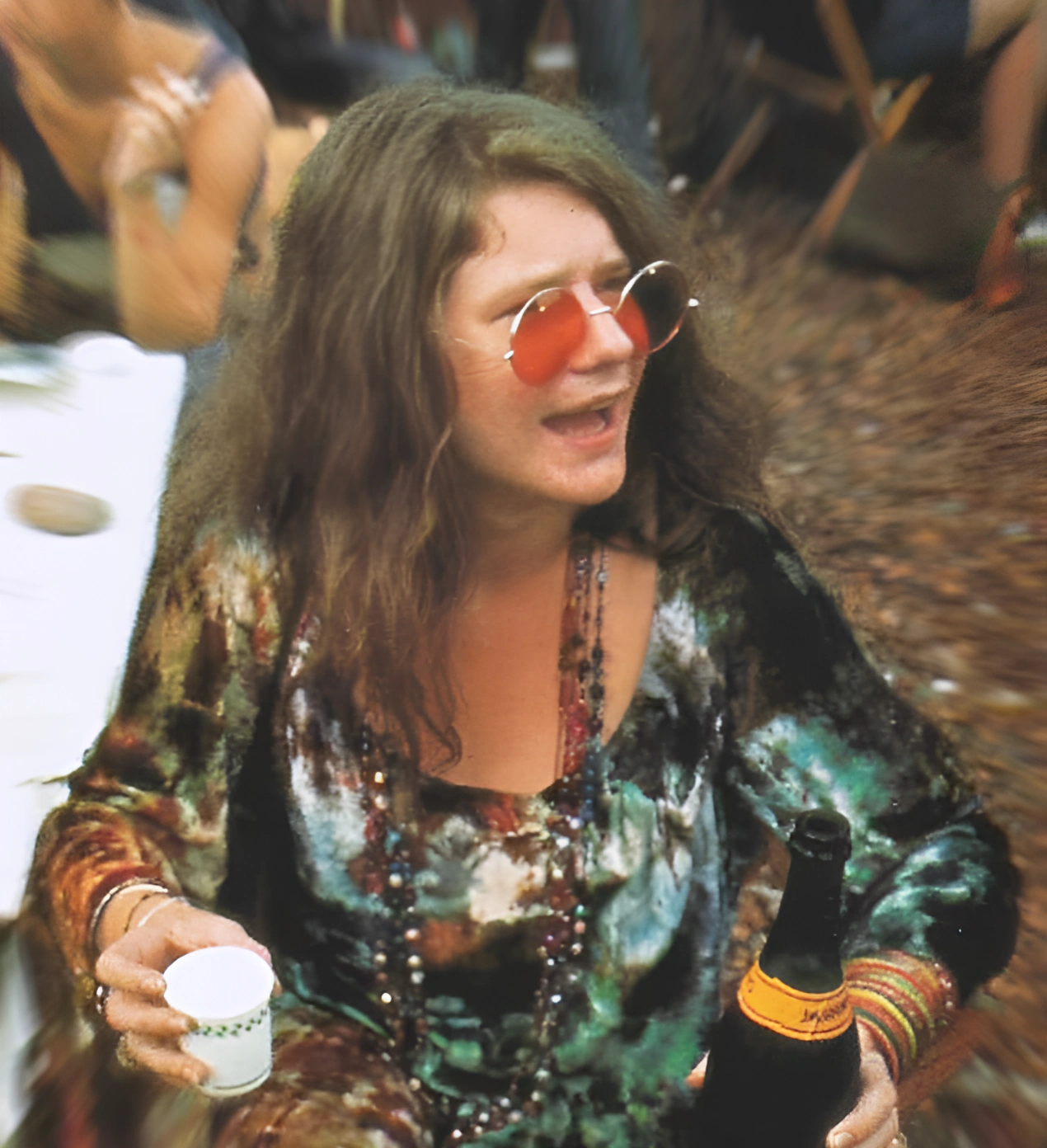
| 18 Quotes | |
| Born as | Janis Lyn Joplin |
| Occup. | Musician |
| From | USA |
| Born | January 19, 1943 Port Arthur, Texas, U.S. |
| Died | October 4, 1970 Los Angeles, California, U.S. |
| Cause | Heroin overdose |
| Aged | 27 years |
| Cite | |
Citation Formats
APA Style (7th ed.)
Janis joplin biography, facts and quotes. (2026, February 11). FixQuotes. https://fixquotes.com/artists/janis-joplin/
Chicago Style
"Janis Joplin biography, facts and quotes." FixQuotes. February 11, 2026. https://fixquotes.com/artists/janis-joplin/.
MLA Style (9th ed.)
"Janis Joplin biography, facts and quotes." FixQuotes, 11 Feb. 2026, https://fixquotes.com/artists/janis-joplin/. Accessed 5 Mar. 2026.
Early Life and Background
Janis Lyn Joplin was born on January 19, 1943, in Port Arthur, Texas, a Gulf Coast refinery town shaped by churchgoing respectability and industrial grit. Her father, Seth Ward Joplin, worked as an engineer at Texaco; her mother, Dorothy East, was a registrar and a careful guardian of manners and aspiration. The home was stable, but the cultural air of mid-century Southeast Texas could be punishing to anyone who looked or sounded different. Joplin, bright and intense, began to understand early that talent did not automatically earn protection.As a teenager at Thomas Jefferson High School, she gravitated toward blues and beat literature, listened hard, read widely, and developed a fierce sensitivity to humiliation. Acne, nonconformist clothes, and an outspokenness that cut against local gender codes made her a target; the social wounds of Port Arthur never fully healed, and they sharpened her hunger for an elsewhere where emotion and eccentricity were not just tolerated but turned into art. That outsider stance became both her shield and her fuel: she learned to transmute rejection into performance, to make pain legible by singing it louder.
Education and Formative Influences
Joplin attended Lamar State College of Technology (now Lamar University) in Beaumont and later enrolled at the University of Texas at Austin in 1962-63, drifting between classrooms and coffeehouse stages rather than building a conventional credential. Austin exposed her to folk revival circuits and to the idea that a voice could be a political and personal instrument; she also absorbed the blues lineage that would define her phrasing - Bessie Smith and Big Mama Thornton above all - and the bohemian permission structure of early-1960s counterculture. By 1963 she had left Texas for San Francisco, and after a difficult interlude back home in 1965, she returned to the Bay Area, where the Haight-Ashbury scene offered community, speed, and risk in equal measure.Career, Major Works, and Turning Points
In June 1966 Joplin became the lead singer of Big Brother and the Holding Company, and her breakthrough arrived at the Monterey Pop Festival in 1967, where her volcanic delivery on "Ball and Chain" made her the story of the weekend. The group recorded Cheap Thrills (1968), propelled by "Piece of My Heart" and "Summertime", and Joplin quickly outgrew the band, leaving for the Kozmic Blues Band and then the tighter, more soulful Full Tilt Boogie Band. Her final months in 1970 were a push toward disciplined musicianship and a more mature sound, captured on Pearl, recorded shortly before her death; it yielded definitive versions of "Me and Bobby McGee", "Cry Baby", and "Mercedes Benz". On October 4, 1970, she died in Los Angeles at 27 from a heroin overdose, with alcohol also in her system - a stark endpoint to a career that had moved, in barely four years, from club curiosity to national symbol.Philosophy, Style, and Themes
Joplin sang as if confession were a contact sport. Technically, her instrument fused blues rasp, gospel drive, and rock volume, but the deeper signature was psychological: she treated the microphone like a truth serum, letting hunger, shame, longing, and defiance coexist without tidying them into respectability. She understood herself as socially unclassifiable - “I'm one of those regular weird people”. - and that self-diagnosis was not a pose but a working method: if the world insisted she was strange, she would make strangeness a brand of honesty. The risk was that identity became inseparable from performance, leaving little refuge when the lights went down.Her lyrics and stage patter kept circling the same ache: the need to be chosen, and the fear that love was always temporary. The most revealing line is almost clinical in its loneliness: “On stage I make love to twenty five thousand people; and then I go home alone”. That paradox - mass adoration paired with private vacancy - helps explain both her fearless abandon onstage and her self-destructive offstage search for anesthesia and belonging. Even her ethic of artistry was absolutist: “If I hold back, I'm no good. I'm no good. I'd rather be good sometimes, than holding back all the time”. The sentence reads like a manifesto and a trap, because total emotional expenditure can create transcendent performances while also eroding the boundaries that keep a person safe.
Legacy and Influence
Joplin endures as one of the defining American voices of the 1960s, not because she polished herself into permanence but because she exposed the costs of freedom in real time. Pearl became a posthumous landmark, and her Monterey and Woodstock-era myth solidified the template of the rock singer as a public nerve ending - glorious, vulnerable, and breakable. She widened the space for women in rock to be loud, sexually frank, and musically authoritative without adopting masculine disguise, and she helped pull blues idioms into the heart of mainstream youth culture with open acknowledgement of her influences. Her life remains a cautionary biography, but her art is not a warning label; it is a record of what it sounds like when a person insists that feeling, fully expressed, is a form of truth.Our collection contains 18 quotes written by Janis, under the main topics: Witty One-Liners - Art - Music - Deep - Life.
Other people related to Janis: Ellen Willis (Writer), Bobby Womack (Musician), Clive Davis (Businessman), Linda McCartney (Photographer)
Source / external links