
Jeff Buckley Biography Quotes 8 Report mistakes
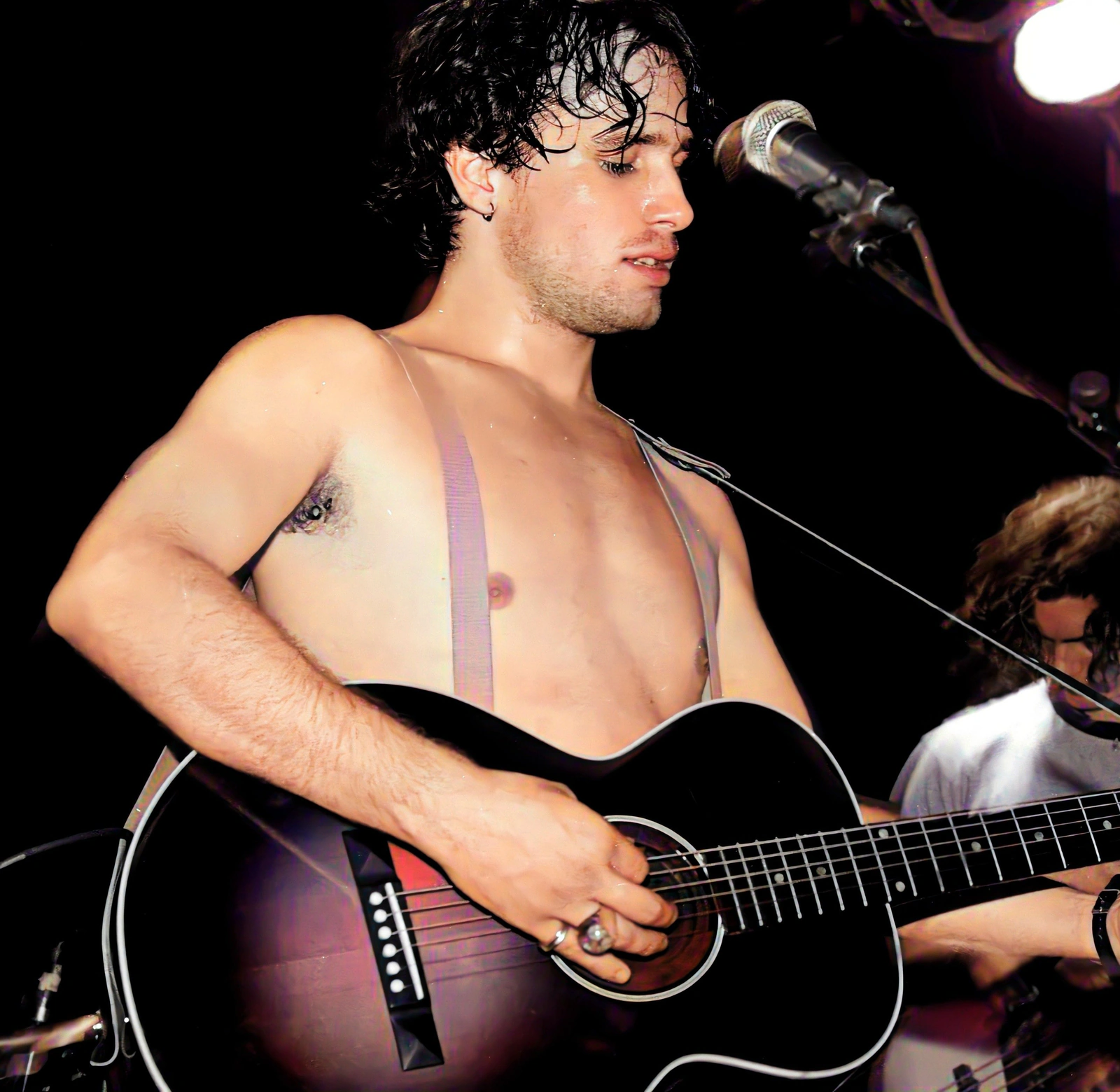
| 8 Quotes | |
| Born as | Jeffrey Scott Buckley |
| Occup. | Musician |
| From | USA |
| Born | November 17, 1966 Anaheim, California, USA |
| Died | May 29, 1997 Memphis, Tennessee, USA |
| Cause | Drowning |
| Aged | 30 years |
| Cite | |
Citation Formats
APA Style (7th ed.)
Jeff buckley biography, facts and quotes. (2026, February 11). FixQuotes. https://fixquotes.com/artists/jeff-buckley/
Chicago Style
"Jeff Buckley biography, facts and quotes." FixQuotes. February 11, 2026. https://fixquotes.com/artists/jeff-buckley/.
MLA Style (9th ed.)
"Jeff Buckley biography, facts and quotes." FixQuotes, 11 Feb. 2026, https://fixquotes.com/artists/jeff-buckley/. Accessed 26 Mar. 2026.
Early Life and Background
Jeffrey Scott Buckley was born on November 17, 1966, in Anaheim, California, into a drifting, musically charged orbit. His father was Tim Buckley, a celebrated and volatile singer-songwriter of the 1960s and 1970s whom Jeff met only a handful of times before Tim died in 1975. The absence became a lifelong pressure point - not only the public comparison but the private wound of being defined by a voice he barely knew, and by a lineage he neither chose nor could escape.Raised primarily by his mother, Mary Guibert, Buckley grew up between Southern California and later Orange County, taking on stepfather Ron Moorhead's surname for a time and living the ordinary instability of working-class life. He listened omnivorously - Led Zeppelin, Nina Simone, Edith Piaf, punk, R&B - and learned early that identity could be built from fragments. That scavenger's instinct, combined with a deep sensitivity and a hunger for connection, later made his songs feel like diaries written in public.
Education and Formative Influences
Buckley studied at the Musicians Institute in Hollywood, where he absorbed theory and the working discipline of session players, but his truest schooling came from immersion: singing in bands, accompanying other artists, and testing how far a voice could travel emotionally without theatricality. He was shaped by the era's crosscurrents - the last glow of classic rock virtuosity, the intimacy of singer-songwriter confession, and the looming 1990s alternative scene - while privately studying the phrasing of qawwali singer Nusrat Fateh Ali Khan, the ache of Smiths-style melancholy, and the expressive risk of jazz improvisation.Career, Major Works, and Turning Points
After moving to New York City in the early 1990s, Buckley emerged at small venues, most famously Sin-e in the East Village, where his elastic tenor, unexpected covers, and hushed intensity became rumor. A tribute performance for Tim Buckley drew industry attention, but Jeff insisted on being heard on his own terms. Signed to Columbia, he worked with producer Andy Wallace and assembled a band to record "Grace" (1994), an album that married rock power with devotional softness and became his central statement - featuring "Mojo Pin", "Grace", "Last Goodbye", and a radical, near-liturgical reimagining of Leonard Cohen's "Hallelujah". Touring deepened both his craft and his restlessness; he wrote toward a second album that remained unfinished. On May 29, 1997, in Memphis, Tennessee, he drowned in the Wolf River Harbor, an abrupt end that froze his career in mid-sentence and recast his work as both promise and completed testament.Philosophy, Style, and Themes
Buckley treated singing as a form of truth-telling that outran language. He distrusted slogans and preferred the body's evidence - breath, vowel, tremor, the way a note can confess what the mind cannot. “Words are beautiful but restricted. They're very masculine, with a compact frame. But voice is over the dark, the place where there's nothing to hang on: it comes from a part of yourself that simply knows, expresses itself, and is”. That credo explains his technique: the swift pivots from whisper to cry, the sudden melisma that feels less like ornament than an involuntary surge, and the sense that each performance risked psychic exposure.His songwriting circles obsession, surrender, and the fear of using love as anesthesia. Even at his most romantic, he resisted pity and emotional bargaining - “Kiss me out of desire, but not consolation”. The line is a boundary, almost moral: do not touch me merely to soothe yourself; meet me where the wanting is real. Elsewhere, he articulates the in-between state that defined much of his inner life, suspended between escape and responsibility, intimacy and self-protection: “To young to hold on and to old to just break free and run”. In "Grace" and the live repertoire that surrounded it, desire is not simple pleasure; it is weather, tide, and trial, pushing the self toward transformation or erasure.
Legacy and Influence
Buckley's influence expanded dramatically after his death, as posthumous releases like "Sketches for My Sweetheart the Drunk" (1998) revealed both his exploratory range and his impatience with safety. "Grace" became a touchstone for artists drawn to vulnerable intensity and vocal daring, echoing in the work of singers across rock, indie, and R&B, and especially in the modern idea of the male vocalist permitted to be fragile, ornate, and spiritually raw. His mythology can obscure the craft - the hours of rehearsal, the disciplined ear, the devotion to song as a living thing - but the enduring impact is simpler: Buckley made emotion sound precise, and precision sound like surrender, leaving behind a small catalog that continues to feel uncannily alive.Our collection contains 8 quotes written by Jeff, under the main topics: Music - Romantic - Heartbreak - I Love You - Youth.
Other people related to Jeff: Gary Lucas (American)
Source / external links