
Jello Biafra Biography Quotes 27 Report mistakes
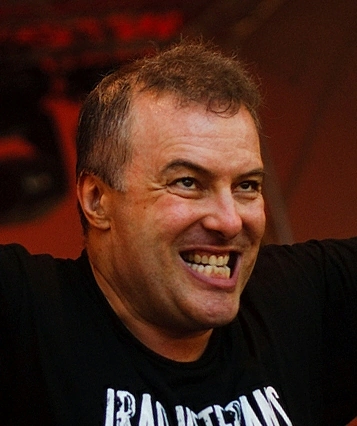
| 27 Quotes | |
| Born as | Eric Reed Boucher |
| Occup. | Musician |
| From | USA |
| Born | June 17, 1958 Boulder, Colorado, U.S. |
| Age | 67 years |
| Cite | |
Citation Formats
APA Style (7th ed.)
Jello biafra biography, facts and quotes. (2026, February 11). FixQuotes. https://fixquotes.com/artists/jello-biafra/
Chicago Style
"Jello Biafra biography, facts and quotes." FixQuotes. February 11, 2026. https://fixquotes.com/artists/jello-biafra/.
MLA Style (9th ed.)
"Jello Biafra biography, facts and quotes." FixQuotes, 11 Feb. 2026, https://fixquotes.com/artists/jello-biafra/. Accessed 28 Mar. 2026.
Early Life and Background
Eric Reed Boucher, later known worldwide as Jello Biafra, was born on June 17, 1958, in Boulder, Colorado, and came of age in the long hangover of the 1960s - the Vietnam era, Watergate, and the hardening divide between official optimism and lived disillusion. His family life was marked by both stability and constraint: his father worked in the aerospace industry, and his mother was active in civic groups, a mix that put patriotism, bureaucracy, and moral certainty in the air he breathed.As a teenager he gravitated toward the theater of rock and the abrasive honesty of underground culture. Moving between Colorado and Arizona, he absorbed the sense of being outside the coastal centers that defined music-industry taste, and he learned early that dissent could be performed as well as argued. The persona he later built - equal parts carnival barker, courtroom witness, and street preacher - was rooted in this early tension between the official story and the messy real.
Education and Formative Influences
Biafra attended the University of California, Santa Cruz, arriving in Northern California as punk detonated into a scene that mixed art, anger, satire, and community self-organization. The Bay Area in the late 1970s offered him a living seminar in power and backlash: post-Vietnam cynicism, the rise of the New Right, and policing that often treated subcultures as enemies. He drew as much from shock-rock, political pamphleteering, and late-night radio as from any classroom, translating those inputs into an onstage voice that sounded like democracy in a malfunctioning loudspeaker.Career, Major Works, and Turning Points
In 1978 he co-founded Dead Kennedys in San Francisco, becoming one of punk's most recognizable frontmen as the band fused hardcore speed with dense political satire. Their early single "California Uber Alles" skewered authoritarian charisma, and "Holiday in Cambodia" turned American complacency into a taunt; albums like Fresh Fruit for Rotting Vegetables (1980) and the EP In God We Trust, Inc. (1981) sharpened their attack on consumer religion, militarism, and moral panic, while Plastic Surgery Disasters (1982) and Frankenchrist (1985) pushed into darker, more collage-like critique. The Frankenchrist era brought an obscenity prosecution over artwork included with the record, a grueling legal ordeal that cemented Biafra as a national free-speech symbol even as it drained money and energy. After Dead Kennedys fractured in 1986, he founded Alternative Tentacles, nurturing outsider voices and continuing as a spoken-word performer and activist, including a high-profile satirical run for San Francisco mayor in 1979 that functioned as street-level political theater. Later conflicts with former bandmates over royalties and reissues underscored how punk ideals collide with ownership, contracts, and the afterlife of famous recordings.Philosophy, Style, and Themes
Biafra's inner engine has always been suspicion of packaged reality. His lyrics and monologues work like investigative journalism conducted with a comedian's timing: he piles up slogans, brand names, and official euphemisms until they reveal their violence. The goal is not nihilism but participation, a push to replace passive spectatorship with noisy agency. “Don't hate the media, become the media”. That line captures the psychology of a performer who never wanted fans to merely admire him - he wanted them to publish, organize, and interrupt.His style also depends on the idea that repression manufactures its own counterculture, and that every crackdown is a recruitment poster for the underground. “For every prohibition you create you also create an underground”. This is why his work returns to censorship, policing, and moral panics: not as abstract issues, but as personal accelerants that turn bored citizens into dissidents. Underneath the sarcasm sits a hard-won warning about co-optation, aimed as much at scenes as at states. “Punk is not dead. Punk will only die when corporations can exploit and mass produce it”. The sentence reads like a diagnosis of his own career-long anxiety - that subversion can be repackaged, and that rebellion must continually reinvent its methods to stay alive.
Legacy and Influence
Jello Biafra helped define American punk as a form of political literature delivered at unsafe volume, and his fingerprints are on generations of hardcore, alternative, and activist art that treats humor as a blade rather than a refuge. Dead Kennedys songs remain entry points into critiques of authoritarianism, consumer culture, and American mythmaking, while Alternative Tentacles stands as a durable model for independent infrastructure outside corporate labels. His endurance - through courtroom battles, scene infighting, and the temptations of nostalgia - has made him a touchstone for artists who want their work to function not just as entertainment, but as a provocation to think, argue, and act.Our collection contains 27 quotes written by Jello, under the main topics: Justice - Music - Sarcastic - Writing - Freedom.
Other people related to Jello: Buzz Osborne (Musician), Mojo Nixon (Musician)
Source / external links