
Jim Morrison Biography Quotes 33 Report mistakes
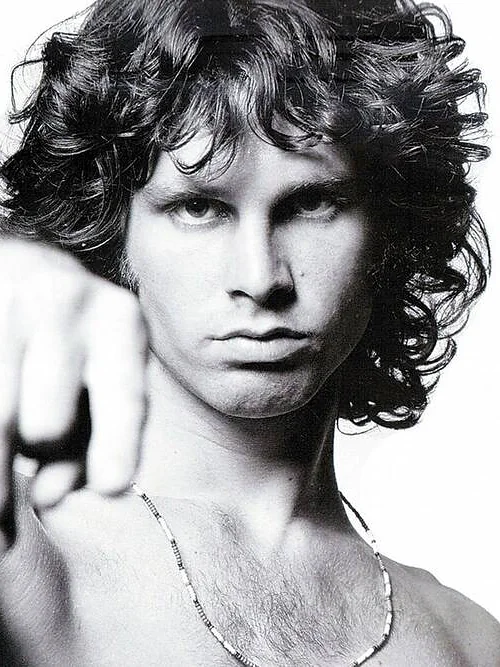
Attr: artphotolimited.com
| 33 Quotes | |
| Born as | James Douglas Morrison |
| Occup. | Musician |
| From | USA |
| Born | December 8, 1943 Melbourne, Florida, USA |
| Died | July 3, 1971 Paris, France |
| Cause | heart failure |
| Aged | 27 years |
| Cite | |
Citation Formats
APA Style (7th ed.)
Jim morrison biography, facts and quotes. (2026, February 11). FixQuotes. https://fixquotes.com/artists/jim-morrison/
Chicago Style
"Jim Morrison biography, facts and quotes." FixQuotes. February 11, 2026. https://fixquotes.com/artists/jim-morrison/.
MLA Style (9th ed.)
"Jim Morrison biography, facts and quotes." FixQuotes, 11 Feb. 2026, https://fixquotes.com/artists/jim-morrison/. Accessed 26 Mar. 2026.
Early Life and Background
James Douglas Morrison was born on December 8, 1943, in Melbourne, Florida, into a mobile world shaped by the Cold War and the U.S. military. His father, George Stephen Morrison, was a career Navy officer who rose to admiral; the family rotated through bases and towns, a pattern that taught Jim early how to read rooms, reinvent himself, and keep his private life sealed behind performance. That restlessness would later surface as both wanderlust and a hunger for altered states - an attempt to turn displacement into revelation.He grew into a tall, watchful adolescent with a taste for provocation and a mind that ran ahead of social rules. Morrison later mythologized a childhood roadside encounter with a Native American accident, describing it as a kind of haunting; whether literal or embellished, the story reveals how he processed experience - as omen, symbol, and raw material for art. By his late teens he was already torn between discipline (the family script) and the lure of transgression, a tension that became the engine of his stage persona.
Education and Formative Influences
After periods in Virginia and elsewhere, Morrison settled into higher education with a seriousness that surprised people who only knew the later caricature: he attended Florida State University before transferring to UCLA's film program in Los Angeles, graduating in 1965. At UCLA he absorbed cinema as ritual and montage, and he read voraciously - Nietzsche, Rimbaud, the Beats, Frazer's "The Golden Bough", and modern drama - assembling a private canon about ecstasy, the crowd, and the self as something performed and shattered. Film school also sharpened his sense of framing and timing; even his silences would later feel edited, as if he were cutting between masks.Career, Major Works, and Turning Points
In 1965 Morrison met keyboardist Ray Manzarek on Venice Beach and soon formed The Doors with guitarist Robby Krieger and drummer John Densmore, naming the band after Aldous Huxley and, indirectly, William Blake's "doors of perception". Signed to Elektra, they broke through in 1967 with "The Doors" and the single "Light My Fire", followed by "Strange Days" (1967), "Waiting for the Sun" (1968), "The Soft Parade" (1969), "Morrison Hotel" (1970), and "L.A. Woman" (1971). Morrison's career became a contest between artistry and self-destruction: the 1969 Miami concert led to obscenity charges and a draining legal ordeal that tightened his antagonism toward authority, while escalating alcohol use and instability strained the band. Seeking distance, he moved to Paris in 1971 to write and live more quietly, but he died there on July 3, 1971, at 27; the official cause was heart failure, and the sparse circumstances ensured the legend would metastasize.Philosophy, Style, and Themes
Morrison treated rock not as entertainment but as an initiation - a theater where identity could be dissolved and remade in public. He was fascinated by thresholds, by the moment when ordinary perception breaks and something archaic rushes in; “There are things known and things unknown and in between are the doors”. That line reads like a self-portrait: he chased the in-between, the hinge between civility and impulse, the point where language becomes spell. The result was a voice that could sound both intimate and oracular, alternating whispers, croons, and barked commands as if channeling competing selves.His greatest subject was freedom, and he depicted it as both necessity and danger - a stripping away rather than an indulgence. “The most important kind of freedom is to be what you really are. You trade in your reality for a role. You give up your ability to feel, and in exchange, put on a mask”. Onstage he tested that proposition mercilessly, often using confrontation to pry the audience out of passive consumption, while privately he feared the emptiness behind the mask he had created. The songs - from "Break On Through (To the Other Side)" to "The End" and "Riders on the Storm" - circle death, erotic power, apocalypse, and the American night, as if he were trying to outstare dread. His aphorism “Expose yourself to your deepest fear; after that, fear has no power, and the fear of freedom shrinks and vanishes. You are free”. captures the psychology beneath the scandals: a man repeatedly staging his own fear as spectacle in order to master it, even when the method harmed him.
Legacy and Influence
Morrison endures as one of the defining figures of late-1960s American culture - a singer-poet whose charisma, intellect, and volatility fused into a template for the modern rock frontman. The Doors' catalog remains canonical, and his imagery of highways, storms, cities, and psychic doors continues to feed filmmakers, writers, and musicians drawn to the collision of art and danger. Yet his influence is not only stylistic; it is the cautionary power of his life as a case study in what happens when a gifted young man tries to live permanently at the threshold he sang about, turning liberation into a weapon against himself while leaving behind a body of work that still feels like a dare.Our collection contains 33 quotes written by Jim, under the main topics: Witty One-Liners - Motivational - Truth - Wisdom - Art.
Other people related to Jim: Val Kilmer (Actor), Ray Manzarek (Musician), Scott Weiland (Musician), Robby Krieger (Musician), Greil Marcus (Author)