
Jimi Hendrix Biography Quotes 48 Report mistakes
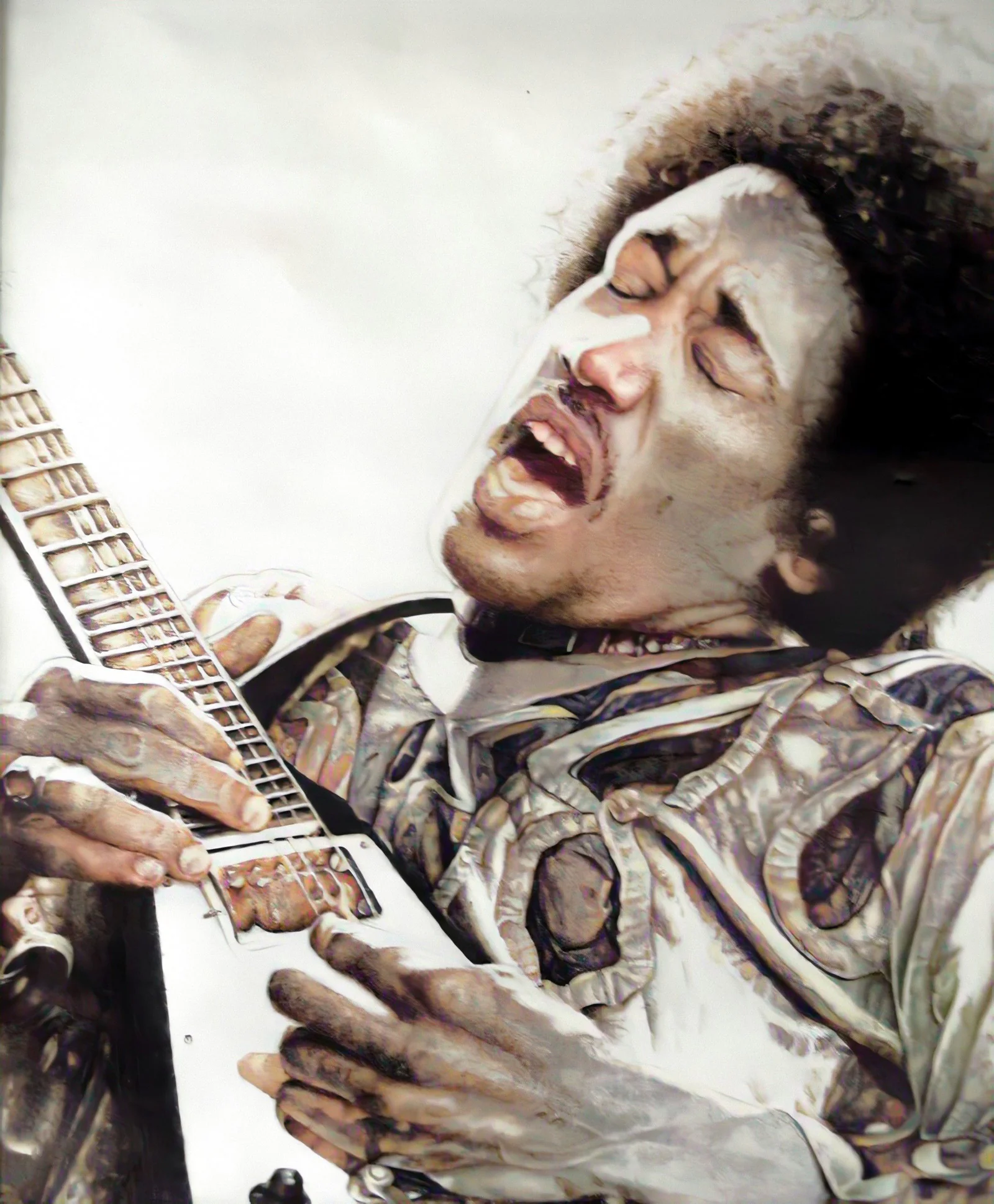
| 48 Quotes | |
| Occup. | Musician |
| From | USA |
| Born | November 27, 1942 |
| Died | September 18, 1970 |
| Aged | 27 years |
| Cite | |
Citation Formats
APA Style (7th ed.)
Jimi hendrix biography, facts and quotes. (2026, February 2). FixQuotes. https://fixquotes.com/artists/jimi-hendrix/
Chicago Style
"Jimi Hendrix biography, facts and quotes." FixQuotes. February 2, 2026. https://fixquotes.com/artists/jimi-hendrix/.
MLA Style (9th ed.)
"Jimi Hendrix biography, facts and quotes." FixQuotes, 2 Feb. 2026, https://fixquotes.com/artists/jimi-hendrix/. Accessed 25 Mar. 2026.
Early Life and Background
James Marshall "Jimi" Hendrix was born on 1942-11-27 in Seattle, Washington, in a wartime America that promised prosperity while leaving many Black families negotiating segregation, low-wage work, and precarious housing. Raised largely in the Central District, he grew up with the sound of blues, R&B, and gospel moving through radios and neighborhood clubs. His father, Al Hendrix, worked various jobs; his mother, Lucille Jeter, was affectionate but struggled with instability and died in 1958, a loss that hardened his inwardness and sharpened his hunger for a language that could hold grief without explaining it.Hendrix's childhood was marked by frequent moves, uneven schooling, and the private discipline of listening. He learned early how quickly adults could vanish and how easily a boy could be labeled trouble, and he responded by building an inner sanctuary around rhythm. A one-string ukulele and then a used acoustic guitar became not hobbies but lifelines - objects he could control when the household could not. By his mid-teens he was playing in local bands, already showing an instinct to turn limitation into style, stretching simple chord shapes into color and noise.
Education and Formative Influences
He attended Seattle schools including Garfield High but did not graduate, drifting instead toward music, cars, and the street-level hustle of adolescence. His formal education was thin; his real conservatory was the record collection of mid-century Black America - Muddy Waters and B.B. King for electric bite, Curtis Mayfield for chordal sweetness, Little Richard for showmanship, and the jazz and surf guitar innovations that were bleeding into rock. In 1961 he enlisted in the U.S. Army, trained at Fort Ord, and joined fellow soldier Billy Cox in the King Kasuals; after an early discharge in 1962, Hendrix entered the grueling chitlin' circuit as a sideman, absorbing discipline behind stars like the Isley Brothers and Little Richard while learning how show business could both feed and erase a musician.Career, Major Works, and Turning Points
Between 1964 and 1966 he worked largely in New York, including stints with Curtis Knight and sessions where he learned studio craft and the politics of credit; the turning point came when bassist Chas Chandler saw him at Cafe Wha? and brought him to London in late 1966. There Hendrix formed the Jimi Hendrix Experience with Noel Redding and Mitch Mitchell and detonated the British scene: "Hey Joe", "Purple Haze", and "The Wind Cries Mary" led to Are You Experienced (1967) and Axis: Bold as Love (1967), records that fused blues vocabulary with feedback, studio collage, and a songwriter's ear for pop tension. Electric Ladyland (1968) broadened the canvas further, while the Monterey Pop Festival (1967) and Woodstock (1969) turned him into a symbol of the era's freedom and its burn rate - the star who could make an instrument sound like weather, sirens, prayer. Under relentless touring, legal and managerial knots, and self-medication, he sought autonomy by building Electric Lady Studios in New York in 1970, but he died in London on 1970-09-18 at 27, with a future still in draft.Philosophy, Style, and Themes
Hendrix spoke about sound as a moral force rather than mere entertainment: “Music is my religion”. That sentence is less a slogan than a psychological map - a man without stable institutions constructing a portable faith from vibration, volume, and trance. His playing pursued transcendence through risk: controlled feedback, whammy-bar dives, microtonal bends, and chord voicings borrowed from R&B and jazz, all treated as a single expressive vocabulary. Onstage he could appear flamboyant, yet the drive beneath it was devotional - an attempt to dissolve the self that history kept insisting upon and to rebuild it as pure tone.The themes in his best songs circle escape, tenderness, and apocalypse: "Little Wing" offers shelter; "Voodoo Child (Slight Return)" turns swagger into elemental myth; "1983... (A Merman I Should Turn to Be)" imagines flight from a violent world into an oceanic dream. He believed art could pressure reality: “Music doesn't lie. If there is something to be changed in this world, then it can only happen through music”. Even his humor carried self-awareness about authorship and distortion - “I've been imitated so well I've heard people copy my mistakes”. - a wry acknowledgment that innovation becomes a template, and that what sounds like chaos is often a signature of precision.
Legacy and Influence
Hendrix permanently rewired the electric guitar's possibilities: not just faster or louder, but more dimensional, treating amplifiers, pedals, and the studio as part of the instrument and making texture as meaningful as melody. He influenced players across rock, funk, metal, jazz, and hip-hop-era sampling culture; his approach to rhythm guitar opened paths for funk innovators, while his studio imagination foreshadowed later sound design. In the broader American story, he remains a figure who carried blues lineage into the psychedelic 1960s without surrendering its ache, embodying both the era's utopian reach and its costs - a musician whose brief life left a long shadow of sound, possibility, and unfinished work.Our collection contains 48 quotes written by Jimi, under the main topics: Witty One-Liners - Motivational - Wisdom - Puns & Wordplay - Never Give Up.
Other people related to Jimi: Lenny Kravitz (Musician), David Gilmour (Musician), Mike McCready (Musician), Robin Trower (Musician), Dave Navarro (Musician), Aynsley Dunbar (Musician), Linda McCartney (Photographer), Carl Wilson (Musician), Steve Winwood (Musician), Pat Travers (Musician)
Source / external links