
Jimmy Chamberlin Biography Quotes 20 Report mistakes
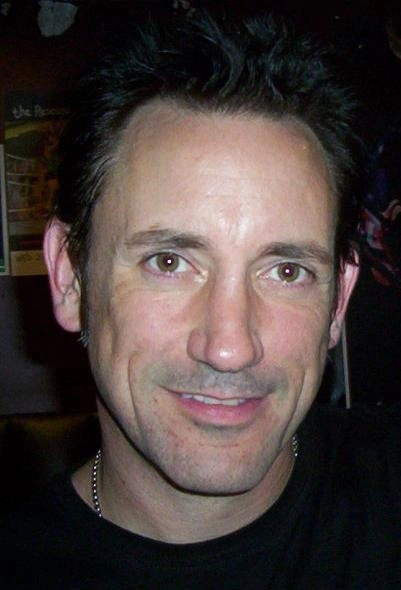
| 20 Quotes | |
| Occup. | Musician |
| From | USA |
| Born | June 10, 1964 Joliet, Illinois, United States |
| Age | 61 years |
| Cite | |
Citation Formats
APA Style (7th ed.)
Jimmy chamberlin biography, facts and quotes. (2026, February 11). FixQuotes. https://fixquotes.com/artists/jimmy-chamberlin/
Chicago Style
"Jimmy Chamberlin biography, facts and quotes." FixQuotes. February 11, 2026. https://fixquotes.com/artists/jimmy-chamberlin/.
MLA Style (9th ed.)
"Jimmy Chamberlin biography, facts and quotes." FixQuotes, 11 Feb. 2026, https://fixquotes.com/artists/jimmy-chamberlin/. Accessed 12 Feb. 2026.
Early Life and Background
James Joseph "Jimmy" Chamberlin was born June 10, 1964, in Joliet, Illinois, and came of age in a Midwestern music culture where basement bands, church halls, and union-club stages sat only a short drive from Chicago's jazz history. Raised in a large Catholic family, he absorbed an ethic of duty and repetition early - the idea that you show up, do the work, and let the work speak. That grounding would later matter when fame arrived suddenly and publicly, and when the consequences of excess arrived just as fast.Before he was known worldwide as the propulsive engine of the Smashing Pumpkins, Chamberlin was a working drummer trying to reconcile two selves: the student of swing and improvisation, and the young rock musician drawn to volume, drama, and the catharsis of a packed room. Even in his teens he displayed a hunger for complexity - not just speed or power, but the ability to turn a song's emotional arc with a fill, a cymbal choice, or a subtle shift in time feel. That emotional intelligence, forged in local scenes and family expectations, became his signature long before it became his brand.
Education and Formative Influences
Chamberlin's formative discipline came through formal study as well as gigging: he pursued jazz training and immersed himself in rudimental control, independence, and the language of swing, while also internalizing rock's physicality and the studio-era precision of late-1970s and 1980s production. The collision of these worlds - Buddy Rich-level drive, Elvin Jones turbulence, and the arranged punch of arena rock - shaped a drummer who could both push and listen, who could lead a band without stepping on it. Chicago's proximity mattered too: it offered models of musicianship as a craft and a profession, not merely a youth identity.Career, Major Works, and Turning Points
In 1988 Chamberlin joined Billy Corgan and James Iha in Chicago, completing the core of the Smashing Pumpkins and giving the band its volatile rhythmic center; his playing quickly distinguished early recordings and then erupted on the breakthrough albums Gish (1991) and Siamese Dream (1993), where his dynamism and touch made the guitars feel larger than life. On Mellon Collie and the Infinite Sadness (1995), his versatility - from bruising rock to cabaret-like stylings - helped the band sustain an ambitious double-album narrative, but the era also exposed the costs of nonstop touring and celebrity. A public crisis in 1996, following the death of touring keyboardist Jonathan Melvoin and drug-related fallout, led to Chamberlin's dismissal, marking a painful turning point that redefined his relationship to music and survival. He rebuilt through sobriety, session work, and his own projects (including the Jimmy Chamberlin Complex), returned to the Pumpkins in 1999 for Machina/The Machines of God, and later rejoined during subsequent reunions, eventually expanding into production, collaborations, and education while remaining an in-demand drummer whose name signals both fire and finesse.Philosophy, Style, and Themes
Chamberlin's inner life, as heard through his drumming, is the story of intensity learning to serve meaning. He plays like someone who hears harmony in rhythm - a voice that can sing, argue, and confess without words - and he has articulated that self-understanding plainly: "I've always seen my drumming as lyrical anyway". That lyricism is not softness; it is narrative. In the Pumpkins' best-known work his fills often function like plot turns, and his cymbal choices feel like lighting cues, turning adolescent fury into shaped drama. The jazz imprint is not merely technical flash but an ethical stance: the drummer as collaborator, responsive to melody and phrasing, anchoring while commenting.The themes that recur in his public reflections map tightly onto the private stakes of his biography: discipline as a safeguard, music as a lifeline, and community as the difference between self-destruction and endurance. "But back then the thing that saved me was the music, and it's certainly the music that saves me now. The music, my family and my friends and everybody around me". The statement reads like a personal credo forged in consequence - the recognition that talent alone is not protection, and that art can be both refuge and responsibility. He frames mastery as daily practice rather than myth, insisting, "When I'm at home I practice everyday". Taken together, these lines reveal a psychology that distrusts shortcuts: the closer he gets to the edge, the more he leans on routine, craft, and people - a practical spirituality that turns survival into a method.
Legacy and Influence
Chamberlin's enduring influence is audible in the post-1990s vocabulary of alternative-rock drumming: the permission to be both technically fluent and emotionally direct, to bring jazz independence into riff-based music without losing weight. For listeners, he helped define the Smashing Pumpkins' sound as much as any guitar tone - the sense that the songs were alive, capable of surging or suspending mid-phrase. For drummers, he modeled a rare combination: chops with taste, aggression with swing, and virtuosity that still serves the song. His later openness about recovery and craft reframed his story from cautionary tale to long-form resilience, reinforcing an example that artistry is not a single peak but a lifelong practice that can be rebuilt, deepened, and taught.Our collection contains 20 quotes written by Jimmy, under the main topics: Motivational - Music - Work Ethic - Training & Practice - Work.
Source / external links