
Joanna Newsom Biography Quotes 30 Report mistakes
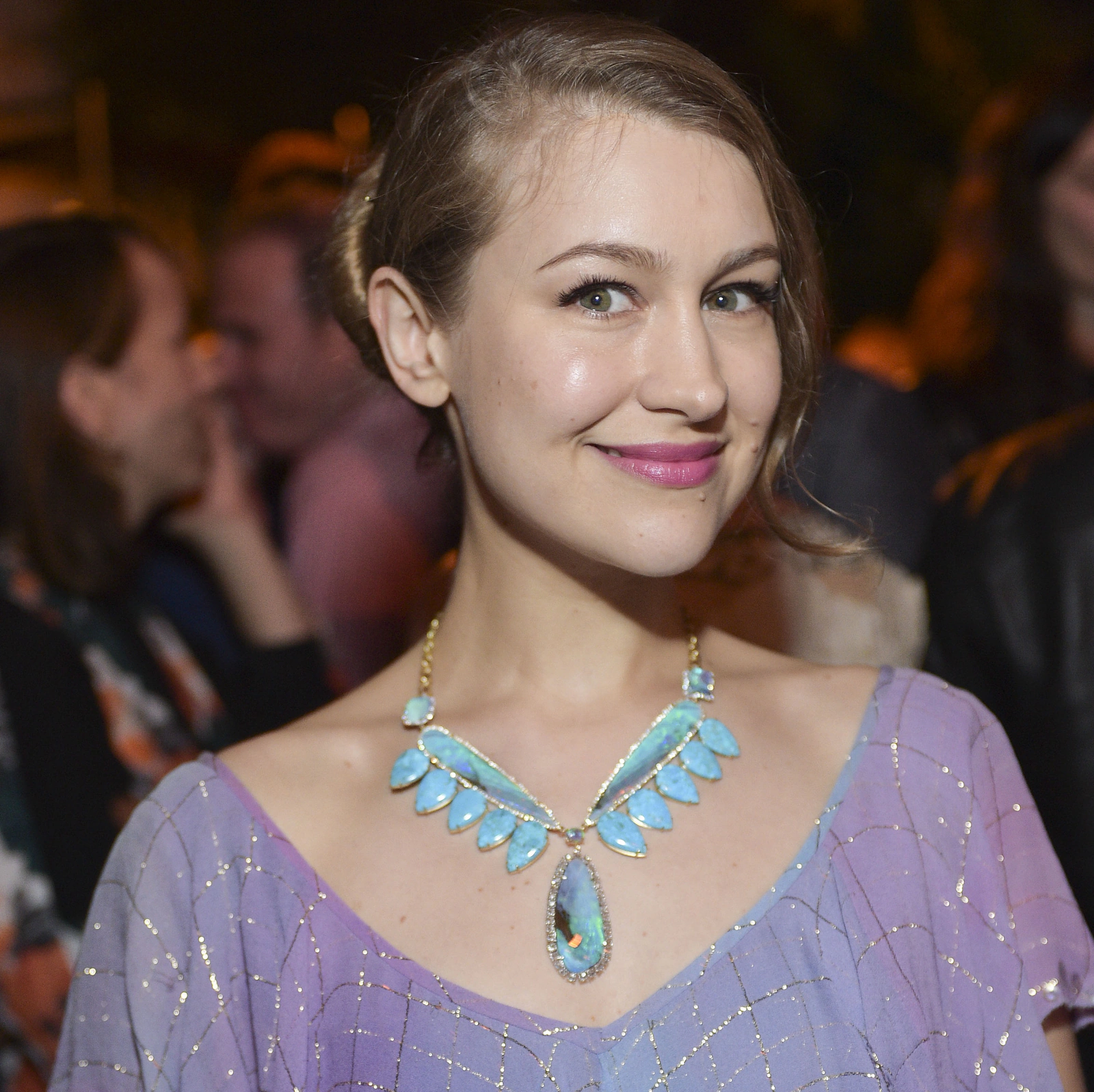
| 30 Quotes | |
| Born as | Joanna Caroline Newsom |
| Occup. | Musician |
| From | USA |
| Spouse | Andy Samberg |
| Born | January 18, 1982 Nevada City, California, USA |
| Age | 44 years |
| Cite | |
Citation Formats
APA Style (7th ed.)
Joanna newsom biography, facts and quotes. (2026, March 22). FixQuotes. https://fixquotes.com/artists/joanna-newsom/
Chicago Style
"Joanna Newsom biography, facts and quotes." FixQuotes. March 22, 2026. https://fixquotes.com/artists/joanna-newsom/.
MLA Style (9th ed.)
"Joanna Newsom biography, facts and quotes." FixQuotes, 22 Mar. 2026, https://fixquotes.com/artists/joanna-newsom/. Accessed 26 Mar. 2026.
Early Life and Background
Joanna Caroline Newsom was born on January 18, 1982, in Nevada City, California, a Gold Country town in the Sierra foothills whose blend of rural isolation, countercultural residue, and old-American folklore would remain audible in her work. She was raised in a household saturated with music and books: her father, William Newsom, was a physician; her mother, Christine, worked as a medical secretary; both played instruments, and her siblings were musical as well. The family limited television, encouraged reading, and treated art less as ornament than as daily practice. That atmosphere mattered. Newsom's later songs, with their archaic diction, botanical precision, and mingling of innocence with severity, seem to grow from a childhood in which imagination was not fenced off from ordinary life.
She studied piano as a child before turning decisively to the harp, an instrument that set her apart almost by necessity. In a period when mainstream American pop was moving toward digital polish, Newsom gravitated toward an acoustic, labor-intensive sound that felt both antique and startlingly personal. Nevada City's distance from industry centers gave her a useful estrangement: she absorbed folk traditions, Appalachian and Anglo-Irish echoes, classical texture, and the storytelling habits of American songwriting without being fully claimed by any one scene. The result was not rustic naivete but a highly self-directed sensibility, one that would later make her one of the most singular musicians of her generation.
Education and Formative Influences
Newsom attended a Waldorf school, whose emphasis on myth, craft, and developmental imagination suited her temperament, then briefly studied composition and creative writing at Mills College in Oakland, a historically adventurous institution with deep ties to experimental music. Even where formal training was incomplete, the surrounding culture sharpened her ear. She played in the San Francisco indie band the Pleased, wrote constantly, and began performing solo with harp and voice in the Bay Area in the early 2000s. Crucial early champions included Will Oldham and the freak-folk-adjacent underground that valued idiosyncrasy over market legibility. Just as important was her reading - poetry, folklore, 19th-century prose, natural history - which gave her language its unusual tensile strength. She did not emerge as a revivalist. She emerged as an artist assembling a private canon from inherited forms.
Career, Major Works, and Turning Points
Her debut album, The Milk-Eyed Mender (2004), announced an unprecedented voice: high, wiry, sometimes polarizing in timbre, yet paired with harp compositions and lyrics of almost preternatural density. Ys (2006), arranged with Van Dyke Parks, was the breakthrough that converted cult admiration into serious critical reverence; its five long songs fused chamber orchestration, mythic narrative, erotic unease, and emotional exactitude. After vocal rest due to nodules, she returned with Have One on Me (2010), a sprawling triple album whose emotional weather - breakup, self-scrutiny, historical drift - revealed a new breadth and lower vocal register. Divers (2015) compressed that ambition into a formally intricate meditation on time, exchange, war, love, and recurrence. Alongside recording, she became a formidable live performer, often reshaping songs in concert. Her public profile widened through television appearances and later marriage to comedian Andy Samberg, yet she remained protective of her artistic privacy, giving relatively few interviews and avoiding overexposure. The major turning point in her career was not celebrity but authority: by the mid-2000s she had made eccentricity itself sound canonical.
Philosophy, Style, and Themes
Newsom's art begins with language. “The way that words fit together is always interesting to me. I love words!” That declaration is not a quaint aside but the key to her method. Her lyrics are built less from confessional blurting than from verbal architecture - internal echoes, antique turns, legal and liturgical cadences, precise names of plants, tools, stars, and wounds. She writes songs that think. Yet the intelligence is never merely literary display; it is a way of testing whether feeling can survive exact description. “I am always trying to write”. suggests compulsion rather than productivity, the temperament of someone for whom composition is a continuous act of ordering experience before it hardens into silence.
At the same time, Newsom has always resisted easy ethnographic tagging. “I am consciously trying not to make it sound Celtic or African”. reveals a scrupulous self-awareness about influence, lineage, and the dangers of decorative borrowing. Her harp is not used to signify fantasy, pastoral purity, or world-music eclecticism; it is a compositional engine, capable of abrupt modulations, contrapuntal motion, and emotional strain. Across her songs, recurring themes - time as debt, love as vow and revision, female embodiment, ecological perception, mortality, and the unstable border between myth and domestic life - are handled with unusual moral seriousness. Newsom often sounds as if she is trying to rescue complexity from both irony and sentimentality. The childlike surface some listeners first hear gives way, on closer attention, to an imagination steeped in history, violence, devotion, and the fragility of earthly forms.
Legacy and Influence
Newsom's influence has been disproportionate to her relatively compact discography. She expanded what indie and folk-adjacent songwriting could contain, proving that ambitious structure, difficult vocabulary, and highly specific imagery need not sacrifice emotional force. For many younger musicians and writers, she reopened permission for ornate language, long-form song, and female artistic eccentricity not packaged for easy consumption. Critics have placed her in conversation with Joni Mitchell, Kate Bush, and Van Dyke Parks, but the comparison finally underscores her singularity: no one else quite sounds like Joanna Newsom, because few artists have joined such technical rigor to such visionary inwardness. Her work endures not as a period curiosity of the 2000s independent scene but as a living repertoire - strange, exacting, and increasingly central to the story of American music in the 21st century.
Our collection contains 30 quotes written by Joanna, under the main topics: Music - Writing - Resilience - Poetry.
Source / external links