
John Lennon Biography Quotes 47 Report mistakes
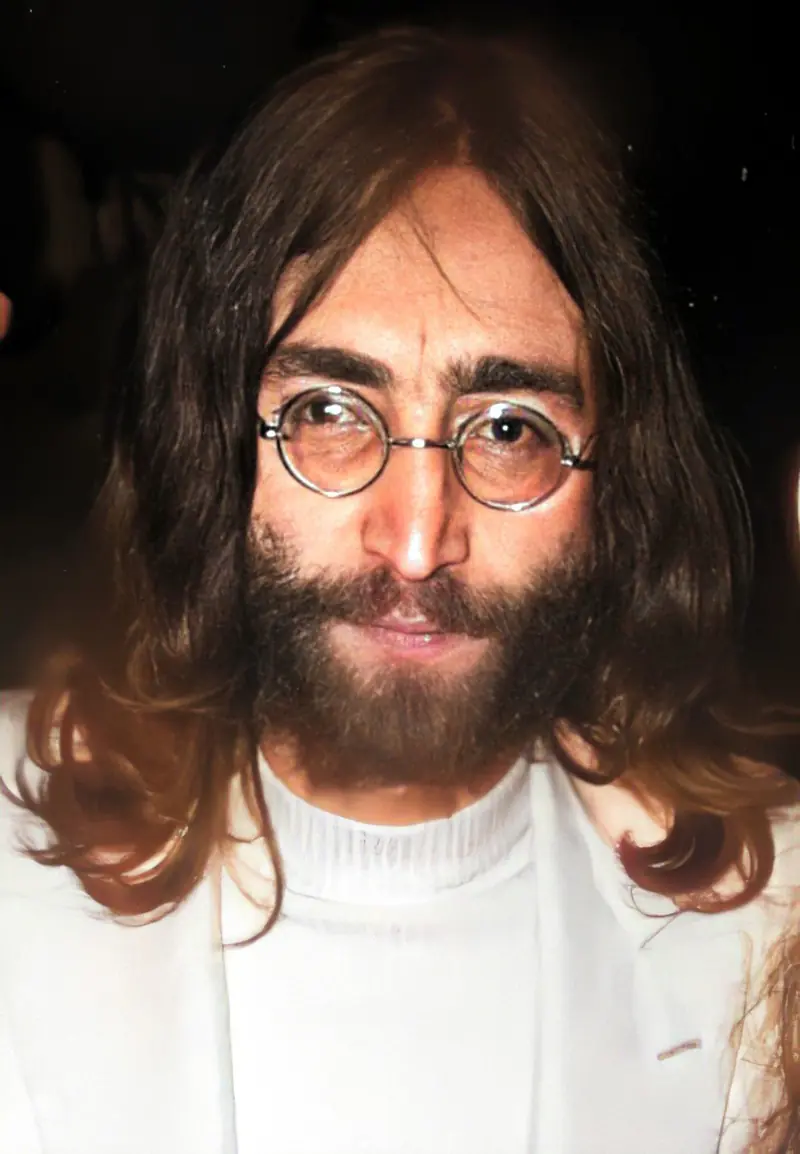
Attr: Joost Evers / Anefo, CC0
| 47 Quotes | |
| Born as | John Winston Lennon |
| Occup. | Musician |
| From | United Kingdom |
| Born | October 9, 1940 Liverpool, England |
| Died | December 8, 1980 New York City, USA |
| Cause | Assassination |
| Aged | 40 years |
John Winston Lennon was born on October 9, 1940, in Liverpool, England, during a World War II air raid. His parents, Julia (née Stanley) and Alfred Lennon, had a turbulent relationship, and John was largely raised by his maternal aunt, Mary “Mimi” Smith, and her husband, George Smith, at 251 Menlove Avenue, a modest semi-detached house known as “Mendips.” His mother remained a loving, if irregular, presence who encouraged his music, teaching him banjo chords that he adapted to the guitar and turning him on to early American rock and roll. In 1958, when John was 17, Julia was killed in a road accident, a devastating loss that rippled through his life and art.
Lennon attended Quarry Bank High School, where his rebellious wit and irreverent humor flourished alongside a nascent passion for skiffle and rock. He was a sharp, gifted cartoonist and writer, later channeling this playfulness and wordplay into published books.
Art School and The Quarrymen
In 1957 Lennon enrolled at the Liverpool College of Art. That year he formed a skiffle group, the Quarrymen, with neighborhood friends. On July 6, 1957, at a church fête in Woolton, he met Paul McCartney, a younger musician whose ear for melody and harmony complemented Lennon’s edge and lyrical bite. George Harrison joined soon after, adding crisp lead guitar work. This nucleus would eventually become the Beatles.
At art college Lennon met Cynthia Powell; their relationship would continue through the early Beatles years.
From Hamburg to The Beatles
In 1960, after early gigs around Liverpool and Hamburg, the Quarrymen evolved into the Beatles. The band’s formative residencies in Hamburg’s clubs, long, grueling sets at places like the Indra, Kaiserkeller, Top Ten, and Star-Club, hardened their sound and showmanship. The lineup included bassist Stuart Sutcliffe (a close friend from art school) and drummer Pete Best. After Sutcliffe left and tragically died in 1962, and Best was replaced by Richard “Ringo” Starr, the classic quartet gelled.
Liverpool record-shop owner Brian Epstein discovered them at the Cavern Club in late 1961 and became their manager, shaping their image and securing an audition with producer George Martin at EMI’s Parlophone label in 1962. With Martin’s guidance, their debut single “Love Me Do” was followed by “Please Please Me, ” and Beatlemania erupted in Britain.
Beatlemania and Global Breakthrough (1963–1966)
From 1963 through 1966 the Beatles became a global phenomenon. Lennon’s songwriting partnership with McCartney, though often competitive, produced a string of hits that reshaped pop music, including “She Loves You, ” “I Want to Hold Your Hand, ” and “A Hard Day’s Night.” Lennon's sharp lyrical voice and driving rhythm guitar were central to the band’s sound, while his onstage quips and offstage candor made him a vivid public figure.
In 1962 Lennon married Cynthia Powell; their son, Julian, was born in 1963. In 1966, a remark Lennon had made months earlier, observing that the Beatles were “more popular than Jesus”, was publicized in the United States, prompting backlash, record burnings, and death threats in some regions. The turmoil, combined with the escalating chaos of touring and the desire to advance musically, led the Beatles to retire from live performance in 1966.
Studio Innovation and Artistic Growth (1966–1970)
Freed from the road, the Beatles plunged into studio experimentation. Lennon’s writing deepened, encompassing introspection, surreal imagery, and social commentary. Highlights include “In My Life, ” “Strawberry Fields Forever, ” “A Day in the Life” (co-written with McCartney), “All You Need Is Love, ” “I Am the Walrus, ” “Across the Universe, ” and “Revolution.” Albums such as Rubber Soul, Revolver, Sgt. Pepper’s Lonely Hearts Club Band, the “White Album, ” and Abbey Road expanded the possibilities of popular music.
Personal and professional stresses mounted. Manager Brian Epstein died in 1967, depriving the Beatles of a steadying hand. The group’s business affairs grew tangled, particularly around their company, Apple Corps, and the choice of manager Allen Klein, which Lennon supported and McCartney resisted. Meanwhile, Lennon, who had first tried LSD in the mid-60s, grappled with drugs and the pressures of fame. His encounter with avant-garde artist Yoko Ono in 1966, and their subsequent relationship, profoundly shifted his art and priorities.
Partnership with Yoko Ono and Activism
By 1968 Lennon’s partnership with Yoko Ono was both artistic and personal. Together they produced experimental works (including the provocative Two Virgins), staged conceptual events, and began a public campaign for peace that included their widely publicized “Bed-Ins” in 1969 in Amsterdam and Montreal. From the Montreal Bed-In came “Give Peace a Chance, ” recorded with a roomful of friends and activists and swiftly adopted as an anti-war anthem.
Lennon’s increasing focus on his own voice and politics, along with entrenched business disputes, hastened the end of the Beatles. Though the group completed Abbey Road in 1969 and released Let It Be in 1970 (shaped posthumously by producer Phil Spector), Lennon privately announced his departure in 1969. McCartney’s 1970 press release effectively made the split public.
Solo Career
Lennon’s solo work oscillated between stark confession and utopian idealism. John Lennon/Plastic Ono Band (1970), influenced by primal therapy, stripped his sound to raw essentials. “Mother, ” “God, ” and “Working Class Hero” confront abandonment, disillusionment, and identity with unsettling directness. Imagine (1971) broadened the palette; its title track became a global hymn to peace, while “Jealous Guy, ” “Gimme Some Truth, ” and the biting “How Do You Sleep?” (aimed at McCartney) showcased his range.
Sometime in New York City (1972), recorded with the New York band Elephant’s Memory, engaged directly with current events, women’s rights, prison conditions, Irish politics, though critics were divided on its polemical approach. He rebounded with Mind Games (1973), Walls and Bridges (1974), featuring the hit “Whatever Gets You Thru the Night” with Elton John and the dreamlike “#9 Dream”, and Rock ’n’ Roll (1975), a covers album celebrating his teenage heroes.
Exile, Immigration Battle, and the “Lost Weekend”
After moving to New York in 1971, Lennon immersed himself in the downtown arts and activist scenes, befriending figures like Abbie Hoffman and Jerry Rubin. His antiwar profile drew the attention of the Nixon administration; the U.S. government attempted to deport him, citing a 1968 cannabis conviction in London. The legal battle, led by attorney Leon Wildes, lasted years. Lennon ultimately won his green card in 1976.
During a separation from Ono from 1973 to 1975, his so-called “Lost Weekend”, Lennon lived in Los Angeles with his companion and assistant May Pang. It was a tumultuous period marked by heavy drinking and notorious nightclub incidents, but also creative output and reconciliations with friends and colleagues. Lennon and Ono reunited in 1975.
Retreat and Return: Fatherhood and Double Fantasy
On October 9, 1975, the couple’s son, Sean Ono Lennon, was born. Lennon largely withdrew from the music industry to be a full-time, self-described “househusband, ” cooking, sailing, and writing sporadically while living at the Dakota in Manhattan. In 1980, energized by domestic life and renewed purpose, he returned with Double Fantasy, a joint album with Ono interweaving their songs. Tracks such as “(Just Like) Starting Over, ” “Watching the Wheels, ” and “Woman” signaled a mature, reflective phase. The album would win the 1981 Grammy for Album of the Year.
Death
On December 8, 1980, John Lennon was shot and killed outside the Dakota by Mark David Chapman, a disturbed fan who had sought his autograph earlier that evening. Lennon was pronounced dead on arrival at Roosevelt Hospital. He was 40. The world mourned with spontaneous gatherings and moments of silence; a dedicated Strawberry Fields memorial in Central Park opened in 1985.
Artistry: Songwriting, Voice, and Themes
Lennon’s artistry was anchored by a distinctive vocal timbre, lithe, urgent, capable of tenderness and rage, and a fearless approach to subject matter. As a rhythm guitarist, he drove early Beatles tracks with churning energy, later embracing studio textures, tape manipulation, and unconventional forms. His lyrics spanned romantic directness, Dada-esque wordplay, political critique, and naked autobiography. He could be caustic, self-mocking, and idealistic, often in the same song.
He also wrote and drew with wry humor, publishing In His Own Write (1964) and A Spaniard in the Works (1965), and maintained a lifelong interest in visual art that resurfaced in late-career lithographs.
People Around John Lennon
- Yoko Ono: Artist, collaborator, and partner from 1968; mother of Sean. Central to Lennon’s late work and activism.
- Paul McCartney: Co-writer and musical foil; their partnership formed one of the most influential songwriting teams in history.
- George Harrison and Ringo Starr: Fellow Beatles whose musicianship and personalities balanced Lennon and McCartney’s dynamic.
- Brian Epstein: Manager who shaped the Beatles’ rise; his death in 1967 deeply affected the band.
- George Martin: Producer who helped translate the Beatles’ ideas into groundbreaking recordings.
- Cynthia Lennon (née Powell): First wife; mother of Julian. Their marriage overlapped with early Beatlemania.
- Julian and Sean Lennon: John’s sons; both became musicians.
- Mimi Smith: Aunt who raised John with firm discipline and support for his education.
- Stuart Sutcliffe and Pete Best: Early Beatles members; Sutcliffe’s death in 1962 left a lasting imprint on Lennon.
- May Pang: Companion during the mid-1970s separation from Ono.
- Phil Spector: Producer on Let It Be and early solo singles like “Instant Karma!”
- Allen Klein: Manager whose role in Beatles business affairs contributed to internal conflict.
- Activists and friends: Abbie Hoffman, Jerry Rubin, and others in New York’s political and arts circles.
Selected Works
- With the Beatles: “Please Please Me, ” “She Loves You, ” “I Want to Hold Your Hand, ” “Help!, ” “In My Life, ” “Strawberry Fields Forever, ” “A Day in the Life, ” “All You Need Is Love, ” “I Am the Walrus, ” “Revolution, ” “Come Together, ” “Across the Universe.”
- Solo: “Give Peace a Chance, ” “Cold Turkey, ” “Instant Karma!, ” “Mother, ” “Working Class Hero, ” “Imagine, ” “Gimme Some Truth, ” “Jealous Guy, ” “Mind Games, ” “Whatever Gets You Thru the Night, ” “#9 Dream, ” “(Just Like) Starting Over, ” “Watching the Wheels, ” “Woman.”
Awards and Honors
Lennon received multiple Ivor Novello Awards and, with the Beatles, was appointed MBE in 1965; he returned the honor in 1969 to protest the Vietnam War and other issues. Double Fantasy won the 1981 Grammy for Album of the Year. He was inducted into the Rock and Roll Hall of Fame with the Beatles (1988) and as a solo artist (1994). Memorials include Strawberry Fields in Central Park, with its “Imagine” mosaic, and numerous statues and museums in Liverpool and beyond.
Influence and Legacy
John Lennon’s legacy cuts across music, culture, and politics. As a Beatle, he helped transform rock from entertainment into art, expanding its lyrical and sonic boundaries. As a solo artist, he championed unguarded self-expression and a politics of peace that moved from slogans into lived example. His partnership with Paul McCartney modeled a collaborative ideal, competitive yet generative, that artists still study. Songs like “Imagine, ” “All You Need Is Love, ” and “Working Class Hero” remain touchstones for social movements and personal reflection alike.
Lennon’s contradictions, acerbic yet vulnerable, skeptical yet utopian, make him an enduringly human figure. His life’s arc, from a wartime childhood in Liverpool to global fame, from private grief to public advocacy, continues to inspire musicians, activists, and listeners searching for honesty in art and hope in the world.
Our collection contains 47 quotes who is written by John, under the main topics: Witty One-Liners - Motivational - Wisdom - Truth - Puns & Wordplay.
Other people realated to John: David Bowie (Musician), George Harrison (Musician), Mike Love (Musician), Angela Davis (Activist), Carl Perkins (Musician), Dick Cavett (Entertainer), Neil Innes (Writer), Maharishi Mahesh Yogi (Philosopher), Annie Leibovitz (Photographer), Liam Gallagher (Musician)
Frequently Asked Questions
- John Lennon movies: A Hard Day's Night; Help!; Magical Mystery Tour; Let It Be; How I Won the War.
- John Lennon wife: Cynthia Powell (1962–1968); Yoko Ono (1969–1980).
- John Lennon (born): 9 October 1940, Liverpool, England.
- John Lennon Imagine: 1971 peace anthem from his album Imagine.
- Yoko Ono: Artist and peace activist; John Lennon's second wife and collaborator.
- John Lennon songs: Imagine; Instant Karma!; Give Peace a Chance; Working Class Hero; Jealous Guy.
- How old was John Lennon? He became 40 years old
Source / external links