
Johnny Cash Biography Quotes 11 Report mistakes
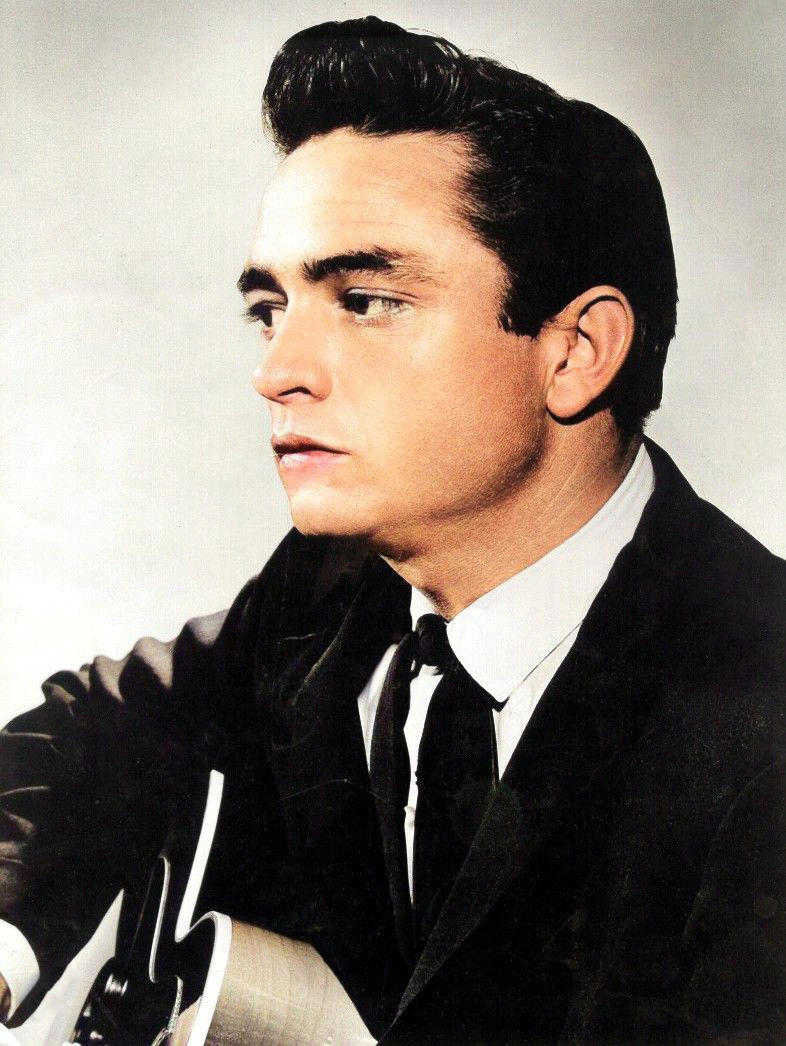
| 11 Quotes | |
| Born as | John R. Cash |
| Occup. | Musician |
| From | USA |
| Born | February 26, 1932 Kingsland, Arkansas, United States |
| Died | September 12, 2003 Kingsland, Arkansas, United States |
| Aged | 71 years |
| Cite | |
Citation Formats
APA Style (7th ed.)
Johnny cash biography, facts and quotes. (2026, February 11). FixQuotes. https://fixquotes.com/artists/johnny-cash/
Chicago Style
"Johnny Cash biography, facts and quotes." FixQuotes. February 11, 2026. https://fixquotes.com/artists/johnny-cash/.
MLA Style (9th ed.)
"Johnny Cash biography, facts and quotes." FixQuotes, 11 Feb. 2026, https://fixquotes.com/artists/johnny-cash/. Accessed 4 Mar. 2026.
Early Life and Background
Johnny Cash was born John R. Cash on February 26, 1932, in Kingsland, Arkansas, and raised in the hardscrabble farm community of Dyess in the Mississippi Delta. The Cash family were among the Depression-era settlers placed on New Deal colony land; cotton, debt, and flood country shaped his earliest sense of struggle as ordinary life, not as a romantic pose. Radio carried hymns, field songs, and the Grand Ole Opry into a household where Saturday night entertainment could sit beside strict Sunday faith.A defining childhood wound came in 1944 with the death of his older brother Jack, an accident that left the family grieving and Cash absorbing a lifelong mix of guilt, tenderness, and defiance. He later spoke of his father with unusually clear affection for a man forged by labor: “My father was a man of love. He always loved me to death. He worked hard in the fields, but my father never hit me. Never. I don't ever remember a really cross, unkind word from my father”. That steadiness, paired with poverty and loss, became the emotional baseline of his art - compassion without sentimentality, toughness without cruelty.
Education and Formative Influences
Cash attended local schools in Dyess and learned music less through formal training than through church singing, radio, and the folk-blues continuum of the South. After high school he worked briefly before enlisting in the U.S. Air Force in 1950; stationed in Landsberg, West Germany, he served as a radio intercept operator during the early Cold War and began writing songs to give shape to loneliness and discipline. Discharged in 1954, he moved to Memphis, Tennessee, drawn by work, studios, and the dream of broadcasting - “That was the big thing when I was growing up, singing on the radio. The extent of my dream was to sing on the radio station in Memphis. Even when I got out of the Air Force in 1954, I came right back to Memphis and started knocking on doors at the radio station”. Career, Major Works, and Turning PointsIn Memphis, Cash worked selling appliances by day and pursued music by night, forming the Tennessee Two with Luther Perkins and Marshall Grant and recording at Sun Records with producer Sam Phillips; early singles like "Cry! Cry! Cry!" and "Folsom Prison Blues" introduced a new, stripped-down pulse that sat between country, rockabilly, gospel, and the blues. National breakthrough came with "I Walk the Line" (1956), followed by years of relentless touring, chart hits, and a growing dependence on amphetamines and barbiturates that strained his first marriage to Vivian Liberto. The 1960s were both collapse and reinvention: after highly publicized arrests and near-derailments, he found steadier footing through faith and through June Carter, whom he married in 1968. That same year he captured his public myth in sound with At Folsom Prison, followed by At San Quentin, records that framed him as a champion of the condemned and a performer willing to take his show into Americas locked rooms. In the 1970s his reach widened through The Johnny Cash Show and collaborations across genres, while later decades brought commercial fluctuations until producer Rick Rubin, beginning in the 1990s, re-centered Cashs voice with the American Recordings series - intimate, fatalistic, and shockingly contemporary. He died on September 12, 2003, months after June, closing a life that had always sounded like it was lived near an edge.
Philosophy, Style, and Themes
Cashs inner life was a contest between moral absolutism and human weakness, a tension he refused to smooth out. He could sound like a preacher and a prisoner in the same verse, a man haunted by judgment yet stubbornly loyal to the flawed and the outcast. That clarity had teeth: “How well I have learned that there is no fence to sit on between heaven and hell. There is a deep, wide gulf, a chasm, and in that chasm is no place for any man”. His songs often stage that chasm - between devotion and temptation, law and mercy, violence and tenderness - and his greatness lies in making the struggle feel lived rather than posed.His style was similarly double-edged: a boom-chicka rhythm, minimal chords, and a voice that carried gravel, prayer, and dark humor, leaving space for the listener to feel implicated. Cash understood himself as divided, and he made that division productive rather than merely confessional: “Sometimes I am two people. Johnny is the nice one. Cash causes all the trouble. They fight”. When he sought redemption, it was practical, earned, and forward-looking - the ethic of a man who knew relapse and return: “You build on failure. You use it as a stepping stone. Close the door on the past. You don't try to forget the mistakes, but you don't dwell on it. You don't let it have any of your energy, or any of your time, or any of your space”. That psychology powered the late-career recordings, where age did not soften his themes but clarified them: mortality, love as vow, and dignity for the discarded.
Legacy and Influence
Cash endures as a uniquely American artist who turned biography into a public moral instrument: a poor Southern farm boy who spoke to prisoners, soldiers, believers, skeptics, and rock audiences without changing the core of his voice. His catalog - from Sun sparseness to the prison albums to the Rubin-era elegies - shaped country, rock, folk, and singer-songwriter traditions, influencing performers as different as outlaw country heirs, punk-rooted songwriters, and modern Americana acts. More than image or fashion, his legacy is permission: to sing plainly about sin and grace, to honor working people without condescension, and to make art from contradiction until the contradiction becomes a kind of truth.Our collection contains 11 quotes written by Johnny, under the main topics: Music - Deep - Success - Faith - Father.
Other people related to Johnny: Rosanne Cash (Musician), Chris Cornell (Musician), Jerry Lee Lewis (Musician), Guy Clark (Musician), Joaquin Phoenix (Actor), Jerry Reed (Musician), Robert Patrick (Actor), Shel Silverstein (Poet)
Source / external links