
Johnny Thunders Biography Quotes 12 Report mistakes
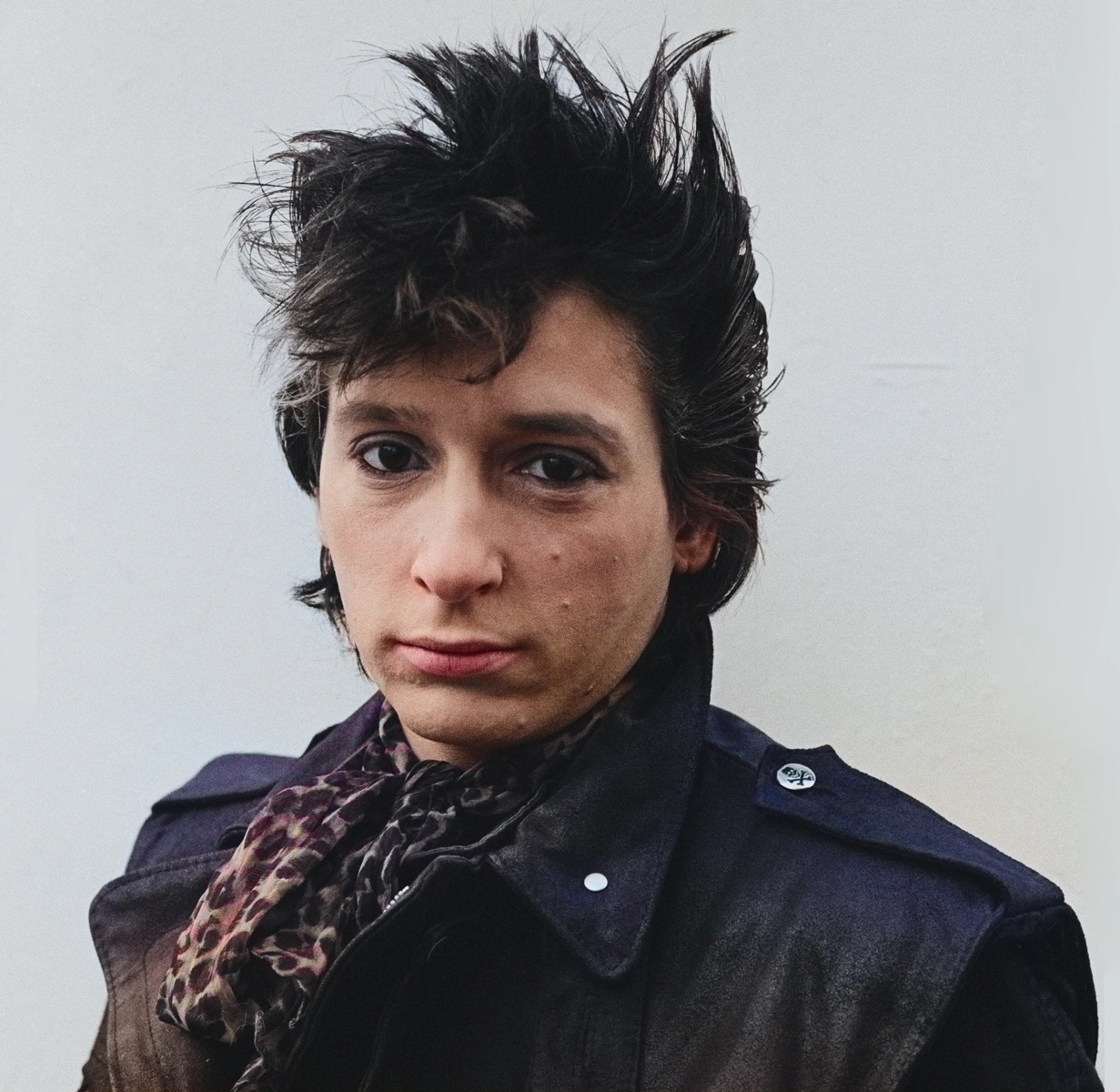
| 12 Quotes | |
| Born as | John Anthony Genzale |
| Occup. | Musician |
| From | USA |
| Born | July 15, 1952 Queens, New York, USA |
| Died | April 23, 1991 New Orleans, Louisiana, USA |
| Aged | 38 years |
| Cite | |
Citation Formats
APA Style (7th ed.)
Johnny thunders biography, facts and quotes. (2026, February 11). FixQuotes. https://fixquotes.com/artists/johnny-thunders/
Chicago Style
"Johnny Thunders biography, facts and quotes." FixQuotes. February 11, 2026. https://fixquotes.com/artists/johnny-thunders/.
MLA Style (9th ed.)
"Johnny Thunders biography, facts and quotes." FixQuotes, 11 Feb. 2026, https://fixquotes.com/artists/johnny-thunders/. Accessed 12 Feb. 2026.
Early Life
John Anthony Genzale Jr., known to the world as Johnny Thunders, was born in 1952 in Queens, New York. Raised in a city whose streets were a noisy chorus of jukebox rock, doo-wop, and the first waves of British Invasion records, he gravitated early to guitars, attitude, and performance. By his late teens he had adopted the name Johnny Thunders and fashioned a swaggering, streetwise persona that matched the raw energy of the music that lit him up. New York would remain the essential backdrop to his story, the crucible of his ambitions, and the stage on which he first burned brightly.New York Dolls
Thunders emerged on the national radar in the early 1970s as a founding guitarist of the New York Dolls, alongside singer David Johansen, guitarist Sylvain Sylvain, bassist Arthur "Killer" Kane, and drummer Billy Murcia (later succeeded by Jerry Nolan). The Dolls fused raunchy Chuck Berry riffing with flamboyant glam theatrics, teasing hair and gender conventions while blasting through songs with a loose, joyful ferocity. Todd Rundgren produced the band's self-titled 1973 debut, and Shadow Morton helmed the follow-up, Too Much Too Soon. Thunders's guitar tone, often a biting snarl veering between bluesy bends and feedback squall, formed the group's electric center. Managed for a period by Malcolm McLaren, the band became a catalyst for a new attitude that would soon be labeled punk. Though commercial success eluded them, the Dolls rewired countless imaginations at CBGB and Max's Kansas City, and Thunders, in particular, seemed to embody the band's dangerous romance.The Heartbreakers and the UK Connection
After the Dolls fractured in the mid-1970s, Thunders and drummer Jerry Nolan formed the Heartbreakers, initially with Richard Hell on bass, and soon with Walter Lure on guitar and Billy Rath on bass. The Heartbreakers exported New York snarl to London just as British punk was erupting, sharing bills with bands that included the Sex Pistols and the Clash. Their lone studio album, L.A.M.F., appeared in 1977, notorious at the time for its muddy mix but revered for the songs' swagger and Thunders's razor-wire leads. The band's live shows, volatile and celebratory, made it clear that Thunders was as much a bandleader as a guitar stylist: he was the focal point and the fuse.Solo Work and Collaborations
Thunders's solo career began in earnest with So Alone (1978), a record that mingled covers with original material and showcased a more vulnerable voice beneath the bravado. The ballad You Can't Put Your Arms Around a Memory became his signature composition, a tender, aching song later covered by artists across generations, including Guns N' Roses. In the 1980s he remained an active, itinerant performer, issuing live recordings, the studio album Que Sera Sera, and a collaborative project with Patti Palladin titled Copy Cats, which highlighted his affection for vintage pop and R&B. He continued to reconnect with old compatriots; Jerry Nolan, Walter Lure, and friends from the New York and London scenes slipped in and out of his orbit, underscoring the interwoven community that defined his career.Style, Image, and Influence
Thunders's style was a synthesis of American rock roots and glam attitude: a Les Paul Junior slung low, scarves and eyeliner, pouting defiance, and a tone that could move from sweet vibrato to vicious bite in a heartbeat. His phrasing nodded to Keith Richards and Chuck Berry but stripped down and sped up, prefiguring the economy that would define punk guitar. Beyond technique, he offered a blueprint for swagger itself: romantic, sarcastic, street-poetic. Musicians from both sides of the Atlantic have cited him as a touchstone, from early punks inspired by the Dolls to later alternative and hard rock players who absorbed his melodic sense and rebellious posture.Struggles and Personality
Charisma and chaos were never far apart in Thunders's life. He struggled with substance dependence for much of his career, a reality that could derail sessions and tours even as it fed the mythology surrounding him. Those close to him, including David Johansen, Sylvain Sylvain, Jerry Nolan, Walter Lure, and peers like Dee Dee Ramone, witnessed a mercurial figure who could be generous and sharp-witted one moment, abrasive or self-sabotaging the next. Beneath the bravado, his songwriting revealed a wounded romantic. The contradiction was central to his art: the tough exterior offset by vulnerability, the clipped sneer softened by fragile melody.Final Years and Death
In the late 1980s and into 1991, Thunders continued to perform, often in Europe and the United States, carrying a set that mixed Dolls and Heartbreakers staples with solo material. He died in New Orleans in April 1991, found in a room in the French Quarter. The circumstances surrounding his death have been the subject of debate, with reports pointing to drug involvement and others noting indications that he had been in poor health. What is certain is that his passing at 38 cut short a career that, despite turmoil, remained fiercely creative to the end.Legacy
Johnny Thunders left a legacy out of proportion to chart positions or sales figures. With the New York Dolls he helped redraw the map of American rock, opening a lane for punk, glam-punk, and the rawer strands of hard rock to follow. With the Heartbreakers he forged an archetype of street-level intensity and transatlantic connection that linked New York grit to London's punk uprising. His solo work gave voice to the bruised romantic behind the eyeliner, cementing songs that would outlive him and travel through other artists' repertoires. The people around him, David Johansen, Sylvain Sylvain, Arthur Kane, Jerry Nolan, Walter Lure, Richard Hell, and many more, were not just collaborators; they formed a community that carried his music forward. Decades after his death, guitarists still chase his bite, singers emulate his sneer and tenderness, and fans return to the recordings to hear, in his playing, how rock and roll can sound both wrecked and indomitable at once.Our collection contains 12 quotes written by Johnny, under the main topics: Witty One-Liners - Justice - Mortality - Music - Work Ethic.
Source / external links