
Kelly Clarkson Biography Quotes 9 Report mistakes
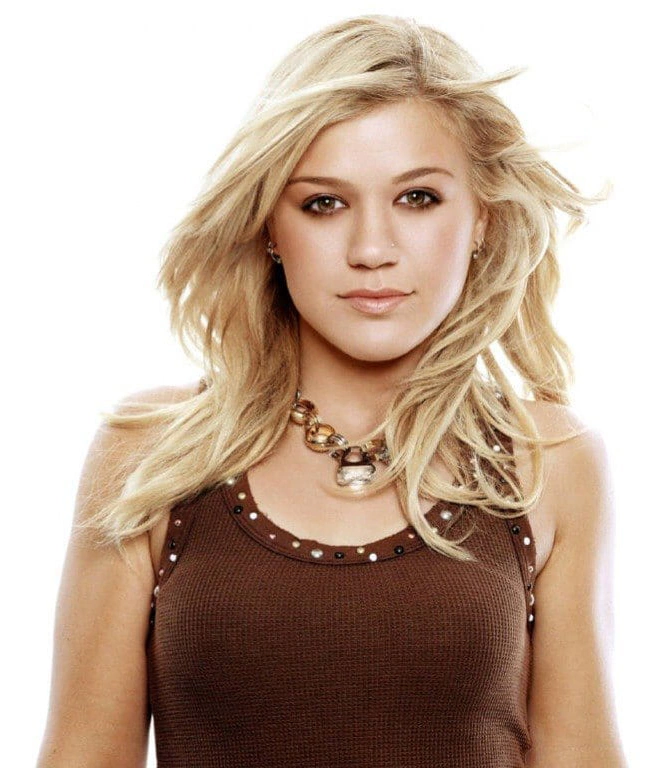
| 9 Quotes | |
| Born as | Kelly Brianne Clarkson |
| Occup. | Musician |
| From | USA |
| Spouse | Brandon Blackstock |
| Born | April 24, 1982 Fort Worth, Texas, USA |
| Age | 43 years |
| Cite | |
Citation Formats
APA Style (7th ed.)
Kelly clarkson biography, facts and quotes. (2026, March 18). FixQuotes. https://fixquotes.com/artists/kelly-clarkson/
Chicago Style
"Kelly Clarkson biography, facts and quotes." FixQuotes. March 18, 2026. https://fixquotes.com/artists/kelly-clarkson/.
MLA Style (9th ed.)
"Kelly Clarkson biography, facts and quotes." FixQuotes, 18 Mar. 2026, https://fixquotes.com/artists/kelly-clarkson/. Accessed 27 Mar. 2026.
Early Life and Background
Kelly Brianne Clarkson was born on April 24, 1982, in Fort Worth, Texas, and grew up chiefly in the nearby suburb of Burleson. She was the youngest of three children born to Jeanne Ann, a first-grade English teacher, and Stephen Michael Clarkson, an engineer. Her parents divorced when she was young, and that fracture shaped the emotional weather of her childhood: one sibling went to live with their father, another with an aunt, while Clarkson remained with her mother. The separation gave her early intimacy with instability - financial, domestic, and emotional - but also sharpened the resilience and frankness that later became central to her public identity. In a pop culture landscape often built on polish and distance, Clarkson's appeal would come from the opposite source: she sounded like someone who had lived through ordinary American upheaval and learned to sing from inside it.
Texas also gave her a cultural vocabulary that remained visible long after fame arrived. She was raised in a broadly Christian environment, worked odd jobs as a teenager, and absorbed country, gospel, soul, and mainstream pop rather than any single school of taste. Before national television turned her into a household name, she was already a local performer with a powerful belt and a practical sense of survival. After high school she declined some scholarship opportunities in order to pursue music on her own terms, moved to Los Angeles, and experienced the precarious underside of entertainment life - temp work, rejection, and even the loss of belongings in an apartment fire. That near-anonymous struggle is crucial to understanding her later refusal of diva mystique: celebrity came to her suddenly, but ambition had been forged in uncertainty.
Education and Formative Influences
Clarkson attended Pauline G. Hughes Middle School and Burleson High School, where a choir teacher reportedly heard her singing in a hallway and urged her toward formal performance. School music gave structure to a voice that was unusually large for her age, but her real education was stylistic breadth. She listened across categories - Aretha Franklin, Mariah Carey, Whitney Houston, Reba McEntire, and rock radio - and developed a flexible attack that could move from melisma to grit without losing conversational clarity. That mixture of technical instinct and emotional directness later distinguished her from many reality-show successors. She was not shaped by a conservatory ideal of refinement; she was shaped by church-inflected conviction, Texas plainspokenness, and the demand to connect immediately with listeners.
Career, Major Works, and Turning Points
Clarkson's decisive break came in 2002 when she won the inaugural season of American Idol, a new television format that fused talent competition with mass audience participation. Her coronation single, "A Moment Like This", became an event in itself, but the larger significance was historical: she became the prototype for a new kind of pop stardom, one born in public and tested weekly before millions. Her debut album, Thankful (2003), established her commercially, yet the more important artistic turning point was Breakaway (2004), whose hits - "Since U Been Gone", "Behind These Hazel Eyes", "Because of You" and "Breakaway" - transformed her from reality-show victor into a defining voice of 2000s pop-rock. She then pushed against industry expectations with My December (2007), a darker and more self-directed record born from conflict over control, proving she was willing to risk commercial momentum for authorship. The rest of her career showed both durability and range: All I Ever Wanted (2009) restored chart dominance; Stronger (2011) gave her one of her signature anthems with "Stronger (What Doesn't Kill You)"; Wrapped in Red (2013) displayed holiday classicism; Piece by Piece (2015) returned to family wounds and repair; Meaning of Life (2017) embraced soul-pop fullness; and chemistry with audiences led to major television roles, especially as a coach on The Voice and as host of The Kelly Clarkson Show, where her warmth, wit, and musicianship found a daily format. Across marriages, motherhood, divorce, and public reinvention, she remained unusual among pop stars: a vocalist of elite power who also became a trusted daytime presence.
Philosophy, Style, and Themes
Clarkson's art is built on the tension between extraordinariness and recognizability. Her voice is technically commanding - bright upper register, muscular chest voice, strong dynamic lift - but her persona has always resisted untouchable glamour. She has repeatedly framed success less as conquest than as permission to keep doing the work she loves: “My winning is getting to perform. That's my victory”. That sentence is psychologically revealing. It shifts value away from status and toward activity, suggesting a performer who experiences singing not merely as career but as proof of selfhood. Even her humor about image carries this anti-mythic instinct: “I'm cute - and God, I hate that. Because that's not cool. I'm like your niece, and nobody wants to date their niece. It's the chubby cheeks. The whole reason people voted for me on American Idol is because I'm an everyday, normal girl”. Beneath the joke is acute awareness of how female entertainers are packaged and judged, and a refusal to let desirability define legitimacy.
That refusal helps explain the recurrent themes of Clarkson's catalog: heartbreak without self-erasure, anger without cynicism, recovery without sanctimony. Songs such as "Because of You", "Already Gone", "Piece by Piece" and "Stronger" map injury into assertion, often using autobiographical feeling while keeping the emotional language broad enough for collective ownership. Her spirituality also works less as doctrine than as a stabilizing frame for hardship: “God will never give you anything you can't handle, so don't stress”. The line is simple, but its simplicity matters. Clarkson's worldview tends to metabolize pain into endurance rather than abstraction. This is why her singing often lands with unusual force: she does not decorate emotion, she drives through it. In public life as in music, she has defended body diversity, emotional candor, and female complexity, rejecting the tidy binaries that pop culture imposes on women.
Legacy and Influence
Kelly Clarkson's legacy rests on more than being the first American Idol winner. She legitimized the reality-show pathway by outlasting the format that introduced her, and she did so through musicianship rather than spectacle alone. Her recordings helped define post-millennial pop-rock, her ballads became templates for confessional mainstream songwriting, and her live singing set a standard that peers and younger artists still cite with respect. Just as important, she altered the emotional contract between star and audience: approachable without being slight, funny without self-protection, wounded without collapse. In an era of increasingly managed celebrity, Clarkson made sincerity commercially viable. Her enduring influence lies in that synthesis - powerhouse vocalist, plainspoken narrator of survival, and public figure who turned relatability into a serious artistic asset.
Our collection contains 9 quotes written by Kelly, under the main topics: Witty One-Liners - Success - God - Confidence - Happiness.
Other people related to Kelly: Trisha Yearwood (Musician), Carson Daly (Entertainer)
Source / external links