
Kendrick Lamar Biography Quotes 33 Report mistakes
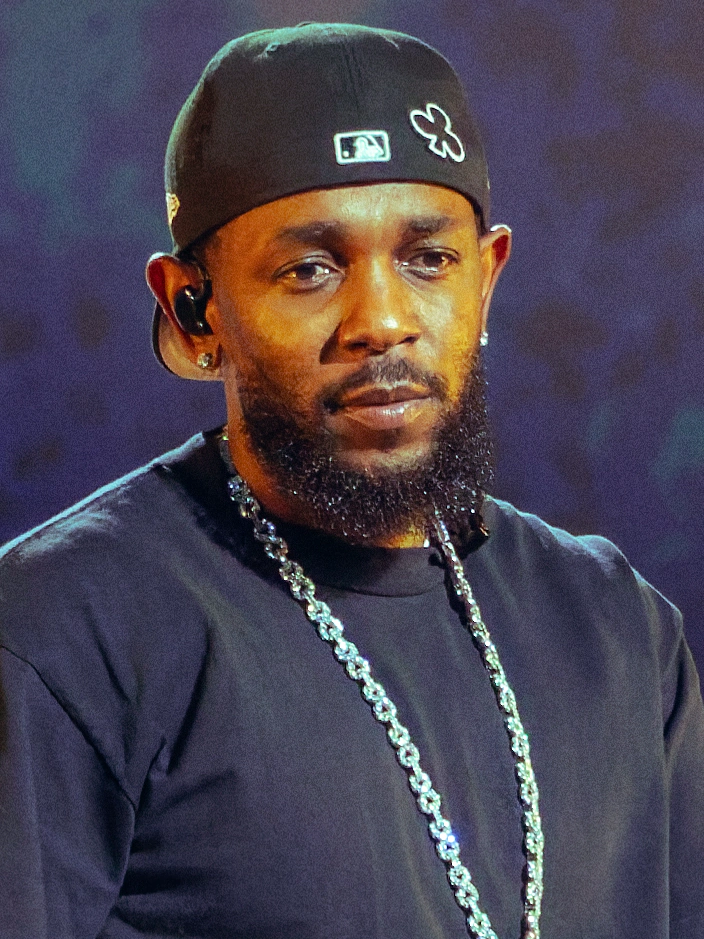
Attr: Raph_PH, CC BY 4.0
| 33 Quotes | |
| Born as | Kendrick Lamar Duckworth |
| Known as | K-Dot |
| Occup. | Musician |
| From | USA |
| Born | June 17, 1987 Compton, California, USA |
| Age | 38 years |
| Cite | |
Citation Formats
APA Style (7th ed.)
Kendrick lamar biography, facts and quotes. (2026, February 11). FixQuotes. https://fixquotes.com/artists/kendrick-lamar/
Chicago Style
"Kendrick Lamar biography, facts and quotes." FixQuotes. February 11, 2026. https://fixquotes.com/artists/kendrick-lamar/.
MLA Style (9th ed.)
"Kendrick Lamar biography, facts and quotes." FixQuotes, 11 Feb. 2026, https://fixquotes.com/artists/kendrick-lamar/. Accessed 22 Mar. 2026.
Early Life and Background
Kendrick Lamar Duckworth was born June 17, 1987, in Compton, California, the child of parents who had left Chicago amid the pressures of street life and limited opportunity. He grew up in the shadow of Los Angeles County's post-crack era, when gang boundaries, over-policing, and the local economy shaped a daily calculus of risk. His early world was not only a geography but a soundscape - West Coast rap, church cadence, and neighborhood storytelling - where survival demanded watchfulness and wit.Family stability existed alongside ambient trauma: friends lost, homes searched, schools underfunded, and the constant message that a young Black boy's future could be shortened by a mistake or another person's fear. Kendrick learned early to observe quietly, to turn the block into narrative, and to hold contradictory feelings at once - pride and dread, loyalty and escape. That double vision would later become his signature: he could honor Compton without romanticizing it, and he could indict systems without erasing personal responsibility.
Education and Formative Influences
He attended Centennial High School in Compton, earning strong grades while sharpening a writer's discipline through rhyme. A pivotal spark came as a teenager watching Dr. Dre and Tupac Shakur on the set of the "California Love" video, an encounter that made fame tangible but also framed it as a kind of civic power. He absorbed the technical clarity of Jay-Z, the moral urgency of Tupac, and the cinematic craft of Dr. Dre, then filtered them through local mentors and peers in the citys rap ecosystem, where authenticity was measured by both lyrical skill and lived knowledge.Career, Major Works, and Turning Points
Recording first as K.Dot, he built regional credibility through mixtapes, then broke wider with the independent album Section.80 (2011), which announced his gift for character studies and social diagnosis. His major turning point arrived when Dr. Dre signed him to Aftermath and he released good kid, m.A.A.d city (2012), a Compton coming-of-age framed as a moral thriller - radio-ready yet structurally ambitious. He escalated into national conscience with To Pimp a Butterfly (2015), welding jazz, funk, and spoken-word traditions to a critique of exploitation and self-hate, and then complicated his own role with DAMN. (2017), a hit-driven album that still wrestled with fate, pride, and salvation; it earned the Pulitzer Prize for Music in 2018, a historic recognition of hip-hop as high American literature. Later, Mr. Morale and the Big Steppers (2022) widened the lens to therapy, family legacy, and spiritual exhaustion, while high-profile projects like the Black Panther soundtrack and recurring competitive flare-ups kept him central to hip-hops public drama.Philosophy, Style, and Themes
Kendricks art is built on the belief that a person is a battleground of histories - family, neighborhood, nation - and that confession can be both weapon and medicine. He writes like a documentarian with a preachers urgency: shifting voices, internal dialogues, and abrupt scene changes that mimic intrusive memory. Under the virtuosity is an anxious ethic: he fears becoming an instrument of the same forces he condemns, so he continually audits his motives - desire for money, craving for validation, impulse toward violence, hunger for grace.Three of his recurring motifs are inheritance, temptation, and transcendence, often expressed as DNA, scripture, or state power. When he asserts, “I got loyalty, got royalty inside my DNA”. , it is less boast than argument with history - a counter-claim against narratives of disposability, and a reminder that pride can be survival. Yet his critique extends outward: “What you want, you a house or a car? Forty acres and a mule, a piano, a guitar? Anything, see my name is Uncle Sam, I'm your dog. Motherfucker, you can live at the mall”. Here the voice of the state turns seduction into control, exposing consumer comfort as a substitute for reparative justice. Even his ecstatic moments carry religious and dissociative heat - “This what God feel like, yeah”. - suggesting that performance can become a brief escape from pain, and also a dangerous flirtation with messiahhood.
Legacy and Influence
Kendrick Lamar has reshaped what mainstream rap can carry: dense narrative, historical argument, and intimate self-interrogation without surrendering rhythm or mass appeal. He helped reopen space for album-as-novel in the streaming era, influenced a generation of writers toward conceptual structure and emotional candor, and forced critics and institutions to confront hip-hops artistic legitimacy. More enduring, his work functions as a moral archive of early 21st-century America - the aftershocks of mass incarceration, the rhetoric of Black excellence, the commodification of struggle - mapped through one mans evolving conscience as he tries, repeatedly, to tell the truth without being destroyed by it.Our collection contains 33 quotes written by Kendrick, under the main topics: Justice - Love - Music - Deep - One-Liners.
Other people related to Kendrick: Pharrell Williams (Musician), Mary J. Blige (Musician)
Source / external links