
Kenny G Biography Quotes 15 Report mistakes
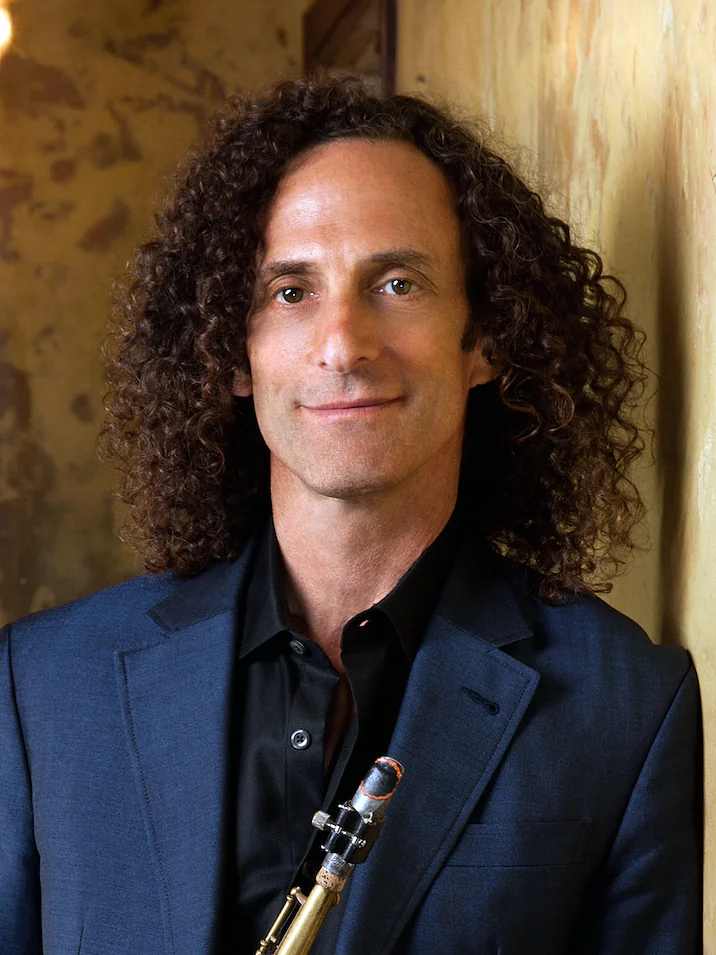
| 15 Quotes | |
| Born as | Kenneth Bruce Gorelick |
| Occup. | Musician |
| From | USA |
| Born | June 5, 1956 Seattle, Washington, United States |
| Age | 69 years |
| Cite | |
Citation Formats
APA Style (7th ed.)
Kenny g biography, facts and quotes. (2026, February 11). FixQuotes. https://fixquotes.com/artists/kenny-g/
Chicago Style
"Kenny G biography, facts and quotes." FixQuotes. February 11, 2026. https://fixquotes.com/artists/kenny-g/.
MLA Style (9th ed.)
"Kenny G biography, facts and quotes." FixQuotes, 11 Feb. 2026, https://fixquotes.com/artists/kenny-g/. Accessed 5 Mar. 2026.
Early Life and Education
Kenneth Bruce Gorelick, known worldwide as Kenny G, was born on June 5, 1956, in Seattle, Washington. Raised in a Jewish household in the city's Seward Park area, he discovered the saxophone as a child and quickly gravitated toward the instrument's expressive possibilities. Hearing a saxophonist on television during his youth stirred his curiosity, and by middle school he was practicing with unusual discipline. At Franklin High School in Seattle, he played in the band and sharpened the technical control that would later define his ultra-smooth tone. He continued his studies at the University of Washington while gigging locally, balancing academics with an increasingly active musical life.Career Beginnings
Kenny G's first professional break arrived as a teenager when he joined Barry White's Love Unlimited Orchestra for touring dates. The experience introduced him to high-level show business, travel, large audiences, and the expectations of a disciplined ensemble. After returning to Seattle and continuing his education, he earned another pivotal opportunity with keyboardist Jeff Lorber. As a member of The Jeff Lorber Fusion, he toured and recorded, strengthening his command of soprano, alto, and tenor saxophones and absorbing the mechanics of fusion, R&B, and pop production. His work with Lorber brought him to the attention of influential record executive Clive Davis, who signed him to Arista Records and steered him toward a solo career that would eventually place him among the best-selling instrumental artists in history.Breakthrough and Global Fame
Kenny G's first solo releases in the early 1980s blended R&B rhythms with melodic saxophone lines, but it was the 1986 album Duotones that established him worldwide. The single Songbird, driven by his lyrical soprano sax tone and unhurried phrasing, became an unlikely pop hit, crossing into the upper reaches of the Billboard charts and introducing instrumental music to mainstream radio playlists. He followed with Silhouette and a string of albums that refined his signature sound: long, flowing melodies; polished, reverberant production; and a compositional approach built around clear, singable hooks. Breathless (1992) turned him into a household name, selling in the multi-millions and yielding Forever in Love, for which he won a Grammy Award. In 1994 he released Miracles: The Holiday Album, which became one of the best-selling Christmas albums in U.S. history and cemented his presence during the holiday season.Collaborations and Key Relationships
Alongside his solo work, Kenny G became a sought-after collaborator. He appeared on pop and R&B recordings and shared stages and studios with artists who broadened his audience. He worked with Michael Bolton, contributing his saxophone voice to adult contemporary hits; paired with Peabo Bryson on By the Time This Night Is Over; recorded Even If My Heart Would Break with Aaron Neville for The Bodyguard era; and brought his tone to Frank Sinatra's late-career projects. Clive Davis remained an important advocate during these years, helping position Kenny G's records in a market that did not typically reward instrumentalists. Behind the scenes, a circle of engineers and producers helped translate his sound into glossy, radio-friendly arrangements without losing the core warmth of his soprano sax. As a performer, he drew inspiration from saxophonists such as Grover Washington Jr., whose own blend of jazz and R&B provided a model for accessible instrumental music.Technique, Image, and Debate
Kenny G's technical identity rests on breath control, clarity of articulation, and a highly stable vibrato. He popularized circular breathing in mainstream conversation by sustaining notes for extraordinary durations, a feat that drew both admiration and controversy. He once held a note for an exceptionally long time during a public demonstration, which fed into his image as a virtuoso showman. At the same time, jazz purists sometimes criticized his style for prioritizing smooth textures over improvisational complexity. The debate intensified when he overdubbed a part onto a historical recording by Louis Armstrong, drawing pointed rebukes from some musicians. Kenny G maintained that he was offering a tribute, not a replacement for jazz tradition, and he continued to present himself as a melodic, pop-oriented instrumentalist rather than a strict modern jazz player.Business Acumen and Global Reach
While his U.S. success made him a fixture on adult contemporary and smooth jazz radio, his reach extended worldwide. In China, his composition Going Home became an unexpected cultural signal for closing time in public spaces, greatly expanding his recognition across Asia. He experienced a public-relations flare-up years later when a social media post from Hong Kong stirred criticism on the mainland; he clarified that he respected local laws and customs, a reminder of how global fame now intersects with political sensitivities. Outside music, he displayed notable business instincts as an early investor in Starbucks, a link to his Seattle roots and a reflection of his willingness to diversify beyond touring and recording.Later Career and Continuing Work
From the late 1990s onward, Kenny G alternated between original material and themed projects. Classics-focused releases, romantic standards, and holiday albums kept him visible while new studio albums reminded audiences of his compositional voice. Tours filled theaters and arenas, where he leaned into audience connection, walking the aisles with his soprano sax, holding impossibly long notes, and punctuating polished arrangements with brief improvisations. Albums such as The Moment, Paradise, Heart and Soul, Brazilian Nights, and New Standards demonstrated his interest in both familiar songcraft and stylistic experiments within the smooth-jazz vocabulary. He continued to collaborate with vocalists across pop and R&B, choosing partners whose phrasing and tone complemented his singing horn lines.Personal Life and Interests
Kenny G married Janice DeLeon in 1980; the marriage ended in 1987. In 1992 he married Lyndie Benson, with whom he has two sons, and they later separated and divorced. Away from the studio, he is known for meticulous practice habits, long-tone exercises and daily warmups that keep his embouchure consistent on the soprano sax. He is also a passionate golfer with a low handicap, a routine that mirrors the discipline he applies to his instrument. Friends and colleagues often describe him as attentive to detail, punctual, and committed to rehearsal, traits that sustained his long tenure as a touring artist.Recognition and Cultural Impact
Kenny G's career coincided with a period when instrumental music found space on major radio formats, and he became the genre's most visible face. He earned multiple Grammy nominations, won a Grammy for Forever in Love, and amassed substantial RIAA certifications across several albums. For many listeners, his recordings served as an entry point into instrumental music; for others, they became a soundtrack for weddings, holidays, and everyday moments. Critics and fellow musicians have debated the boundaries of jazz in relation to his catalog, a conversation that inadvertently kept his name in the public sphere. Through it all, his audience remained broad and loyal, with fans drawn to melody-forward writing and a tone recognizable within seconds.Legacy
Kenny G's legacy rests on two pillars: the mainstreaming of instrumental pop-saxophone music and an unmistakable soprano sax sound that crossed demographics and geographies. Enabled early by the confidence of Clive Davis, shaped by formative stints with Barry White and Jeff Lorber, and amplified by collaborations with singers like Michael Bolton, Peabo Bryson, and Aaron Neville, he built a global brand around lyricism and polish. Whether performing in concert halls, appearing on major television broadcasts, or soundtracking everyday life, he remained a constant in late 20th-century and early 21st-century popular culture. For a generation of listeners and aspiring saxophonists, the name Kenny G signifies an approach to music that privileges melody, breath control, and emotional immediacy, qualities that helped an instrumentalist become one of the most widely recognized American musicians of his era.Our collection contains 15 quotes written by Kenny, under the main topics: Music - Life - Letting Go - Son.