
Kool Moe Dee Biography Quotes 11 Report mistakes
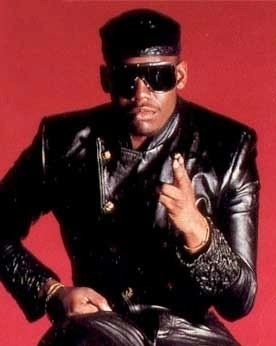
| 11 Quotes | |
| Occup. | Musician |
| From | USA |
| Born | August 8, 1962 |
| Age | 63 years |
| Cite | |
Citation Formats
APA Style (7th ed.)
Kool moe dee biography, facts and quotes. (2026, February 11). FixQuotes. https://fixquotes.com/artists/kool-moe-dee/
Chicago Style
"Kool Moe Dee biography, facts and quotes." FixQuotes. February 11, 2026. https://fixquotes.com/artists/kool-moe-dee/.
MLA Style (9th ed.)
"Kool Moe Dee biography, facts and quotes." FixQuotes, 11 Feb. 2026, https://fixquotes.com/artists/kool-moe-dee/. Accessed 6 Mar. 2026.
Early Life and Education
Kool Moe Dee, born Mohandas Dewese on August 8, 1962, in New York City, emerged from Harlem at a time when hip-hop culture was taking shape in borough parks, community centers, and clubs. His upbringing in New York gave him direct access to the DJs, MCs, and dancers who were inventing a new language of rhythm and rhetoric. Before becoming an established recording artist, he pursued higher education and earned a degree in communications from SUNY Old Westbury. The academic grounding would later inform his measured diction, emphasis on enunciation, and the rhetorical construction of his lyrics, lending an almost oratorical precision to performances that were otherwise raw and electric.Origins in the Old School
By the late 1970s and early 1980s, Kool Moe Dee had aligned himself with a formidable cohort of peers committed to pushing MCing beyond party chants. He co-founded the Treacherous Three with Special K and L.A. Sunshine, with DJ Easy Lee anchoring the group's sound. Early recordings arrived via Enjoy Records, overseen by Harlem entrepreneur Bobby Robinson. The crew swiftly distinguished itself with speed, clarity, and intricate rhyme schemes. Their collaboration with Spoonie Gee on "The New Rap Language" showcased a rapid-fire cadence few could match, setting a bar for technical proficiency. As the group's reputation grew, they recorded for Sugar Hill Records, run by Sylvia Robinson, joining the label that had introduced rap to mainstream radio while preserving a streetwise ethos.Treacherous Three Breakthroughs
Throughout the early 1980s, Treacherous Three singles such as "Body Rock" and "Feel the Heartbeat" crystallized a template for performance-centered rap. Kool Moe Dee's stage presence, wraparound shades, crisp posture, and a clearly projected voice, helped the group stand out in packed lineups. Their prominent appearance in the 1984 film Beat Street, in a festive club scene that also featured Doug E. Fresh, placed them squarely within hip-hop's expanding popular culture. Onstage and on record, their interplay emphasized thematic verses and call-and-response patterns, but Kool Moe Dee's verses were often the exclamation point, turning technical skill into narrative authority.Battlecraft and the Busy Bee Turning Point
An inflection point in Kool Moe Dee's career, and in battle rap history, arrived with his 1981 face-off against Busy Bee Starski at Harlem World. Busy Bee was a charismatic party-rocker, but Kool Moe Dee's clinical dismantling reframed the expectations for MC battles: content, punchlines, and directed critique eclipsed crowd-hyping routines. The moment was both theater and thesis, arguing that hip-hop could reward the craftsman's scalpel as much as the showman's smile. It elevated Kool Moe Dee as a technician of the mic and inspired a generation to treat lyrical writing as a competitive sport measured in wit, structure, and stamina.From Group to Solo Artist
By the mid-1980s, Kool Moe Dee stepped into a solo career that preserved his old-school discipline while embracing contemporary production. Signing with Jive Records, he issued the self-titled album "Kool Moe Dee" in 1986. The standout single "Go See the Doctor", produced with the young prodigy Teddy Riley, combined cautionary storytelling with an unforgettable hook, landing him on charts at home and abroad. The track's balance of humor and message, alongside its polished sonics, signaled that Kool Moe Dee had successfully translated his battle-hardened craft into studio-ready anthems.New Jack Swing, Hits, and Pop Crossover
Working closely with Teddy Riley as the New Jack Swing sound came to dominate late-1980s R&B and hip-hop, Kool Moe Dee found a powerful frame for his baritone clarity. His 1987 album "How Ya Like Me Now" yielded signature records, including the booming title track and the cinematic "Wild Wild West". The follow-up, "Knowledge Is King" (1989), pushed his brand of assertive lyricism even further, highlighted by the disciplined workout of "I Go to Work". These releases expanded his audience, placing him in regular rotation on urban and pop radio. His deep-voiced delivery and impeccably enunciated internal rhymes cut through busy mixes, proof that an MC steeped in early-80s battle codes could thrive in the era of slick drum programming and layered synths.Rivalry with LL Cool J
Kool Moe Dee's rivalry with LL Cool J became one of rap's defining lyrical contests of the late 1980s and early 1990s. It was a clash of generations and aesthetics: the elder statesman who prized diction, craft, and decorum versus a younger superstar who fused braggadocio with pop ambition. Kool Moe Dee's "How Ya Like Me Now" artwork, infamously showing a red Kangol cap, associated with LL, pinned under a Jeep, broadcast the conflict. LL Cool J answered with battle cuts like "Jack the Ripper" and later "To Da Break of Dawn", while Kool Moe Dee countered with records including "Let's Go" and "Death Blow". The exchange, amplified by producers and DJs such as Marley Marl on LL's side and the New Jack Swing camp on Moe Dee's, sharpened standards for battle rap, forcing both artists to refine their pen games for a mass audience.Collaborations, Film, and Community Initiatives
Kool Moe Dee's reach extended well beyond solo LPs. He contributed to Quincy Jones's 1989 project "Back on the Block", sharing space with Melle Mel, Big Daddy Kane, and Ice-T, a cross-generational cypher that linked hip-hop to jazz and R&B legacies. He participated in KRS-One's Stop the Violence Movement, appearing on the 1989 single "Self Destruction", aligning his public profile with messages of community responsibility. His earlier on-screen appearance with Treacherous Three in Beat Street kept him linked to hip-hop's visual history, and later, when Will Smith revived "Wild Wild West" for a 1999 blockbuster, Kool Moe Dee's original concept echoed through the new version, with a cameo nodding to his enduring imprint on the song's DNA.Later Work, Writing, and Ongoing Influence
As hip-hop evolved in the 1990s, Kool Moe Dee released "Funke, Funke Wisdom" (1991) and "Interlude" (1994), records that maintained his commitment to articulate, idea-driven rap even as trends shifted. He extended his influence through authorship, publishing "There's a God on the Mic: The True 50 Greatest MCs", a critical treatise that dissected technique, impact, originality, and longevity. The book codified his perspective on craft, placing him in dialogue with peers and successors by offering criteria for evaluation rooted in the same exacting standards he brought to the stage. He continued to perform on old-school tours and appeared at commemorative events marking hip-hop's milestones, serving as a living bridge between the park-jam era and the global industry it spawned.Style, Technique, and Legacy
Kool Moe Dee's artistry rests on clarity, structure, and intellect. He projected authority without sacrificing musicality, packing syllables into tightly engineered bars that still breathed in performance. Collaborations with figures such as Teddy Riley demonstrated his adaptability; alliances with Quincy Jones, Ice-T, Big Daddy Kane, and Melle Mel placed him within a lineage of innovators; and his participation in movements led by KRS-One underscored a belief that the microphone could carry civic messages as powerfully as boasts. The Busy Bee battle crystallized the value of content in rap; the LL Cool J rivalry popularized battle aesthetics for a mass audience; and his hits showed that technique could ride the pulse of radio without compromise.From Harlem rec rooms to major-label success, from Enjoy and Sugar Hill to Jive, and from Treacherous Three cyphers to solo anthems, Kool Moe Dee helped define what it meant to be an MC. He demonstrated that a rapper could be a tactician and a hitmaker, a competitor and a collaborator, a historian and a participant. His voice, cool, deliberate, and commanding, remains a landmark sound of hip-hop's formative decades, and the artists who followed have built upon a foundation he helped to pour alongside peers like Special K, L.A. Sunshine, DJ Easy Lee, Spoonie Gee, Busy Bee Starski, and producers and mentors spanning Bobby Robinson to Sylvia Robinson and Teddy Riley. In the ongoing story of rap, his name endures as one of the clearest examples of technique meeting purpose.
Our collection contains 11 quotes written by Kool, under the main topics: Justice - Music - Deep - Life - Human Rights.
Source / external links