
Kurt Cobain Biography Quotes 24 Report mistakes
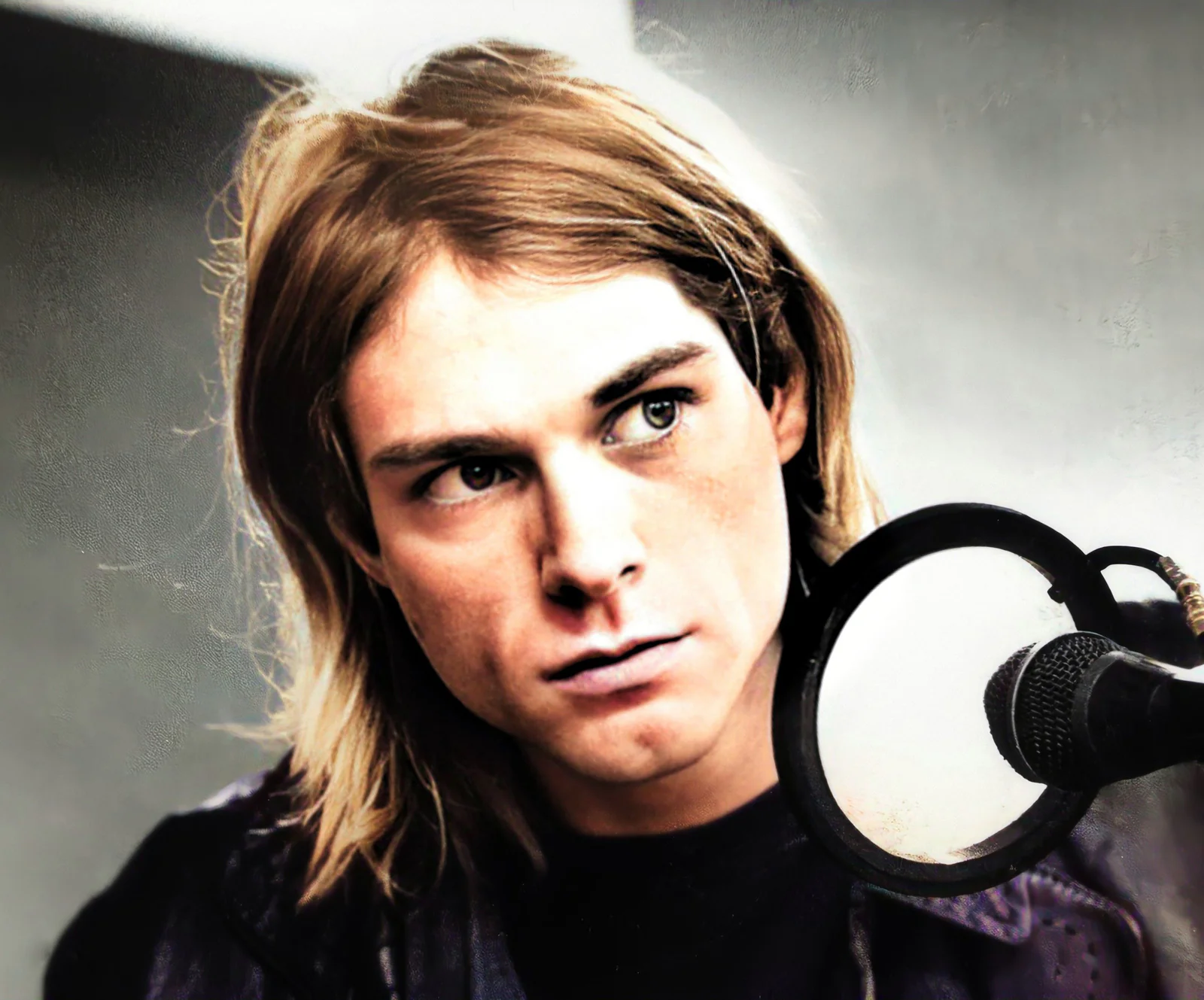
| 24 Quotes | |
| Born as | Kurt Donald Cobain |
| Occup. | Musician |
| From | USA |
| Spouse | Courtney Love |
| Born | February 20, 1967 Aberdeen, Washington, USA |
| Died | April 5, 1994 Seattle, Washington, USA |
| Cause | Suicide by gunshot |
| Aged | 27 years |
| Cite | |
Citation Formats
APA Style (7th ed.)
Kurt cobain biography, facts and quotes. (2026, February 11). FixQuotes. https://fixquotes.com/artists/kurt-cobain/
Chicago Style
"Kurt Cobain biography, facts and quotes." FixQuotes. February 11, 2026. https://fixquotes.com/artists/kurt-cobain/.
MLA Style (9th ed.)
"Kurt Cobain biography, facts and quotes." FixQuotes, 11 Feb. 2026, https://fixquotes.com/artists/kurt-cobain/. Accessed 27 Mar. 2026.
Early Life and Background
Kurt Donald Cobain was born on February 20, 1967, in Aberdeen, Washington, a rain-soaked logging town on the Pacific edge of the United States. The place mattered: isolated, economically precarious, and culturally narrow, it sharpened his sensitivity to outsiders and fed the claustrophobia that later powered Nirvana's most blunt songs. He gravitated to drawing and music early, absorbing radio pop, punk attitude, and the emotional directness of hard rock, but even as a child he carried a volatile mix of tenderness and irritation at rules he did not consent to.His parents, Donald and Wendy Cobain, divorced when he was nine, an event he later treated less as a single trauma than as the beginning of a long homelessness of feeling. He moved between households and relatives, a restless adolescence that made intimacy feel conditional and belonging feel temporary. By his teens, he was bouncing through friendships in Aberdeen and nearby Montesano, holding onto art as a private refuge while learning how quickly a small town can label someone "different" and then punish the difference.
Education and Formative Influences
Cobain attended Aberdeen High School but disengaged from formal schooling and dropped out shortly before graduation, trading credentials for subculture. He internalized the DIY ethic of punk - especially the raw candor of the Sex Pistols, the political intensity of Black Flag, and later the melodic ache of the Pixies - while also keeping a pop craftsman's ear for hooks. The Washington state underground of the 1980s, circulating through cassette trades, small clubs, and cheap rehearsal spaces, offered him a workable identity: not the town's misfit, but an artist building a language with other misfits.Career, Major Works, and Turning Points
In 1987 Cobain formed Nirvana with bassist Krist Novoselic in Aberdeen; after a series of drummers, Dave Grohl joined in 1990, stabilizing the band at the moment it mattered. Their Sub Pop debut, "Bleach" (1989), sketched a heavy, sardonic sound, but "Nevermind" (1991) detonated globally - "Smells Like Teen Spirit" turning underground frustration into mass anthem and yanking alternative rock into the center of early-1990s culture. Cobain reacted to fame as both vindication and contamination, doubling down on discomfort with the spotlight even as he used it to amplify values he cared about. "In Utero" (1993), recorded with Steve Albini, was a corrective: thornier textures, more exposed vocals, and lyrics that refused the clean satisfactions of celebrity. After his marriage to Courtney Love in 1992 and the birth of their daughter Frances Bean, his health problems, depression, and heroin addiction intensified amid relentless media scrutiny. Following a near-fatal overdose in Rome in March 1994 and a brief intervention attempt, Cobain died by suicide in Seattle on April 5, 1994.Philosophy, Style, and Themes
Cobain's inner life was defined by a craving for authenticity and a fear of being co-opted, a psychological tension that made him both charismatic and self-eroding. He distrusted performance-for-approval and treated sincerity as a moral stance: “The worst crime is faking it”. That line maps onto the way he sang - not as a virtuoso, but as someone willing to make ugliness audible - and the way Nirvana moved between abrasion and melody, like a conscience arguing with itself. His best writing makes shame, disgust, and tenderness share the same cramped room: a lullaby surrounded by broken glass.Just as central was his refusal of macho hierarchy, shaped by his experiences in small-town masculinity and his empathy for the targeted. He repeatedly positioned himself against bullying, sexism, and homophobia, and he saw "average macho" dominance as a personal threat as well as a cultural poison: “I've always had a problem with the average macho man - they've always been a threat to me”. Yet he was not naive about the costs of self-reinvention and escape; he insisted that identity is not a costume but a duty to the self: “Wanting to be someone else is a waste of the person you are”. In songs that swing from whispered confession to sudden combustion, his art keeps returning to the same knot - the desire to be loved without being rewritten.
Legacy and Influence
Cobain's impact is both musical and moral: he helped mainstream a sound that made room for vulnerability, sarcasm, and social conscience, and he modeled an anti-star posture that later artists borrowed even when they could not replicate its credibility. Nirvana's catalog remains a blueprint for loud-quiet dynamics, but also for how a band can speak to alienation without glamorizing power. His death froze him in the public imagination as a cautionary icon of the 1990s, yet the enduring force of his work lies in its human scale - a voice insisting that pain is real, posturing is suspect, and tenderness is not weakness.Our collection contains 24 quotes written by Kurt, under the main topics: Witty One-Liners - Wisdom - Music - Sarcastic - Mortality.
Other people related to Kurt: Courtney Love (Musician), Krist Novoselic (Musician), Dave Grohl (Musician), Kurt Loder (Journalist), Al Yankovic (Comedian), Gus Van Sant (Director), Frances Bean Cobain (Celebrity), Buzz Osborne (Musician)
Source / external links