
Larry Hovis Biography Quotes 5 Report mistakes
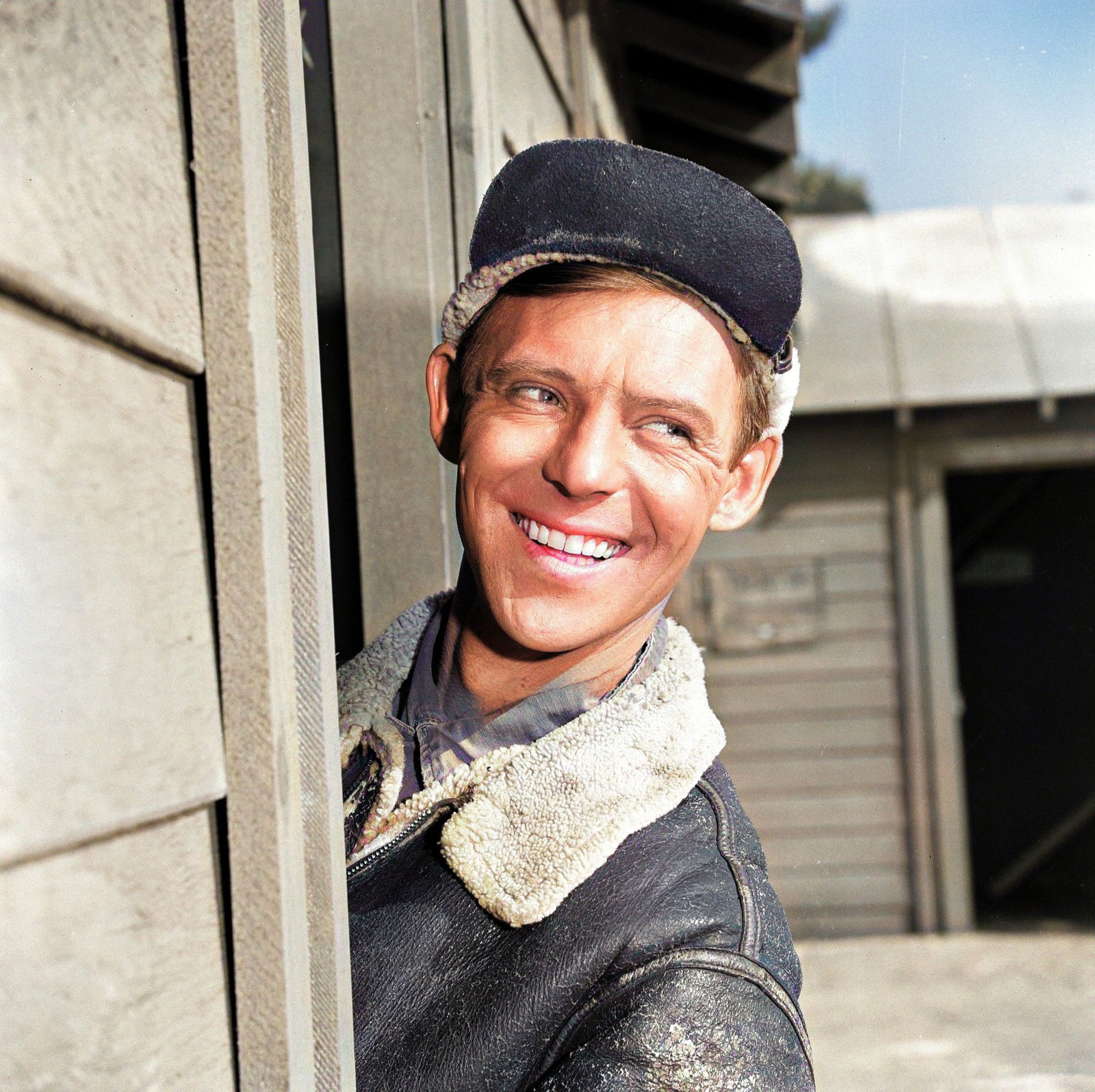
| 5 Quotes | |
| Occup. | Musician |
| From | USA |
| Born | February 20, 1936 USA |
| Died | September 9, 2003 USA |
| Aged | 67 years |
| Cite | |
Citation Formats
APA Style (7th ed.)
Larry hovis biography, facts and quotes. (2026, February 11). FixQuotes. https://fixquotes.com/artists/larry-hovis/
Chicago Style
"Larry Hovis biography, facts and quotes." FixQuotes. February 11, 2026. https://fixquotes.com/artists/larry-hovis/.
MLA Style (9th ed.)
"Larry Hovis biography, facts and quotes." FixQuotes, 11 Feb. 2026, https://fixquotes.com/artists/larry-hovis/. Accessed 26 Mar. 2026.
Early Life and Background
Larry Hovis was born February 20, 1936, in Wapakoneta, Ohio, a small Midwestern town whose rhythms of work, church, and civic ritual formed a durable baseline for his later, plainspoken comic persona. He grew up in the long shadow of the Depression and World War II, years that prized practicality and quick wit as social tools, and he carried that sensibility into a career spent balancing ambition with the realities of show business.Before fame, Hovis lived the portable life of many postwar strivers: jobs taken where opportunity appeared, stages accepted where a paycheck met a dream. That early elasticity - learning to win a room without demanding it - became a psychological throughline: he often played men who seemed ordinary until pressure revealed their resourcefulness, a pattern that mirrored his own steady climb from regional work to national television.
Education and Formative Influences
Hovis attended Wright State University in Dayton, Ohio, where campus theater and performance training sharpened his timing and gave him a disciplined respect for craft. The period coincided with American entertainment's mid-century shift from vaudeville and radio to television, and Hovis absorbed both traditions: the old emphasis on precise, audience-facing technique and the new demand for camera-friendly understatement. Those formative years also taught him the professional humility that later surfaced in interviews - a belief that the work mattered more than the performer.Career, Major Works, and Turning Points
After service in the U.S. Air Force, Hovis moved through stage and television work until he became widely recognizable as Sgt. Andrew Carter on the CBS sitcom Hogan's Heroes (1965-1971), a role that made him a familiar face in American living rooms during the Vietnam-era reappraisal of war narratives. The series' unlikely premise - Allied POWs outwitting German captors - required a tonal tightrope of farce, menace, and moral distance; Hovis contributed a dependable comic engine, often playing Carter's malapropisms and earnest bungling as cover for competence. Post-series, he continued acting while also pursuing theater, writing, and producing, choosing projects that kept him close to live audiences even when television typecasting narrowed the field.Philosophy, Style, and Themes
Hovis' style was built on self-effacement and rhythm: he let jokes land as if they surprised him, then recovered with a craftsman's steadiness. His interviews reveal an inner life shaped by a clear-eyed accounting of status in the industry and a refusal to romanticize it. “At some point, you've got to realize, you're either a leading man or you're not”. That line is not resignation so much as triage - a way of protecting artistic identity by naming the system's limits, then finding dignity inside them. In performance, that translated into characters who rarely won by glamour; they won by persistence, loyalty, and timing.The moral problem of making comedy out of captivity followed him, and his approach was careful rather than glib. “I had to be sure we were doing something tasteful”. He also insisted on historical distinction to justify the show's tonal boundaries: “I didn't equate a POW camp with a concentration camp”. Taken together, these remarks frame a psychology of constraint - a performer aware that laughter can either dull empathy or, if handled with restraint, keep an audience engaged with human stakes. Even when he joked about the interchangeability of sitcom labor - “Any competent actor could have done what I did”. - the subtext was pride in professionalism: the ethic of showing up, hitting marks, and serving the ensemble.
Legacy and Influence
Hovis endures less as a star than as a template for the indispensable supporting player: the actor whose credibility and comic timing stabilize a whole fictional world. Hogan's Heroes remains a cultural artifact of 1960s American television - controversial to some, nostalgic to others - and Hovis' Carter is central to its blend of camaraderie and farce. He died September 9, 2003, but his legacy persists in the craft he modeled: humility without self-erasure, comedy shaped by taste, and a pragmatic understanding that influence often comes not from dominating a scene, but from making everyone else in it better.Our collection contains 5 quotes written by Larry, under the main topics: Art - War - Humility - Confidence - Career.
Other people related to Larry: John Banner (Actor)
Source / external links