
Laurie Anderson Biography Quotes 37 Report mistakes
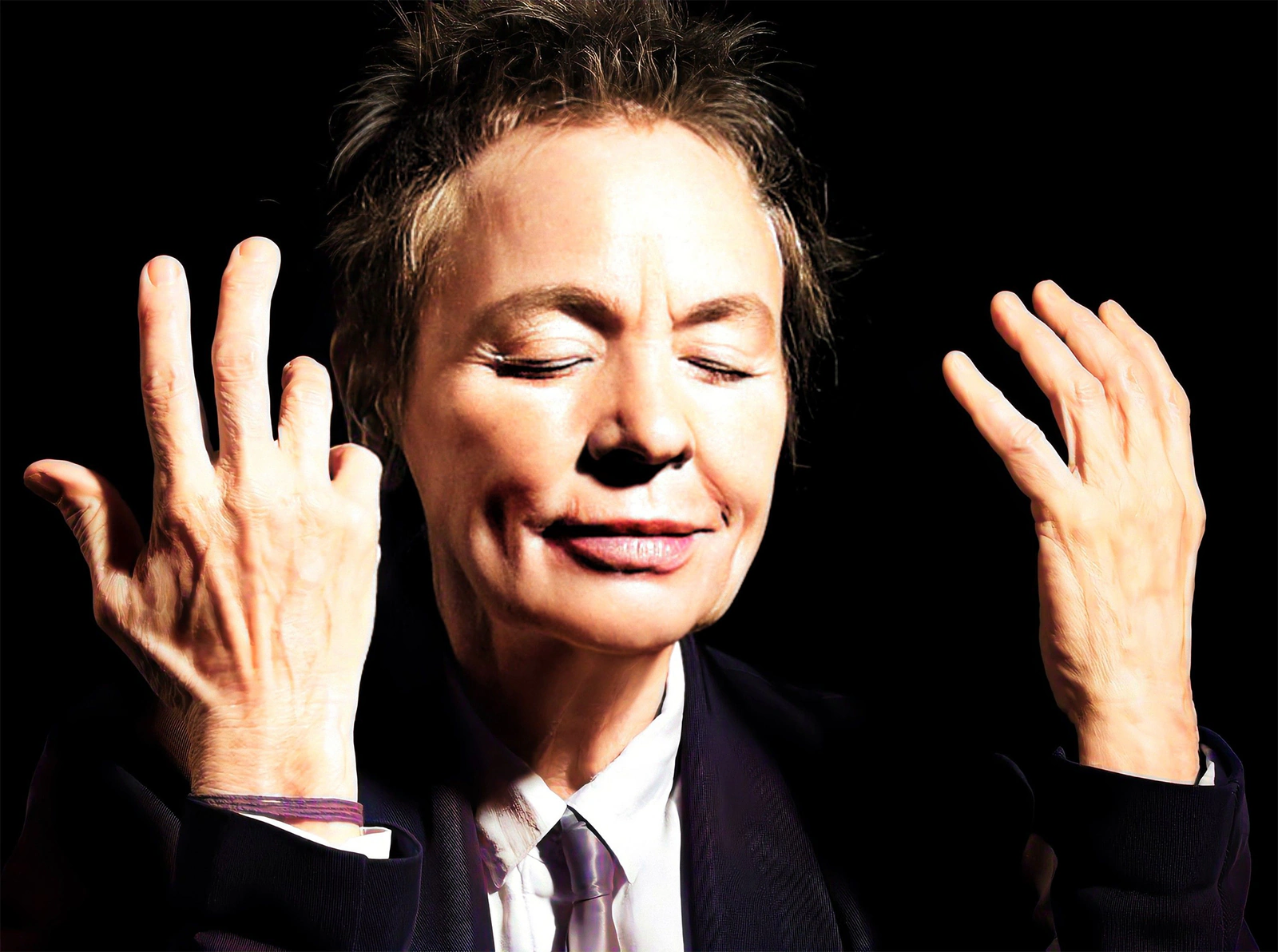
| 37 Quotes | |
| Born as | Laura Phillips Anderson |
| Occup. | Musician |
| From | USA |
| Born | June 5, 1947 Glen Ellyn, Illinois, USA |
| Age | 78 years |
| Cite | |
Citation Formats
APA Style (7th ed.)
Laurie anderson biography, facts and quotes. (2026, February 11). FixQuotes. https://fixquotes.com/artists/laurie-anderson/
Chicago Style
"Laurie Anderson biography, facts and quotes." FixQuotes. February 11, 2026. https://fixquotes.com/artists/laurie-anderson/.
MLA Style (9th ed.)
"Laurie Anderson biography, facts and quotes." FixQuotes, 11 Feb. 2026, https://fixquotes.com/artists/laurie-anderson/. Accessed 6 Mar. 2026.
Early Life and Background
Laura Phillips Anderson was born on June 5, 1947, in Glen Ellyn, Illinois, a commuter town west of Chicago shaped by postwar confidence and quiet conformity. She grew up in a large Catholic family where rules, music lessons, and the pressure to be "good" created an early awareness of how stories are used to manage behavior. That tension - between private imagination and public obedience - became a lifelong engine in her work.As a child she studied violin seriously, training her ear for pitch and duration while also learning the discipline of repetition. Illness and the fragility of the body were not abstractions in her youth, and the experience of being confined to a sickbed sharpened her attention to time, narration, and the mind's ability to build entire worlds from limited materials. Midwestern pragmatism stayed with her, even as she later embraced avant-garde risk: if an idea could be built from scraps, it was worth trying.
Education and Formative Influences
She studied at Barnard College in New York City, earning a BA in art history, then completed an MFA in sculpture at Columbia University. New York in the late 1960s and early 1970s offered her a living laboratory of minimalism, conceptual art, Fluxus-derived performance, and downtown music, and she absorbed the example of artists who treated language, objects, and the body as equally valid instruments. The city also trained her in the economics of survival - short-term jobs, loft rehearsals, and the necessity of turning technique into a portable, repeatable practice.Career, Major Works, and Turning Points
Anderson emerged in the 1970s downtown scene with performance works that fused spoken text, electronics, and sculptural staging, including pieces built around altered instruments and measured endurance. Her breakthrough came with "O Superman" (1981), an eight-minute vocoder-driven monologue that improbably became a hit in the UK and opened the door to her album "Big Science" (1982). She expanded her scale with the eight-hour stage work "United States I-IV" (1983), a panoramic portrait of American speech, technology, desire, and fear, then continued to cross media with films such as "Home of the Brave" (1986) and later projects that treated the concert hall, museum, and theater as variants of the same storytelling machine. In the 1990s and 2000s she remained a defining figure of multimedia practice, and her partnership and marriage with Lou Reed added a second long arc of artistic dialogue, grief, and legacy, reflected in later works such as "Heart of a Dog" (2015).Philosophy, Style, and Themes
Anderson thinks like a sculptor who learned that the most malleable material is attention. Her signature method is to braid vernacular talk, political unease, and deadpan humor into a sound-world where meaning is always slightly postponed. She distrusts the tidy moral of the well-made story, resisting the critic's demand that art must arrive at a lesson: “Writers want to summarize: What does this mean? What did we learn from this? That's a very 19th-century way of thinking about art, because it assumes that it should make our lives better or teach us something”. Psychologically, this refusal reads as self-protection as much as aesthetics - a way to keep experience open, unresolved, and therefore survivable.Her voice work - often filtered through vocoders and pitch-shifters - dramatizes identity as a costume you can put on, glitch, and discard. She is candid about standpoint, not as a slogan but as an operating condition: “I see and write things first as an artist, second as a woman, and third as a New Yorker. All three have built-in perspectives that aren't neutral”. The dry joke becomes an ethical tool, exposing how power replaces love with procedure, then procedure with violence, then violence with mythic comfort: “When love is gone, there's always justice. And when justice is gone, there's always force. And when force is gone, there's always Mom. Hi, Mom!” Across decades, her themes return to surveillance, patriotism, consumer ritual, the seductions of technology, and the intimate terror of losing those we love - all delivered in a tone that lets laughter and dread share the same breath.
Legacy and Influence
Anderson helped define what "multimedia" could mean before the term became institutional: not decoration around music, but a unified art of sound, text, image, and staged thought. She influenced generations of experimental musicians, performance artists, and filmmakers by proving that a monologue could chart a nation, that electronics could carry tenderness, and that conceptual rigor did not require emotional coldness. Her work remains a template for artists navigating the 21st century's churn of data, propaganda, and private grief - an enduring demonstration that the most radical instrument is a human voice deciding how, and whether, to tell the story.Our collection contains 37 quotes written by Laurie, under the main topics: Witty One-Liners - Art - Puns & Wordplay - Music - Writing.
Other people related to Laurie: Lou Reed (Musician)
Source / external links