
Lenny Kravitz Biography Quotes 55 Report mistakes
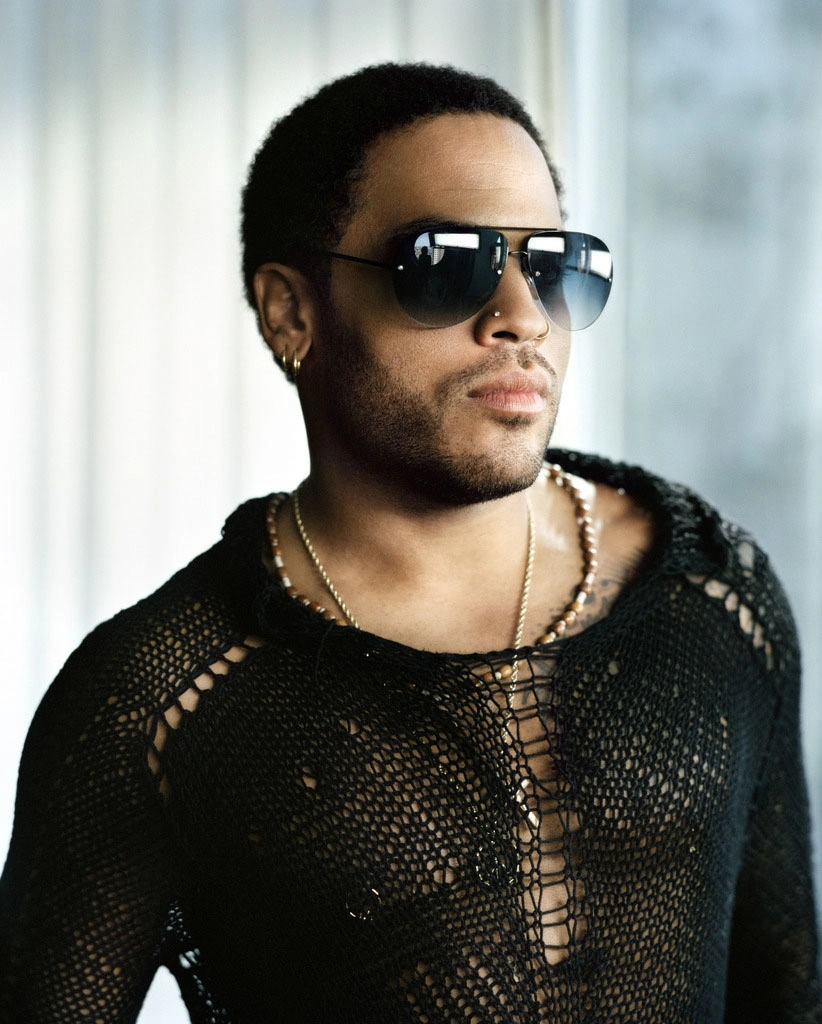
| 55 Quotes | |
| Born as | Leonard Albert Kravitz |
| Known as | Lenny Kravitz, Romeo Blue |
| Occup. | Musician |
| From | USA |
| Born | May 26, 1964 New York City, United States |
| Age | 61 years |
| Cite | |
Citation Formats
APA Style (7th ed.)
Lenny kravitz biography, facts and quotes. (2026, February 11). FixQuotes. https://fixquotes.com/artists/lenny-kravitz/
Chicago Style
"Lenny Kravitz biography, facts and quotes." FixQuotes. February 11, 2026. https://fixquotes.com/artists/lenny-kravitz/.
MLA Style (9th ed.)
"Lenny Kravitz biography, facts and quotes." FixQuotes, 11 Feb. 2026, https://fixquotes.com/artists/lenny-kravitz/. Accessed 25 Mar. 2026.
Early Life and Background
Leonard Albert Kravitz was born on May 26, 1964, in New York City, the only child of Sy Kravitz, an NBC television news producer, and Roxie Roker, an actress whose role on The Jeffersons made her one of the most visible Black women on 1970s American sitcoms. From the start, his family life put him inside several Americas at once: the entertainment business and its pressures, an interracial household still treated as provocative in many places, and the constant negotiation between public image and private self.He spent key childhood years in Brooklyn and later in Los Angeles as his parents' careers pulled the family across coasts. The move exposed him to Hollywood proximity and to the era's radio collage - soul, funk, hard rock, singer-songwriter confessionals - at a moment when post-Vietnam disillusion and late-1970s glamour both coexisted. That mixture helped form a personality that could be both flamboyant and guarded: a child watching adults perform for cameras while also learning what it cost to be different.
Education and Formative Influences
Kravitz attended P.S. 6 in Manhattan and later Beverly Hills High School, where he mingled with other future entertainers and absorbed the disciplined craft beneath celebrity. His musical apprenticeship was largely self-directed, rooted in obsessive listening and multi-instrumental practice, with Prince, Jimi Hendrix, Led Zeppelin, the Beatles, Curtis Mayfield, and classic Motown as pillars. By his teens he was writing songs that tried to fuse Black American rhythm traditions with the guitar-driven rock canon, a synthesis made more urgent by the 1980s industry's tendency to sort artists into narrow categories.Career, Major Works, and Turning Points
After early work under the name Romeo Blue, he broke through with Let Love Rule (1989), a debut that signaled his commitment to analog warmth and an idealistic, spiritual strain. Mama Said (1991) sharpened the autobiographical edge, while Are You Gonna Go My Way (1993) turned him into a global rock star with a title track built for arenas and MTV. The mid-1990s run - Circus (1995), 5 (1998), and the Grammy-winning streak for Best Male Rock Vocal Performance from 1999 to 2002 - established him as a rare mainstream figure who could treat 1960s-1970s rock language as a living dialect rather than nostalgia. Parallel to music, he expanded into acting, notably in Precious (2009) and The Hunger Games (2012), and into design and branding, presenting himself as a total aesthetic rather than a single-medium celebrity.Philosophy, Style, and Themes
Kravitz's inner life often reads as a tension between freedom and responsibility. Raised amid public scrutiny and industry expectations, he fashioned a personal creed that treats imagination as destiny - a belief he has credited to family wisdom: “I was taught by my grandfather that anything that your mind can conceive, you can have. It's a reality”. That conviction shows up in the way he builds records as self-contained worlds, frequently playing many instruments himself and chasing an unmistakable sonic fingerprint: crunchy guitar, gospel-leaning harmonies, and drum sounds that nod to John Bonham as much as to Al Jackson Jr. In interviews and lyrics alike, he returns to love as discipline, not decoration - a chosen stance against cynicism.His themes also carry a moral impatience with distraction and numbness. He has warned, “We're getting so pulled in by computers and technology, and our kids have their face in the computers all day. The human relationship is being diminished by this”. That anxiety helps explain his preference for tactile, human-sounding performances and his stage persona as a conduit for communion - sweat, call-and-response, vulnerability. Even his insistence that audiences attend to meaning is psychological self-defense against being reduced to image: “A lot of people don't listen to the lyrics, really”. Beneath the glamour, the songs repeatedly argue that attention is love, and that love is an act.
Legacy and Influence
Kravitz endures as a bridge figure: an artist who kept classic rock sonics commercially viable in a period dominated by digital pop cycles, while insisting on a Black lineage within that tradition and presenting masculinity as stylish, sensual, and emotionally articulate. His best work modeled how to be retro without being trapped by revivalism, and his public life - from fashion to family to cross-medium creativity - helped normalize the idea of the musician as auteur-brand without surrendering musicianship. For younger artists navigating genre policing and identity branding, Kravitz remains proof that synthesis can be the point, and that a coherent inner philosophy can be heard as clearly as a guitar riff.Our collection contains 55 quotes written by Lenny, under the main topics: Witty One-Liners - Motivational - Truth - Art - Music.
Other people related to Lenny: Lisa Bonet (Actress), Vanessa Paradis (Musician)
Source / external links