
Liam Gallagher Biography Quotes 10 Report mistakes
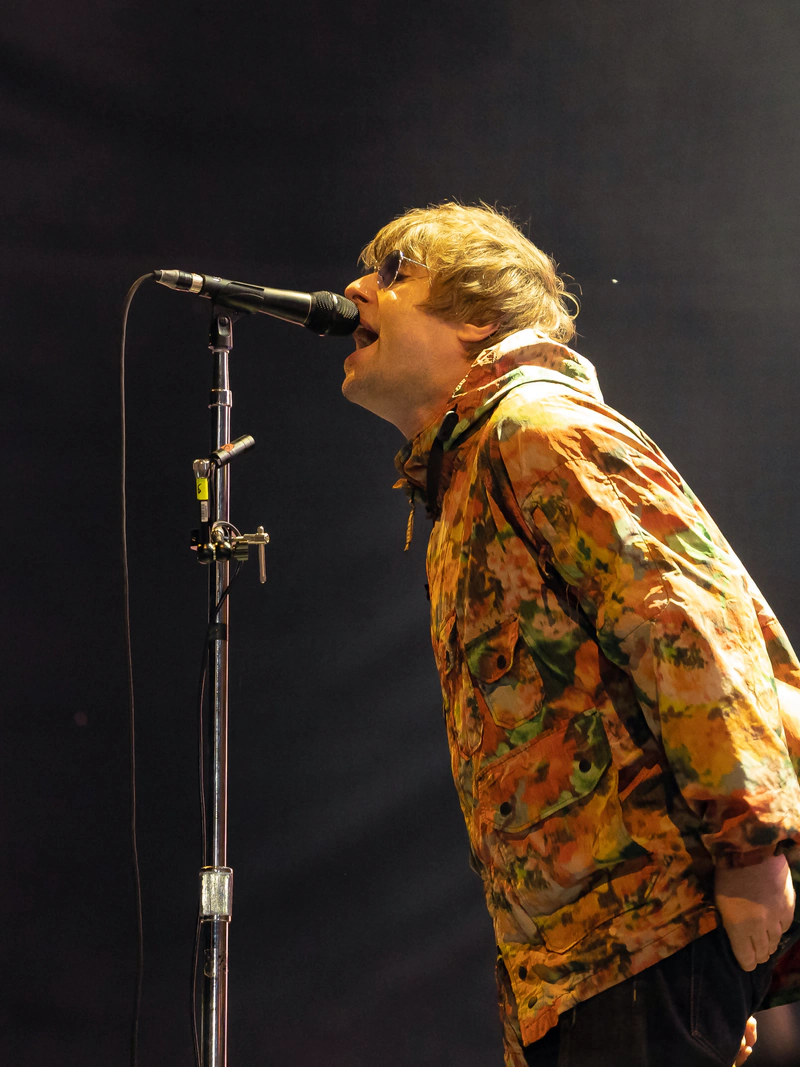
Attr: Bruce Baker, CC BY 2.0
| 10 Quotes | |
| Born as | William John Paul Gallagher |
| Occup. | Musician |
| From | United Kingdom |
| Born | September 21, 1972 Burnage, Manchester, England |
| Age | 53 years |
| Cite | |
Citation Formats
APA Style (7th ed.)
Liam gallagher biography, facts and quotes. (2026, March 17). FixQuotes. https://fixquotes.com/artists/liam-gallagher/
Chicago Style
"Liam Gallagher biography, facts and quotes." FixQuotes. March 17, 2026. https://fixquotes.com/artists/liam-gallagher/.
MLA Style (9th ed.)
"Liam Gallagher biography, facts and quotes." FixQuotes, 17 Mar. 2026, https://fixquotes.com/artists/liam-gallagher/. Accessed 26 Mar. 2026.
Early Life and Background
Liam Gallagher was born William John Paul Gallagher on September 21, 1972, in Burnage, Manchester, the youngest of Peggy and Thomas Gallagher's three sons after Paul and Noel. His childhood was shaped by working-class austerity, Irish family roots, and domestic violence. Thomas, a laborer, was abusive; when Peggy left him in the late 1970s, taking the boys with her, the separation became a foundational drama in Liam's emotional life. Out of that household came several traits that later defined him in public - defiance, suspicion of authority, tribal loyalty, and a reflex to meet vulnerability with swagger. Burnage itself mattered: a postwar Manchester district of council estates, football culture, and narrow prospects, but also a place where identity was performed loudly and daily.
He grew up less as a dutiful student than as a streetwise adolescent tuned to clothes, attitude, and the codes of local masculinity. In school he was not marked as an obvious future star; he was more often associated with mischief, fighting, and restless energy. Yet the seeming blankness concealed a highly charged receptivity. Manchester in the 1980s, battered by deindustrialization but alive with new music, gave him a living education in style and survival. The city had already produced the Smiths, Joy Division, and the Stone Roses; by the time Gallagher came of age, music offered not simply escape but rank, purpose, and self-invention. His later stage persona - chin lifted, hands behind back, voice hurled outward as challenge - was rooted in those early years when dignity had to be asserted before it could be granted.
Education and Formative Influences
Gallagher attended local Catholic schools in Manchester and left formal education without academic distinction, but his real formation came through listening and looking. A teenage head injury during a fight is often cited as one of the moments after which music began to grip him more seriously. He absorbed the Beatles most deeply - especially John Lennon, whose nasal directness, round-voweled melodic attack, and acid candor became models for Liam's own self-mythology - while also taking in the Sex Pistols, the Jam, the Kinks, T. Rex, the Stone Roses, and the Happy Mondays. He learned performance less from conservatory discipline than from records, terraces, and the chemistry of Manchester youth culture. Where Noel Gallagher developed as a writer and arranger, Liam developed as a voice and a presence: instinctive rather than analytical, driven by phrasing, attitude, and the belief that conviction could turn simplicity into force.
Career, Major Works, and Turning Points
His career began when he joined the band Rain as singer; after Noel agreed to join on the condition that he control songwriting and direction, the group became Oasis in 1991. The partnership was combustible and historic. Liam's voice - sneering yet plaintive, hard-edged yet melodic - became the instrument that carried Noel's anthems into mass culture. Definitely Maybe (1994) turned British guitar music away from shoegaze drift and American grunge gloom toward working-class swagger and singalong scale; (What's the Story) Morning Glory? (1995) made Oasis a defining band of Britpop and the wider 1990s, with "Wonderwall", "Don't Look Back in Anger" and "Champagne Supernova" becoming era-marking songs. Be Here Now (1997) was overblown but enormous, after which internal conflict, changing lineups, and shifting musical fashions complicated the story. Still, albums such as Standing on the Shoulder of Giants, Heathen Chemistry, and Don't Believe the Truth showed persistence, while Liam increasingly contributed songs including "Songbird". The brotherly war with Noel - creative dependence entwined with mutual provocation - remained the band's engine until Oasis split in 2009 after a backstage fight in Paris. Liam then fronted Beady Eye before rebuilding himself unexpectedly as a successful solo artist with As You Were (2017), Why Me? Why Not. (2019), and C'mon You Know (2022), proving that his appeal outlasted Britpop nostalgia.
Philosophy, Style, and Themes
Gallagher's artistic philosophy has always been anti-theoretical. He mistrusts polish, explanation, and any idea of performance that smells of calculation. “It's about the music and that's it. I'm not an entertainer. But I do entertain people, see what I mean?” That contradiction is central to him. He rejects showmanship as craft while embodying charisma as instinct, as if magnetism were something to be emitted rather than designed. Likewise, “I refuse to dance. And I can't dance anyway. I'm not in a band for that”. reveals more than comic obstinacy: it is a credo of refusal, a defense of rock authenticity as stillness, stance, and tone. His singing style mirrors this creed - minimal ornament, elongated vowels, a sneer that can suddenly break into yearning. Even at his most aggressive, there is longing in the sound, which is why Oasis songs about escape, memory, and faith could feel both communal and intimate.
Psychologically, Gallagher's public belligerence often masks a need for friction and witness. “I need them, need them to give me a kick up the arse. Otherwise I'd just be sat-in getting fat, counting me money. It's good people living on your doorstep and looking through your bins. Gives you energy”. This is not only bravado but an admission that opposition animates him. He has long needed an audience, rivals, hecklers, journalists, and above all Noel - figures against whom the self can sharpen. Thematically, that helps explain why his career is filled with songs and statements about brotherhood, betrayal, self-belief, and survival. He became a vessel for a specifically British fantasy: the ordinary lad who speaks like the street, worships Lennon, dresses like a football casual, and turns vulnerability into anthem without ever publicly kneeling before it.
Legacy and Influence
Liam Gallagher endures as one of British rock's last indisputably iconic frontmen, a singer whose image is instantly legible even in silhouette. He helped make Oasis the soundtrack of 1990s Britain and gave Britpop one of its defining voices - nasal, urgent, insolent, and unexpectedly tender. Countless later singers borrowed his phrasing, parka-clad stance, and mix of contempt and romance, but imitation rarely captures the original's volatility. His influence extends beyond records into ideas of class, masculinity, and celebrity in modern Britain: he made northern working-class confidence central to pop spectacle without smoothing its rough edges. The later solo renaissance strengthened rather than diluted the legend, showing that beneath the tabloid feuds was a real musical identity. Liam Gallagher's story is finally not just about excess or argument, but about the strange durability of presence - how a voice, an attitude, and a refusal to be domesticated can become cultural memory.
Our collection contains 10 quotes written by Liam, under the main topics: Motivational - Funny - Music - Sarcastic - Self-Discipline.