
Linda Ronstadt Biography Quotes 5 Report mistakes
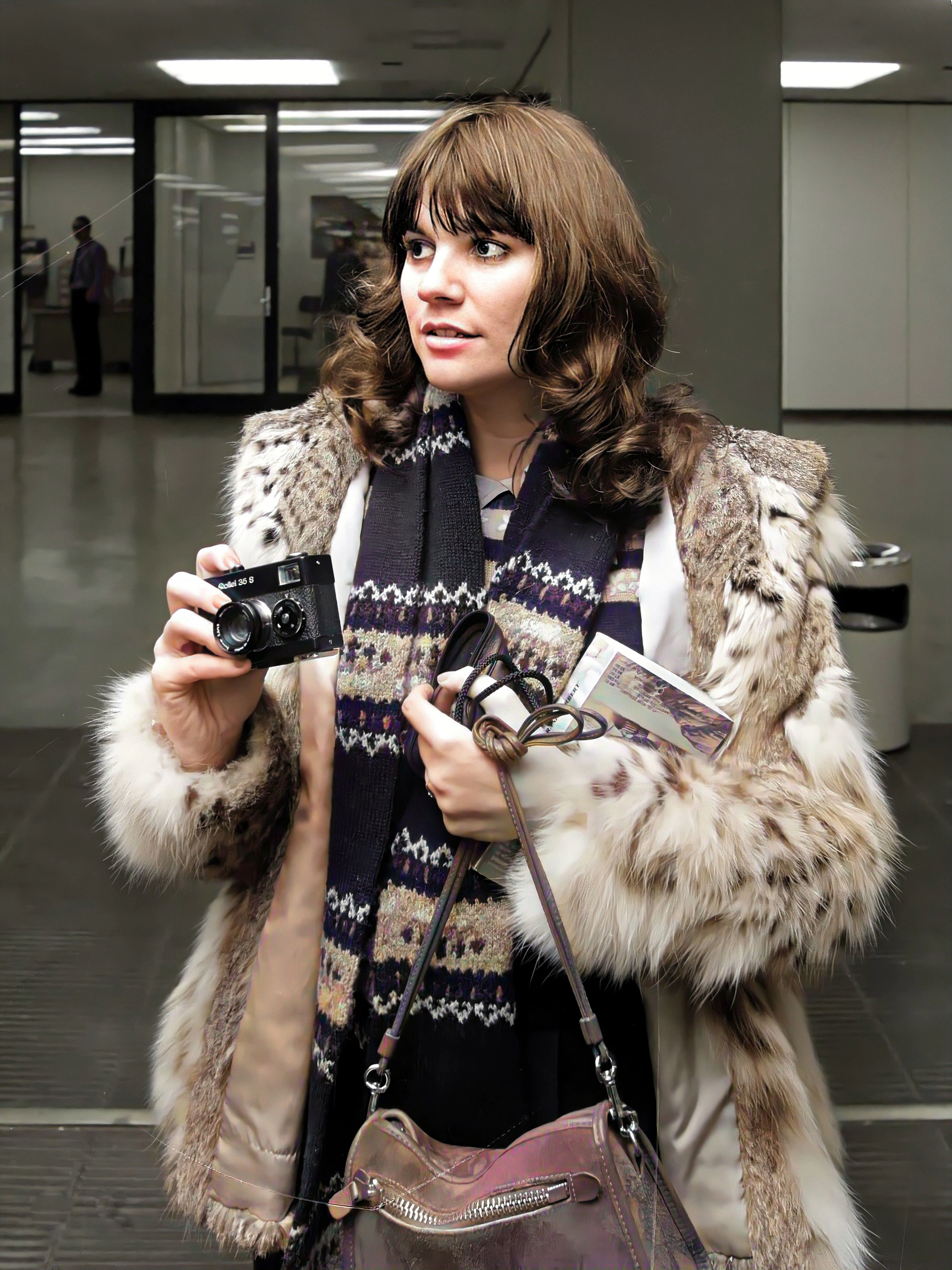
Attr: Rob Bogaerts / Anefo, CC0
| 5 Quotes | |
| Born as | Linda Maria Ronstadt |
| Occup. | Musician |
| From | USA |
| Born | July 15, 1946 Tucson, Arizona, USA |
| Age | 79 years |
| Cite | |
Citation Formats
APA Style (7th ed.)
Linda ronstadt biography, facts and quotes. (2026, February 15). FixQuotes. https://fixquotes.com/artists/linda-ronstadt/
Chicago Style
"Linda Ronstadt biography, facts and quotes." FixQuotes. February 15, 2026. https://fixquotes.com/artists/linda-ronstadt/.
MLA Style (9th ed.)
"Linda Ronstadt biography, facts and quotes." FixQuotes, 15 Feb. 2026, https://fixquotes.com/artists/linda-ronstadt/. Accessed 7 Apr. 2026.
Early Life and Family
Linda Maria Ronstadt was born on July 15, 1946, in Tucson, Arizona, into a musically inclined and culturally rich family with Mexican, German, and English roots. Her father, Gilbert Ronstadt, ran a hardware business and was an amateur singer with a resonant baritone; her mother, Ruth Mary, loved music and encouraged singing in the home. The family often harmonized together, and Linda absorbed traditional Mexican canciones, the Great American Songbook, and the country and folk tunes that drifted across the Southwest. That blend of sounds became the foundation of a voice that would move easily across genres and decades.Beginnings and The Stone Poneys
As a teenager, Ronstadt performed locally and briefly attended the University of Arizona before following the gravity of the West Coast folk scene. In 1964 she moved to Los Angeles, where she formed the Stone Poneys with Bobby Kimmel and Kenny Edwards. The trio built a following on the Southern California coffeehouse circuit and, after signing to Capitol, scored a breakout with Different Drum in 1967, a song written by Michael Nesmith. Its chamber-pop feel and Ronstadt's vivid delivery set her apart, hinting at a capacity to make other writers' songs intensely her own.Solo Breakthrough and Country-Rock Pioneer
After the Stone Poneys, Ronstadt embarked on a solo career that emerged in parallel with the rise of country rock in Los Angeles. She toured relentlessly, fronting bands that included future stars Don Henley and Glenn Frey just before they formed the Eagles. Her move to work with producer and manager Peter Asher in the early 1970s proved decisive: together they shaped a sound that joined rock backbeats, country instrumentation, and polished pop craftsmanship. With Heart Like a Wheel in 1974, she achieved a national breakthrough. Her version of Youre No Good topped the charts, and When Will I Be Loved became a signature, showcasing an instinct for reinterpreting classics without losing their core emotion.Through a run of mid-1970s albums, Prisoner in Disguise, Hasten Down the Wind, and Simple Dreams, she sharpened that approach. She championed contemporary songwriters, cutting Jackson Browne, J.D. Souther, Warren Zevon, and Karla Bonoff songs. The bandplayers around her, including Andrew Gold, Waddy Wachtel, Dan Dugmore, Russ Kunkel, and Leland Sklar, gave her records a supple power onstage and in the studio. Hits such as Blue Bayou, Its So Easy, and Poor Poor Pitiful Me made her one of the defining voices of the decade, while a commanding stage presence and constant touring broadened rock audiences for strong, emotive female leads.
Range and Reinvention: Rock, Operetta, and Standards
Ronstadt refused to be confined by a single category. In 1980 she leaned into new wave textures on Mad Love, then pivoted to operetta in The Pirates of Penzance, first in New Yorks Central Park and then on Broadway and on film, with Kevin Kline and Rex Smith among her co-stars. The project surprised critics and delighted audiences, proving her diction, pitch, and theatrical timing could meet the demands of Gilbert and Sullivan.Another reinvention followed when she asked arranger-conductor Nelson Riddle to craft settings for American standards. The resulting trilogy, Whats New (1983), Lush Life (1984), and For Sentimental Reasons (1986), married her clear phrasing to Riddles elegant orchestrations. Far from a retro exercise, the albums sold in the millions and helped reawaken mainstream interest in the Great American Songbook for a new generation.
Latin Heritage and Cultural Projects
Ronstadt's deep roots in the Sonoran borderlands came to the forefront with Canciones de Mi Padre in 1987, a lovingly researched and exuberantly performed album of Mexican classics. Backed by top mariachi ensembles, she reached back to the music she had heard from her family and community in Tucson. The record became a landmark in U.S. Latin music and was followed by Mas Canciones and the tropical-leaning Frenesi. These projects placed Spanish-language repertoire at the center of a major American pop career, expanding audiences for mariachi and bolero while honoring the musicians who had preserved those traditions.Key Collaborations and Hit Duets
Collaboration was a constant thread. Ronstadt worked closely with J.D. Souther as both songwriter and partner, traded songs and stages with Jackson Browne and Emmylou Harris, and maintained a productive creative partnership with Peter Asher through multiple eras. Her friendship with Dolly Parton and Emmylou Harris yielded Trio in 1987, a project that blended pristine harmonies with country roots and became an instant classic. A second volume appeared years later, again reminding listeners of the power of three distinctive voices weaving together.In 1989 she teamed with Aaron Neville for Cry Like a Rainstorm, Howl Like the Wind, produced by Asher. Dont Know Much and All My Life became sweeping duets that dominated radio and earned major awards, underscoring her capacity to balance intimacy and power in partnership with another singular voice.
Later Career, Writings, and Reflections
The 1990s and 2000s saw Ronstadt continue to explore. Winter Light and Feels Like Home showcased luminous balladry; Dedicated to the One I Love reimagined rock and folk songs as lullabies; We Ran tapped the deep registry of American songwriting; Western Wall: The Tucson Sessions, recorded with Emmylou Harris, returned her to the textures of the desert and the ease of close harmony. She later revisited jazz and pop standards on Hummin to Myself, offering small-combo swing in contrast to the grandeur of the earlier Riddle records.As health issues curtailed her performing, she later disclosed a neurological condition that made singing impossible, she turned to writing and curation. Her memoir, Simple Dreams, recounted a life in music with characteristic clarity and humility. She also authored a book that reflected on family, foodways, and the ecology of the Sonoran borderlands, situating her artistry within a place that shaped her ear and values.
Personal Life
Ronstadt kept a measure of privacy despite intense public interest. In the late 1970s she was in a high-profile relationship with California governor Jerry Brown. In the 1980s she spent time with filmmaker George Lucas. She adopted two children, Mary Clementine and Carlos, and made homes in Los Angeles, San Francisco, and Tucson. Throughout, she sustained ties to family and community, often speaking about education, the arts, and the cultural life of the border region that formed her.Awards and Recognition
Over the decades, Ronstadt earned a place among the most honored singers of her era. She received numerous Grammy Awards across categories that mirrored her range, rock, country, pop, and Latin. Honors later in life acknowledged the breadth of her influence: induction into the Rock and Roll Hall of Fame; the National Medal of Arts; and recognition from national cultural institutions for a career that elevated American and Latin American repertoires alike. A widely seen documentary, Linda Ronstadt: The Sound of My Voice, introduced her story to new audiences and captured the respect of peers who had known her onstage and off.Legacy
Linda Ronstadt's legacy lies not only in chart success but in the permission she gave artists to cross borders, between genres, languages, and expectations. She proved that interpretive singing could be as creative as songwriting, that a rock star could credibly sing operetta and standards, and that the music of Mexican families and communities could resonate in the global marketplace without compromise. The web of people around her, from Peter Asher, Don Henley, and Glenn Frey to Nelson Riddle, Aaron Neville, Dolly Parton, and Emmylou Harris, reflects a life of collaboration that elevated all involved. Her recordings continue to travel widely, their emotional precision intact, offering an enduring model of curiosity, discipline, and fearless range. Even without the stage, her voice endures in the canon of American music and in the cross-cultural conversation she helped ignite.Our collection contains 5 quotes written by Linda, under the main topics: Witty One-Liners - Music - Love - Letting Go.
Other people related to Linda: Glenn Frey (Musician), Dee Dee Warwick (Musician), Gordon Waller (Musician)
Source / external links