
Lionel Hampton Biography Quotes 13 Report mistakes
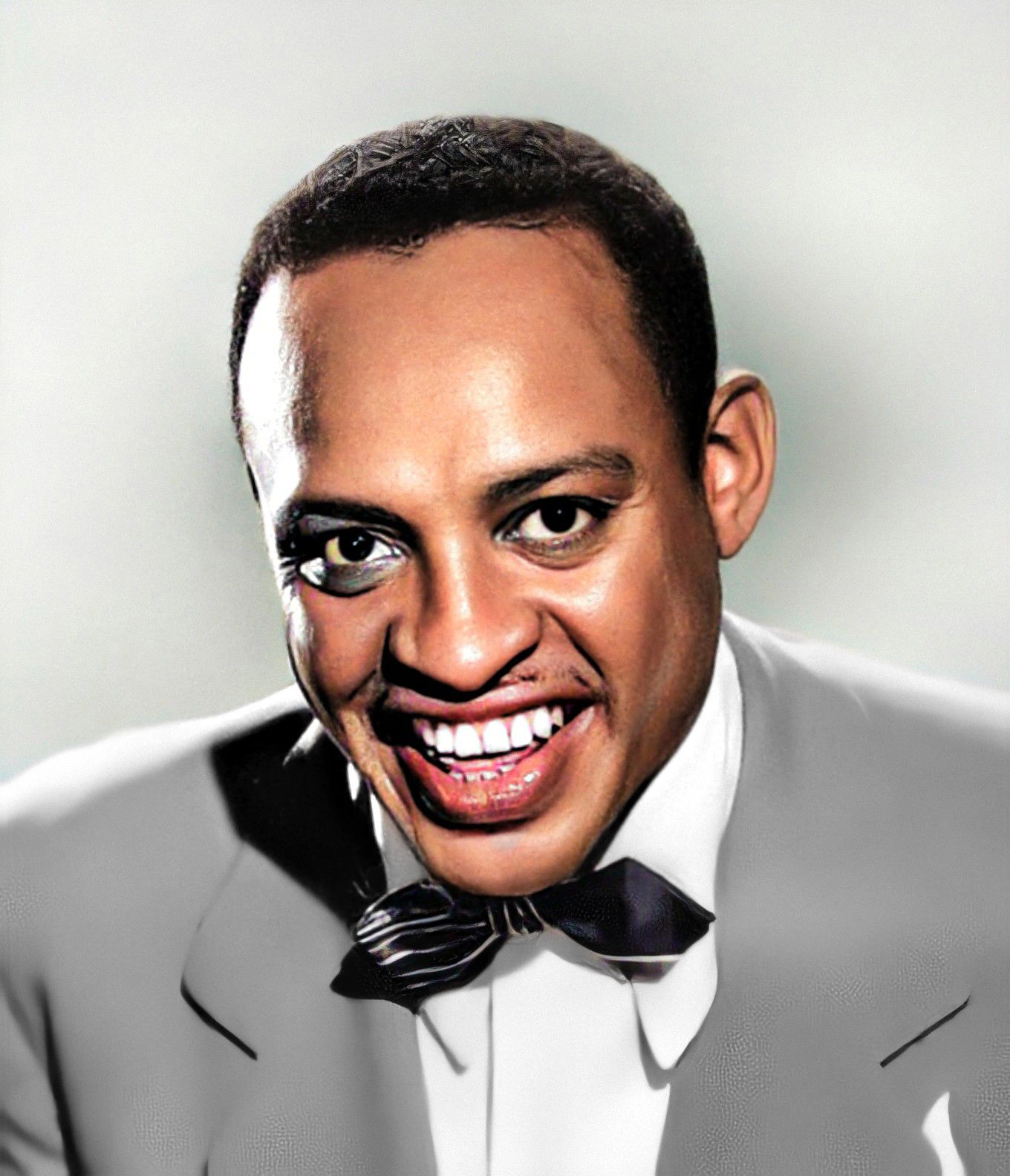
Attr: George B. Evans
| 13 Quotes | |
| Born as | Lionel Leo Hampton |
| Occup. | Musician |
| From | USA |
| Born | April 20, 1908 Louisville, Kentucky, USA |
| Died | August 31, 2002 New York City, New York, USA |
| Cause | Complications from heart surgery |
| Aged | 94 years |
| Cite | |
Citation Formats
APA Style (7th ed.)
Lionel hampton biography, facts and quotes. (2026, February 11). FixQuotes. https://fixquotes.com/artists/lionel-hampton/
Chicago Style
"Lionel Hampton biography, facts and quotes." FixQuotes. February 11, 2026. https://fixquotes.com/artists/lionel-hampton/.
MLA Style (9th ed.)
"Lionel Hampton biography, facts and quotes." FixQuotes, 11 Feb. 2026, https://fixquotes.com/artists/lionel-hampton/. Accessed 27 Mar. 2026.
Early Life and Background
Lionel Leo Hampton was born on April 20, 1908, in Louisville, Kentucky, and came of age in the shifting landscape of Black America between Reconstruction's long shadow and the first waves of the Great Migration. His childhood was marked by movement and reinvention: his family relocated west, and Hampton spent formative years in Alabama and then California, where the port city of Los Angeles offered both opportunity and the hard boundaries of segregation. In that environment, music functioned as livelihood, community, and a kind of protected interior space - a place to build selfhood when public life was constricted.
Hampton's earliest public discipline came through institutional music. At the local Catholic school he attended in Los Angeles, the nuns recognized his aptitude and steered him toward percussion, an origin that later fed his lifelong habit of treating rhythm as moral order rather than mere accompaniment. By his teens he was already a working musician, absorbing blues phrasing, marching-band precision, and the exuberant call-and-response of Black social dances. That combination of churchlike focus and street-level practicality would remain a constant: even at his most flamboyant, Hampton played as if time itself were a promise that had to be kept.
Education and Formative Influences
Hampton was largely self-made, learning by apprenticeship in bands and by close listening to the era's masters, but he also pursued the technical side of his craft early. He later recalled, “I worked hard learning harmony and theory when I was growing up in Chicago in the 1920s”. , a claim that fits his real trajectory: by the late 1920s he was circulating through the Midwest's dance-hall economy, where reading charts, understanding changes, and arranging on the fly separated leaders from sidemen. He drew on the example of drummers like Chick Webb and the emerging swing orchestras, while his own multi-instrumental curiosity - drums, piano, and eventually vibraphone - prepared him to become not just a timekeeper but a front-line voice.
Career, Major Works, and Turning Points
Hampton's decisive breakthrough came in 1930 when Louis Armstrong, recording on the West Coast, heard him at NBC's Los Angeles studios and invited him into a session - a moment often credited with launching the vibraphone as a modern jazz instrument. Hampton's shimmering, percussive attack on the Armstrong sides helped define the vibes as both melodic and rhythmic, and by the mid-1930s he was in the center of swing's national stage with Benny Goodman. In 1936 he joined the Goodman Orchestra and soon became part of the integrated Goodman Quartet with Goodman, Teddy Wilson, and Gene Krupa, a rare public challenge to Jim Crow assumptions in popular entertainment. The 1940s brought his own big band and a string of hits and showcases - including "Flying Home", "Midnight Sun" and "Hamp's Boogie-Woogie" - that fused big-band drive with the hot intensity that younger beboppers respected. Through decades of touring, from wartime USO circuits to late-century festivals, Hampton remained a high-energy bandleader, a tireless collaborator, and one of swing's most visible ambassadors.
Philosophy, Style, and Themes
Hampton's inner life was built around motion: the sense that identity is something you do, nightly, in real time. “Playing is my way of thinking, talking, communicating”. For him, music was not primarily confession but conversation - a social ethic expressed through time, groove, and response. That helps explain his seemingly inexhaustible stage persona: the shouts, the grins, the repeated riffs that turned into communal rituals. Underneath the showmanship was a serious conviction that sound could carry what ordinary speech could not, especially across the racial and generational divides that defined American life during his rise.
His spirituality and work ethic braided together into a single discipline. “Seemed to me that drumming was the best way to get close to God”. The line is revealing: Hampton experienced rhythm as transcendence, and he treated practice as devotion. Even after swing's commercial peak faded, he insisted on improvement rather than nostalgia, and he framed longevity as growth rather than survival: “Every day I look forward to getting with my instruments, trying new things”. Musically, that stance translated into a style both athletic and architectural - bright vibraphone tone, rapid tremolo, muscular two-handed lines, and an emphasis on forward momentum. He loved blues-based shout choruses and boogie-woogie drive, but he also understood harmony and arrangement well enough to keep large ensembles tight, turning exuberance into an organized storm.
Legacy and Influence
Hampton died on August 31, 2002, in New York City, after a career that spanned the birth of swing, the bebop revolution, and jazz's global festival era. He left an imprint that is both technical and symbolic: he helped establish the vibraphone as a frontline jazz instrument, modeled the bandleader as entertainer without sacrificing musicianship, and stood as a prominent figure in the long, uneven integration of American popular culture. His recordings and performances continue to teach a specific lesson about American music - that joy can be rigorous, that rhythm can be a form of belief, and that the most enduring virtuosity is the kind that invites others in.
Our collection contains 13 quotes written by Lionel, under the main topics: Music - Work Ethic - Equality - Change - Gratitude.
Other people related to Lionel: Quincy Jones (Musician), Joe Williams (Musician), Charles Mingus (Musician), Nichelle Nichols (Musician), Jerome Richardson (Musician), Wes Montgomery (Musician)
Source / external links