
Mandy Moore Biography Quotes 16 Report mistakes
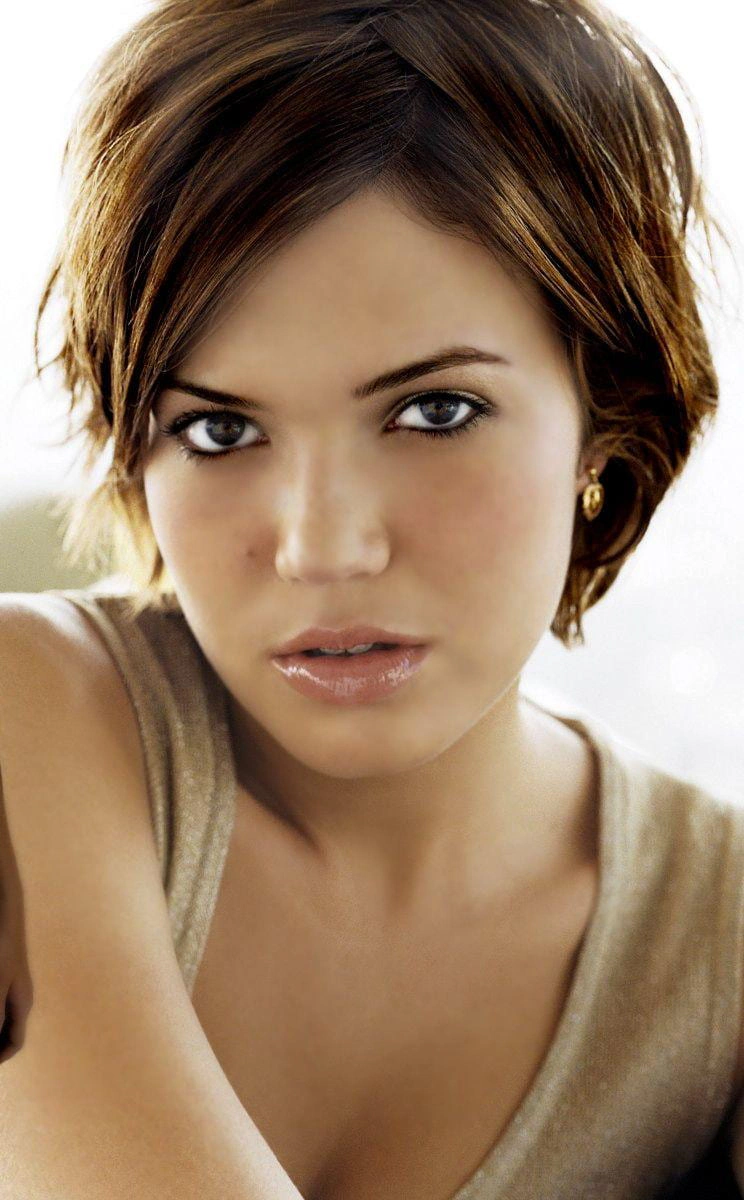
| 16 Quotes | |
| Born as | Amanda Leigh Moore |
| Occup. | Musician |
| From | USA |
| Spouse | Dawes frontman Taylor Goldsmith (2018) |
| Born | April 10, 1984 Nashua, New Hampshire, USA |
| Age | 41 years |
| Cite | |
Citation Formats
APA Style (7th ed.)
Mandy moore biography, facts and quotes. (2026, March 2). FixQuotes. https://fixquotes.com/artists/mandy-moore/
Chicago Style
"Mandy Moore biography, facts and quotes." FixQuotes. March 2, 2026. https://fixquotes.com/artists/mandy-moore/.
MLA Style (9th ed.)
"Mandy Moore biography, facts and quotes." FixQuotes, 2 Mar. 2026, https://fixquotes.com/artists/mandy-moore/. Accessed 5 Mar. 2026.
Early Life and Background
Amanda Leigh Moore was born on April 10, 1984, in Nashua, New Hampshire, to a family shaped by mobility and public-service pragmatism. Her mother, Stacy, had worked as a journalist; her father, Donald, was a pilot for American Airlines. That mixture - storytelling on one side, itinerant discipline on the other - would echo in Moore's adult persona: approachable, controlled, and quietly ambitious. She was raised in a Catholic household alongside two brothers, in the culturally mixed, late-20th-century American suburbia that produced a wave of teen-pop performers even as it trained them to appear "normal" on command.
Moore spent much of her youth in Orlando, Florida, a city whose entertainment infrastructure (theme parks, studios, auditions, touring circuits) functioned as an informal conservatory for ambitious teenagers. The 1990s music economy rewarded bright, camera-ready singers who could work relentlessly - radio promotion, mall tours, TV bookings - and Moore grew up in the slipstream of that system. Her early identity was not built around rebellion but around competence, the ability to deliver under pressure, and the instinct to keep private life guarded while selling optimism in public.
Education and Formative Influences
She attended Bishop Moore Catholic High School in Orlando and trained early through local performance opportunities before committing to a professional path. In that era, the "education" of a young pop artist was less classroom than apprenticeship: vocal coaching, dance rehearsal, media training, and the daily practice of being watchable. Moore absorbed both the mainstream grammar of late-1990s pop and an older, theatrical sensibility - an interest in craft that would later make her transition to acting feel less like reinvention than expansion.
Career, Major Works, and Turning Points
Moore broke nationally at the tail end of the teen-pop boom with the single "Candy" (1999) and the album So Real (1999), followed by I Wanna Be with You (2000). As the market shifted, she pushed away from bubblegum branding toward adult singer-songwriter textures on Coverage (2003), a collection of 1980s covers that signaled taste and intention, and then Wild Hope (2007) and Amanda Leigh (2009), albums that emphasized organic arrangements and reflective writing. Her parallel ascent as an actress began with a defining turn in A Walk to Remember (2002), which recast her from pop ingénue into romantic lead and attached her voice to a durable cultural memory. She later widened her range through film roles and voice work, most prominently as Rapunzel in Disney's Tangled (2010), before achieving a new career peak as Rebecca Pearson on NBC's This Is Us (2016-2022), a performance built on time-spanning nuance that earned major award recognition and cemented her as a serious dramatic presence.
Philosophy, Style, and Themes
Moore's inner narrative has often been about resisting the flattening effects of celebrity. She has spoken in moral terms about staying oriented in an industry designed to disorient: “I don't want to take fame for granted because that is when you start to think you are better than everyone else. That is when you start thinking that you are someone that you are not”. Psychologically, the line reveals a person alert to identity drift - the slow replacement of self with image - and it helps explain her steady pivot toward work that demands humility and technique rather than hype. Her major transitions (from teen pop to singer-songwriter, from film to prestige television) read as attempts to keep authorship over her own narrative.
As a musician, Moore's style moved from radio-bright hooks to warmer, lived-in vocal phrasing, often favoring intimacy over vocal spectacle. Even when acting became the public center of gravity, she framed music as her emotional home base: “Music is my first love”. That loyalty surfaces in her choices - acoustic textures, careful repertoire, and a preference for songs that hold contradiction: hope without naivete, tenderness without theatricality. In her most resonant performances, she treats sentiment as something earned, not assumed, aligning with her own stated premise that “Hope is the most exciting thing there is in life”. - a credo that reads less like cheerleading than like endurance, the decision to stay openhearted inside a profession that rewards cynicism.
Legacy and Influence
Moore's enduring influence lies in the way she modeled longevity without spectacle: a teen-pop origin that did not become a trap, and a crossover into acting that did not require abandoning musicianship. For audiences who grew up with her, she became a case study in adult reinvention - not a dramatic "comeback", but a series of course corrections toward craft, privacy, and steadier self-definition. In an era when celebrity often depends on constant escalation, Moore's career argues for another kind of power: the accumulation of trust, earned by consistent work and a refusal to confuse public attention with personal truth.
Our collection contains 16 quotes written by Mandy, under the main topics: Music - Learning - Hope - Work Ethic - Faith.
Other people related to Mandy: Milo Ventimiglia (Actor), Wilmer Valderrama (Actor)
Source / external links