
Mariah Carey Biography Quotes 22 Report mistakes
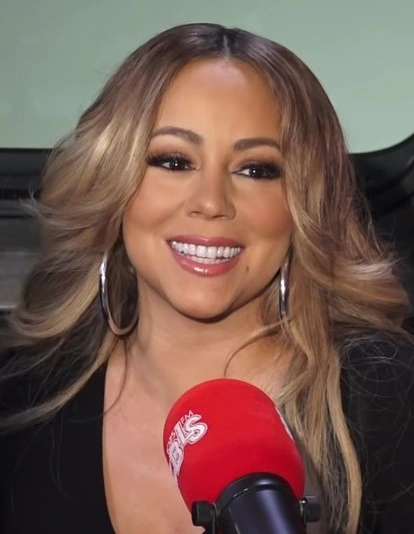
| 22 Quotes | |
| Occup. | Musician |
| From | USA |
| Born | March 27, 1971 |
| Age | 54 years |
| Cite | |
Citation Formats
APA Style (7th ed.)
Mariah carey biography, facts and quotes. (2026, February 11). FixQuotes. https://fixquotes.com/artists/mariah-carey/
Chicago Style
"Mariah Carey biography, facts and quotes." FixQuotes. February 11, 2026. https://fixquotes.com/artists/mariah-carey/.
MLA Style (9th ed.)
"Mariah Carey biography, facts and quotes." FixQuotes, 11 Feb. 2026, https://fixquotes.com/artists/mariah-carey/. Accessed 25 Mar. 2026.
Early Life and Background
Mariah Carey was born March 27, 1971, in Huntington, Long Island, New York, into a family whose very name announced complexity: her mother, Patricia Hickey, was an Irish-American vocal coach and former opera singer; her father, Alfred Roy Carey, was an African-American and Afro-Venezuelan aeronautical engineer. In 1970s suburbia, that interracial marriage placed the family under a harsh, daily scrutiny, and the household also carried the quieter strains of ambition, money, and fracture. When she was young, her parents divorced, and Carey grew up moving between worlds - white and Black, working and aspirational, private pain and public performance.Those early contradictions formed the emotional engine of her later work: the desire to be seen accurately, not mythologized, and the need to master her own narrative. She often described feeling othered and misread, and the adult superstar would repeatedly circle back to the childhood lesson that attention can be both oxygen and threat. Even before fame, she learned to use voice as shelter - a disciplined craft learned at home, and a form of self-definition learned on the outside, where she had to be resilient, quick, and intensely self-contained.
Education and Formative Influences
Carey attended Harborfields High School in Greenlawn, New York, graduating in 1987, and gravitated toward music with a seriousness that separated her from the typical teen hopeful. She worked jobs, wrote songs, and absorbed the lineage that would become her signature blend - gospel melisma, soul phrasing, pop structure, and a hip-hop sensibility that treated rhythm and ad-lib as storytelling. New York in the late 1980s offered both a studio economy and a club economy; Carey learned how to demo efficiently, harmonize precisely, and chase the rare meeting where talent and gatekeeping intersect.Career, Major Works, and Turning Points
Her break came after she handed a demo to Tommy Mottola, head of Columbia Records, leading to her 1990 self-titled debut and an immediate run of chart-topping singles, including "Vision of Love". What followed was a decade that redefined adult contemporary pop through vocal athleticism and meticulous songwriting: "Emotions" (1991), "Music Box" (1993), "Merry Christmas" (1994) with "All I Want for Christmas Is You" and "Daydream" (1995). The late 1990s marked a pivot toward creative autonomy and a closer alignment with hip-hop through collaborations and remixes, culminating in "Butterfly" (1997), often read as her emancipation record. After public turbulence around the "Glitter" era (2001), she rebuilt her standing with "The Emancipation of Mimi" (2005), anchored by "We Belong Together", proving endurance not as nostalgia but as renewed command. Later work such as "E=MC2" (2008) and her continued holiday dominance extended her commercial footprint while her memoir, "The Meaning of Mariah Carey" (2020), sharpened the autobiographical frame behind the songs.Philosophy, Style, and Themes
Carey is frequently reduced to spectacle - the high notes, the diva shorthand, the seasonal ubiquity - yet her core method is closer to a songwriter-producer's discipline than to a vocalist's vanity. She insists on authority over her choices, not as stubbornness but as survival: “I don't think anyone knows as much about what's right for me as I do”. That psychology, forged in a childhood of being defined by other people's categories, becomes a career-long practice of self-editing - deciding what to reveal, when to perform, and when to withhold.Her themes center on longing that is both romantic and existential, the ache of wanting safety without surrendering freedom. Even her public persona is treated like a costume rack, a way to manage scrutiny rather than to court it: “I do not think I reinvent myself. Wearing my hair differently or changing my style of dress is playing dress-up. I don't take it too seriously”. Yet beneath that lightness lies a deeper insistence that the public story is never the whole story: “If you see me as just the princess then you misunderstand who I am and what I have been through”. Musically, this tension is audible in the contrast between crystalline lead lines and dense, self-stacked harmonies - a lone voice multiplying itself into protection, community, and argument, all at once.
Legacy and Influence
Carey stands as one of the defining American musicians of the post-1980s pop era: a virtuoso vocalist who also shaped modern pop writing, the remix economy, and the mainstreaming of hip-hop collaborations without abandoning melody. Her catalog helped set the template for contemporary R and B-pop singing, influencing generations of artists drawn to her agility, whistle register, and emotional precision, while her holiday repertoire became a cultural institution. Just as enduring is the narrative arc she embodies - reinvention not as disguise, but as reclaiming authorship - a model for pop stardom in which craft, control, and vulnerability coexist under relentless public projection.Our collection contains 22 quotes written by Mariah, under the main topics: Witty One-Liners - Never Give Up - Music - Nature - Overcoming Obstacles.
Other people related to Mariah: Christina Aguilera (Musician), Debra Wilson (Comedian), LaToya London (Musician), Kelly Clarkson (Musician), Jermaine Dupri (Musician), Pia Toscano (Musician), Luther Vandross (Musician)
Source / external links