
Marvin Gaye Biography Quotes 11 Report mistakes
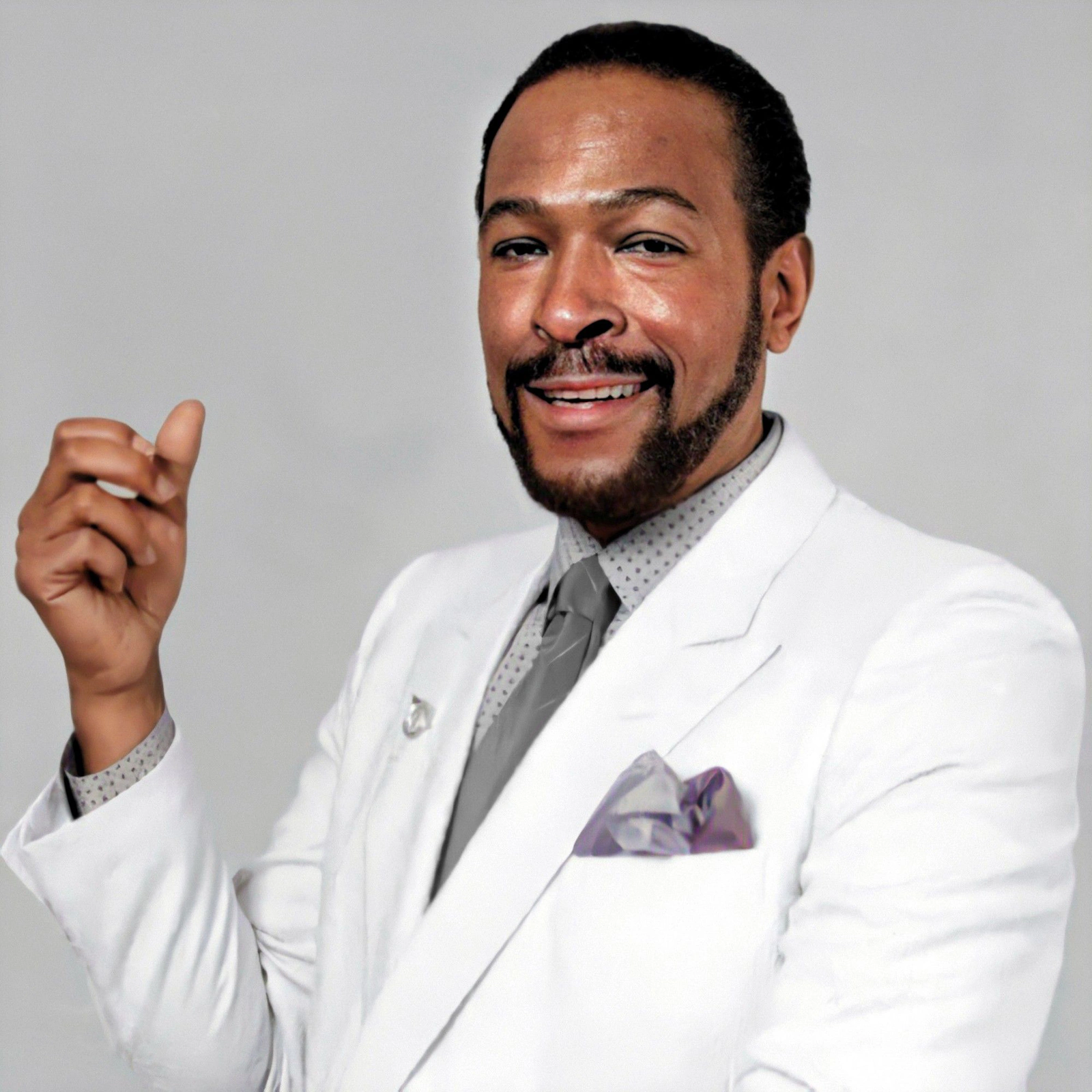
| 11 Quotes | |
| Born as | Marvin Pentz Gay Jr. |
| Occup. | Musician |
| From | USA |
| Spouse | Anna Gordy Gaye |
| Born | April 2, 1939 Washington, D.C., USA |
| Died | April 1, 1984 Los Angeles, California, USA |
| Cause | Homicide |
| Aged | 44 years |
| Cite | |
Citation Formats
APA Style (7th ed.)
Marvin gaye biography, facts and quotes. (2026, February 11). FixQuotes. https://fixquotes.com/artists/marvin-gaye/
Chicago Style
"Marvin Gaye biography, facts and quotes." FixQuotes. February 11, 2026. https://fixquotes.com/artists/marvin-gaye/.
MLA Style (9th ed.)
"Marvin Gaye biography, facts and quotes." FixQuotes, 11 Feb. 2026, https://fixquotes.com/artists/marvin-gaye/. Accessed 5 Mar. 2026.
Early Life and Background
Marvin Pentz Gay Jr. was born on April 2, 1939, in Washington, D.C., a city where gospel storefronts and federal power sat side by side. He grew up in the turbulent household of Marvin Gay Sr., a stern Pentecostal minister, and Alberta Gay, whose steadiness and musical encouragement offered refuge. Church was both stage and discipline: the boy sang and played piano and drums, absorbing hymns that prized ecstatic release yet demanded strict moral control. That contradiction - rapture under surveillance - became a lifelong pattern in his art and private life.At home, violence and shame coexisted with talent and yearning. Accounts from friends and biographers describe a sensitive child who internalized fear and sought escape through sound, radio, and neighborhood doo-wop. The family moved between D.C. neighborhoods, and the adolescent Marvin chased harmony groups with the intensity of someone building an alternate family. Early gigs offered a different kind of authority: applause instead of reprimand, rhythm instead of rules. By his late teens he was already shaping the persona that would later drop the final "e" from his surname and sometimes add an "e" to "Gaye" - a small act of self-authorship against the weight of inheritance.
Education and Formative Influences
Gaye attended D.C. public schools but was educated most decisively by the Black sacred tradition and the postwar vocal-group circuit. He sang in church ensembles and formed doo-wop groups, most notably the Marquees, learning blend, phrasing, and the dramatic pause. After a stint with the U.S. Air Force that ended quickly, he returned to music, working around Bo Diddley and Harvey Fuqua; the Moonglows connection introduced him to the professional road, studio discipline, and the idea that a lead singer could be both romantic narrator and rhythm instrument.Career, Major Works, and Turning Points
In 1961 Gaye signed with Motown, first as a session drummer and would-be jazz crooner, then as a featured vocalist; early hits like "Stubborn Kind of Fellow" (1962), "Hitch Hike" (1962), and "Can I Get a Witness" (1963) established him as a sleek, urgent new voice. The mid-1960s brought crossover stardom through duets with Kim Weston and especially Tammi Terrell - "Ain't No Mountain High Enough" (1967) and "You're All I Need to Get By" (1968) - but Terrell's illness and death, plus friction with Motown's assembly-line expectations, deepened his crisis. The turning point was "What's Going On" (1971) and the album that followed: a self-directed suite about war, ecology, policing, and spiritual hunger that forced the label to treat him as an auteur. He extended that control into "Let's Get It On" (1973) and the fiercely intimate "I Want You" (1976), then confronted collapse and reinvention across "Here, My Dear" (1978), a divorce-settlement album that turned private wreckage into public document. In the early 1980s he relocated to Europe, regained momentum with "Midnight Love" (1982) and "Sexual Healing", yet returned to Los Angeles consumed by paranoia, addiction, and conflict at home. On April 1, 1984, one day before his 45th birthday, he was shot and killed by his father after an argument, an ending that distilled his lifelong entanglement of love, fear, and authority.Philosophy, Style, and Themes
Gaye's inner life was a tug-of-war between sanctified aspiration and bodily need, between the desire to heal and the impulse to disappear. He framed his work as witness rather than spectacle: “I sing about life”. That stance explains the breadth of his catalog - protest, erotic devotion, domestic bitterness, cosmic prayer - and also his restlessness with any fixed role, whether heartthrob, social prophet, or label employee. His sensitivity made him porous to other people's pain: the Vietnam era, urban unrest, and the psychic cost of Black masculinity under pressure all entered his music as lived weather, not slogans.Musically, he fused gospel melisma, doo-wop blend, jazz elegance, and hard-pocket funk into a style that sounded conversational yet architected. His signature tools were multi-tracked harmonies, elastic baritone-to-tenor leaps, and a drum-conscious sense of swing that treated the voice like percussion. He could insist on love as an ethical technology, not mere romance: “War is not the answer, because only love can conquer hate”. Yet his songs also expose how hard that ethic was for him to inhabit; the search for serenity kept colliding with appetite and self-reproach. The struggle is captured in a line that reads like a private commandment: “If you cannot find peace within yourself, you will never find it anywhere else”. In albums like "What's Going On" and "Here, My Dear", the listener hears a man trying to sing himself into coherence, using groove as both confession booth and shield.
Legacy and Influence
Gaye remains a cornerstone of American popular music because he expanded what soul could contain: the political album that still grooves, the erotic record that still prays, the divorce chronicle that refuses dignity as a mask. His vocal layering and intimate microphone technique shaped artists across R&B, pop, and hip-hop, while "What's Going On" endures as a template for socially literate songwriting that does not surrender musical pleasure. Just as crucial is the cautionary power of his biography: a genius formed by church, industry, and family, who chased transcendence through sound and paid dearly for the wounds he could name in song more easily than he could heal in life.Our collection contains 11 quotes written by Marvin, under the main topics: Art - Music - Deep - Peace - Soulmate.
Other people related to Marvin: Alicia Keys (Musician), Diana Ross (Actress), Martha Reeves (Musician), Ed Townsend (Musician)
Source / external links