
Matthew Shipp Biography Quotes 8 Report mistakes
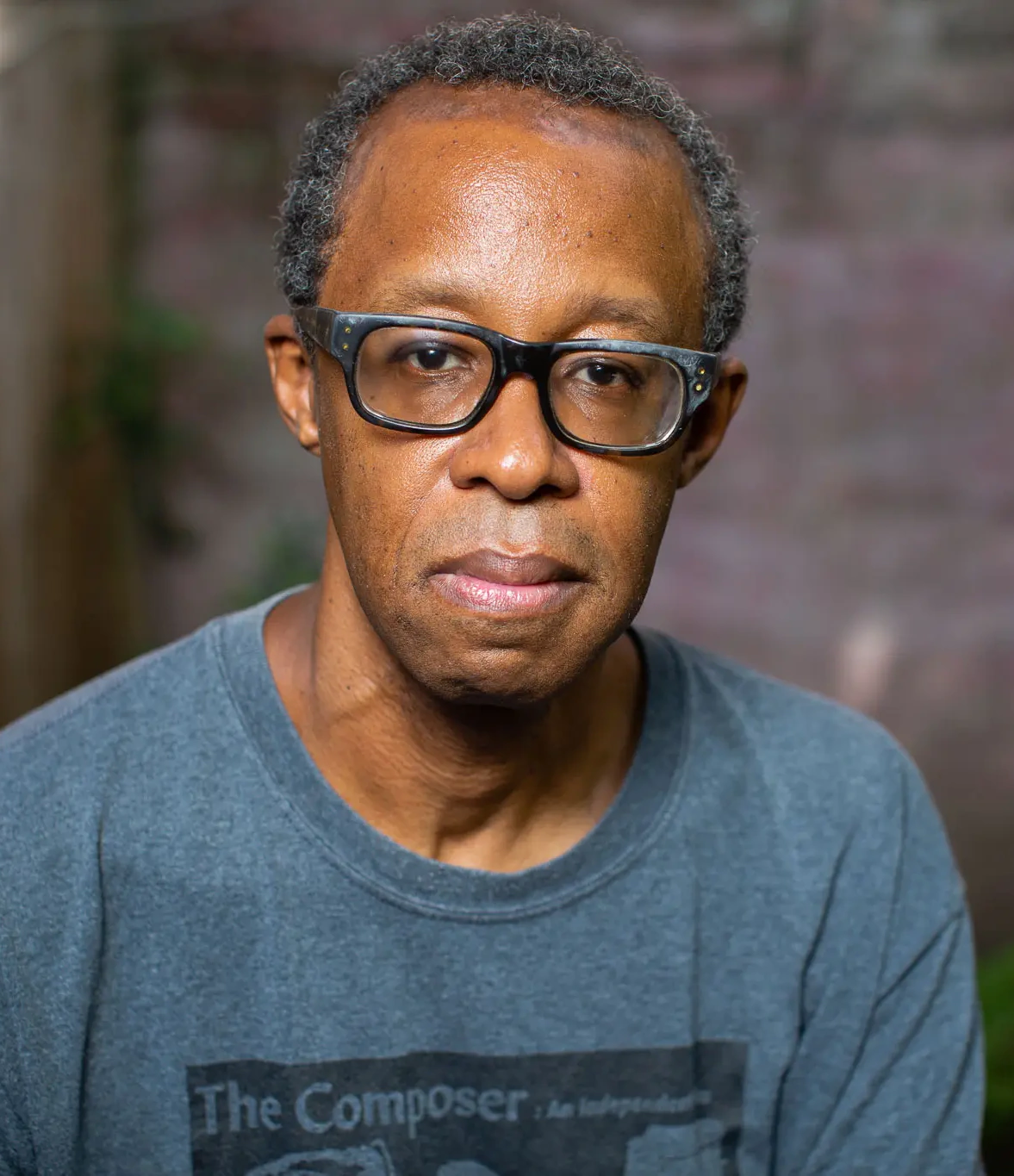
| 8 Quotes | |
| Occup. | Musician |
| From | USA |
| Born | December 7, 1960 Wilmington, Delaware, United States |
| Age | 65 years |
| Cite | |
Citation Formats
APA Style (7th ed.)
Matthew shipp biography, facts and quotes. (2026, March 19). FixQuotes. https://fixquotes.com/artists/matthew-shipp/
Chicago Style
"Matthew Shipp biography, facts and quotes." FixQuotes. March 19, 2026. https://fixquotes.com/artists/matthew-shipp/.
MLA Style (9th ed.)
"Matthew Shipp biography, facts and quotes." FixQuotes, 19 Mar. 2026, https://fixquotes.com/artists/matthew-shipp/. Accessed 2 Apr. 2026.
Early Life and Background
Matthew Shipp was born on December 7, 1960, in Wilmington, Delaware, and came of age in a United States still sorting through the aftershocks of bebop, the avant-garde upheavals of the 1960s, and the market pressures that increasingly tried to divide black music into neat commercial categories. He emerged from an East Coast urban world where jazz was not a museum object but a living argument about freedom, rigor, and identity. That setting mattered. Shipp would become one of the most intellectually combative and sonically distinctive pianists of his generation, but his music always retained the tension of someone formed inside tradition while refusing to be confined by it.
From early on, he showed the temperament that would define his art: analytical, intense, and resistant to easy consensus. Even listeners who first encountered him through the sheer force of his piano attack often missed the degree to which his music was rooted in deep listening and historical consciousness. He belonged to a line of jazz artists for whom sound was inseparable from worldview. By the time he entered public view as a major improviser, he already projected a rare combination - the discipline of a serious student of the piano, the metaphysical ambition of the post-Coltrane avant-garde, and the skepticism of an artist alert to how institutions shape taste.
Education and Formative Influences
Shipp studied at the University of Massachusetts Amherst, where he was exposed not only to formal academic work but also to the broader intellectual atmosphere that sharpened his sense of music as structure, language, and social practice. His deepest formative influences came less from conservatory polish than from immersion in the jazz continuum - especially Bud Powell, Thelonious Monk, Cecil Taylor, and the harmonic and rhythmic revolutions set in motion by bebop and free jazz. He moved to New York, the essential proving ground for a pianist of his ambitions, and entered a scene in which loft-jazz afterlives, downtown experimentation, and hard-won bandstand knowledge still intersected. Crucial associations, especially with saxophonist David S. Ware, placed him in a context where stamina, abstraction, blues feeling, and formal invention had to coexist at the highest level.
Career, Major Works, and Turning Points
Shipp's career developed through a remarkable dual path: as a central ensemble player in avant-jazz and as a prolific leader whose solo, trio, duo, and group recordings mapped an entire personal cosmology. His long work with the David S. Ware Quartet brought him international recognition; in that band, alongside William Parker and Susie Ibarra or Whit Dickey, he helped create one of the great late-20th-century jazz units, capable of volcanic collective momentum and severe architectural logic. At the same time, under his own name he released a stream of major recordings on labels such as Hat Hut and Thirsty Ear, including Piano Sutras, Equilibrium, Symbol Systems, and later expansive statements like The Cosmic Piano and The Piano Equation. His role in the Blue Series on Thirsty Ear was especially important: it framed him as both pianist and curator, linking improvisation with hip-hop-adjacent textures, turntablism, spoken word, and electronic atmosphere without diluting the music's seriousness. A further turning point came through his highly concentrated solo albums, where his method became clearest - dense clusters, abrupt silences, stride shadows, Monk-like dislocations, and lyric fragments fused into a language instantly recognizable as his own.
Philosophy, Style, and Themes
Shipp's piano style is often described as percussive, but that is only the surface. Beneath the attack lies an unusual balance between abstraction and inheritance. He has been explicit about lineage: “Bud Powell's probably the biggest influence on my piano playing”. That admission is revealing because Shipp's music can sound far from bebop decorum, yet its forward propulsion, compressed logic, and sense of line are inseparable from Powell's example. He hears jazz history not as a ladder of supersession but as a field of energies that remain active in the present. His playing turns chords into masses, melody into shards, rhythm into pressure systems; still, the music rarely abandons swing as a deep structural principle. Even at its freest, it thinks in terms of momentum, resistance, and release.
Just as important is his philosophical hostility to fixed categories. “What makes bebop legitimate is the fact that when it was done, it was illegitimate”. That sentence captures his attraction to moments when art violates the social order built around taste. Likewise, when he says, “I like people not being able to be pigeon-holed”. , he is describing not only an aesthetic preference but a moral stance toward creativity. Shipp has often written and spoken with unusual candor about jazz ideology, generational blindness, and the way markets simplify difficult work. The result is a body of music that feels argumentative in the best sense - not random or anti-tradition, but engaged in a permanent struggle against dead language. His compositions and improvisations seek a zone where intellect, instinct, and spiritual inquiry meet, and where beauty can arrive in forms that are jagged, provisional, and unresolved.
Legacy and Influence
Matthew Shipp stands as one of the decisive jazz pianists of the post-1980 era: a bridge between bebop's compressed intelligence, the avant-garde's ecstatic dismantling of form, and a contemporary improvising culture open to cross-genre contamination without surrendering rigor. He has influenced younger pianists, improvisers, and listeners not by founding a school of imitators but by demonstrating that a fiercely individual language can remain legible to history. His recordings, essays, interviews, and collaborations have made him an important theorist of jazz as well as a major practitioner. In an age that rewards branding and easy taxonomy, Shipp's enduring achievement is to have built a body of work that insists on contradiction - physical and cerebral, traditional and radical, severe and lyrical - and in doing so, to have kept alive one of jazz's deepest promises: that freedom is not the absence of form, but the continual remaking of it.
Our collection contains 8 quotes written by Matthew, under the main topics: Wisdom - Music - Freedom.
Frequently Asked Questions
- Matthew Shipp songs: Primarily jazz compositions; start with albums New Orbit, The Multiplication Table, and Piano Vortex.
- How old is Matthew Shipp? He is 65 years old
Source / external links